
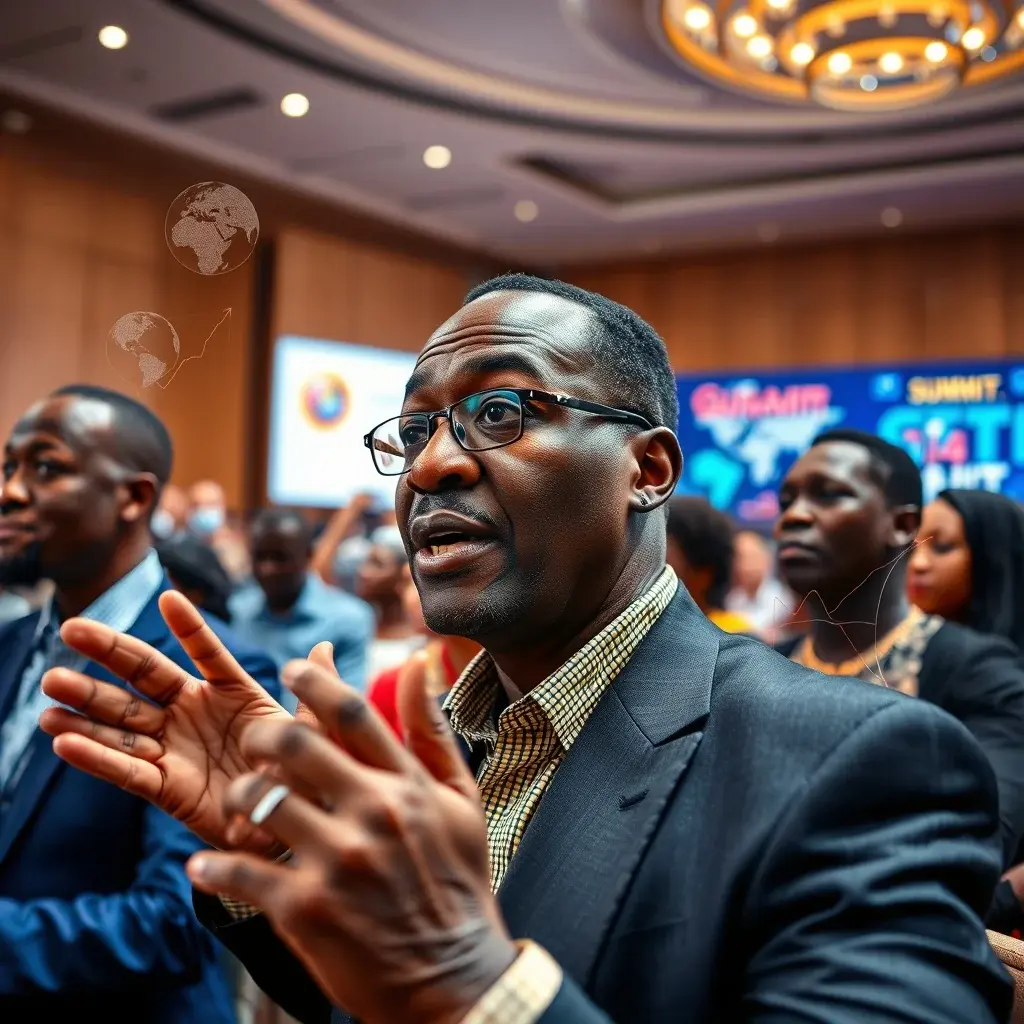
Alex Apau Dadey, Executive Chairman of KGL Group, has urged Africa to shift its focus from inherent potential to the deliberate cultivation of globally competitive indigenous enterprises. Speaking at the 10th Ghana CEO Summit and Expo in Accra, themed “Raising African Champions: Leadership, Resilience and Industrial Scale—Lessons from Ghana’s Business Transformation,” Dadey argued that the continent’s economic future hinges on building enduring institutions and homegrown business champions, not solely on its vast natural resources or large population.
The Imperative for Indigenous Champions
For decades, Africa has been characterized by its immense potential, rich resources, and vibrant entrepreneurial spirit. However, Dadey contends that the time has come to move beyond mere promise and actively construct globally competitive enterprises that can transform local economies and elevate the continent’s standing on the world stage.
“There comes a defining moment in the journey of every nation and every continent when it must confront a fundamental question: Are we content with merely participating in the global economy, or are we prepared to build African institutions, enterprises, and business champions capable of competing globally while transforming our economies locally?” Dadey posed to the assembled business leaders and policymakers.
He emphasized that historical economic transformations have been consistently driven by robust indigenous enterprises and strong institutions, rather than solely by the exploitation of natural wealth. “The truth is, natural resources and population size do not transform nations. Potential alone has never transformed a nation. Institutions do. What Africa and Ghana must now produce intentionally and at scale are enduring institutions,” he stated.
From CEO to Business Champion
Drawing on nearly three decades of experience across diverse markets and economic cycles, Dadey highlighted the critical distinction between managing a company and transforming an economy. He asserted that while CEOs manage enterprises, it is business champions that drive profound economic change.
Dadey shared his personal journey, revealing his deliberate decision to return to Ghana after building a successful career in the United Kingdom for nearly 30 years. This move was fueled by his conviction that African-owned businesses could indeed establish world-class institutions.
“I returned to Ghana because I believed that African-owned enterprises could build world-class institutions powered by technology, governance, disciplined execution, and long-term strategic vision,” he explained. KGL Group, he noted, invested heavily in robust governance systems, cutting-edge technology, and strategic long-term planning, even within a challenging business environment.
KGL Group’s Model of Growth and Reinvestment
What began as a Ghanaian enterprise with an ambitious vision has, according to Dadey, evolved into a significant continental player. KGL Group now operates across more than 10 African markets, including Côte d’Ivoire, Nigeria, and Liberia, with ongoing expansion efforts into East Africa.
A key aspect of KGL’s strategy, Dadey emphasized, is reinvestment within the broader economic ecosystem to foster sustainable growth, moving beyond simply extracting value. Through its investment arm, KGL Capital, the group has channeled millions of dollars into startups, emerging businesses, and even struggling enterprises across Africa and beyond.
“Our journey reinforced a critical lesson. Building an African champion requires more than capital. It requires resilience, institutional discipline, and innovation. It requires governance credibility and technological adaptation. Above all, it requires long-term strategic thinking,” Dadey remarked.
Addressing Challenges and Advocating for Fair Treatment
Despite the successes of indigenous businesses, Dadey acknowledged persistent hurdles, including limited access to patient capital, regulatory complexities, and infrastructural deficits. He urged policymakers and regulators to adopt a balanced and consistent approach toward local enterprises, advocating for them to be recognized as national assets rather than viewed with suspicion as they scale.
“As an indigenous company begins to scale, scrutiny naturally intensifies, and rightly so. But in some instances, scrutiny evolves into suspicion. Scale begins to be viewed not as a national asset to be strengthened, but as something to be contained,” he observed.
Dadey stressed the non-negotiable importance of accountability for all businesses, but called for its consistent, predictable, proportionate, and institutionally mature application. He also advocated for equitable treatment between indigenous firms and foreign multinational corporations, noting that local companies often face more intense scrutiny despite their significant contributions to job creation, investment, and tax revenue.
As a testament to KGL Group’s commitment, Dadey revealed that one of its subsidiaries recently paid over $153 million in taxes, surpassing an earlier government commitment. “We will continue to support the system. We will be announcing another significant tax payment for a second company within the next month,” he added.
The Path Forward
Dadey concluded by calling for collaborative efforts among business leaders, policymakers, and investors to foster African enterprises capable of global competition and sustainable economic transformation. Africa’s next developmental phase, he posited, will be defined by its capacity to forge strong institutions, resilient businesses, and globally competitive champions that retain value on the continent and contribute meaningfully to national development.










Leave a Reply