
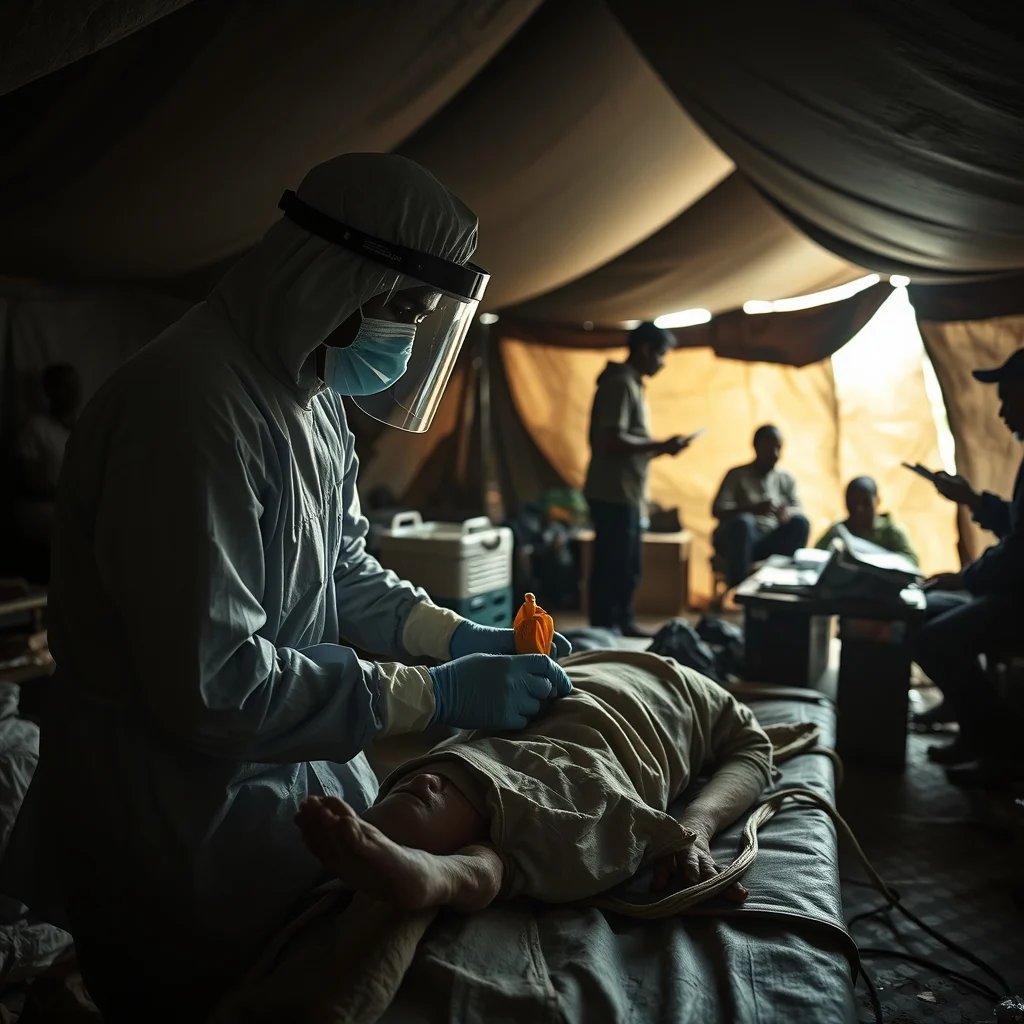
Kinshasa, DRC – World Health Organization (WHO) Director-General Tedros Adhanom Ghebreyesus concluded a visit to the Democratic Republic of Congo (DRC) on Monday, briefing President Felix Tshisekedi on the ongoing response to a persistent Ebola outbreak. The situation is compounded by warnings from an aid agency that the true scale of the epidemic may be significantly larger than official figures indicate, with health officials struggling to control a disease that has persisted undetected for weeks.
Context of a Challenging Outbreak
The current Ebola outbreak, already the third-largest on record, has presented significant challenges for health authorities. Arriving in the DRC last week, Dr. Tedros visited Ituri province, where the first cases were confirmed. He acknowledged both encouraging signs, such as certified recoveries, and the critical need to enhance testing and treatment capabilities while fostering trust among local communities.
The WHO and the Congolese government have jointly acknowledged the difficulties in detecting and isolating cases, tracing contacts, and ensuring safe burial practices. These challenges are exacerbated by the fact that Congolese officials possess limited experience with the specific Bundibugyo strain of the virus, which is responsible for the current outbreak and for which no approved vaccine currently exists.
Escalating Case Numbers and Underreporting Concerns
As of Sunday, the Congolese government reported 282 confirmed cases and 42 deaths. Data distributed by the communications ministry indicated 264 confirmed cases in Ituri province, 15 in North Kivu, and three in South Kivu. These figures followed a report from Friday by the WHO, which listed 906 suspected cases, including 223 suspected deaths under investigation.
However, the International Rescue Committee (IRC) issued a stark warning on Monday, suggesting the outbreak is likely far more extensive and advanced than official reports reflect. The aid agency posited that the virus might have been spreading for up to three months before the initial cases were officially identified in mid-May.
Rachel Howard, IRC’s senior technical emergency health adviser, highlighted the critical gap in contact tracing. “When four out of five contacts are not being traced, it becomes incredibly difficult to contain the outbreak or even understand its true scale,” Howard stated. The current rate means health authorities are struggling to identify and isolate new chains of transmission.
Impact of Conflict and International Support
The Ebola response is further complicated by ongoing armed conflict in the affected provinces. All three provinces—Ituri, North Kivu, and South Kivu—have been impacted by violence, leading to mass displacement of populations. This displacement makes it harder to track individuals, implement containment measures, and provide essential health services.
The region has seen recent violence, including an attack by Allied Democratic Forces (ADF) rebels in Beni, North Kivu, over the weekend, which resulted in the deaths of 15 civilians and one soldier, according to a government statement. Such security incidents disrupt health operations and can increase fear and mistrust within communities.
Ebola cases have also been confirmed in neighboring Uganda, underscoring the regional threat posed by the outbreak. International efforts are underway to bolster the response. Global health organization CEPI announced it would allocate approximately $60 million to Moderna and two other groups to accelerate the development of vaccines against the Bundibugyo strain, with the possibility of having candidate vaccines ready for trials within months.
Additionally, China announced on Monday that it would dispatch a team of medical specialists to the DRC to aid in the outbreak response, signaling a growing international commitment to combating the epidemic.
Implications and Future Outlook
Dr. Tedros emphasized the need for strong government leadership and community ownership to effectively combat the virus. “This Ebola can be stopped when the community owns the agenda and with strong government leadership,” he remarked after his meeting with President Tshisekedi. He also stressed the importance of strengthening the healthcare systems in the affected regions.
The significant underreporting suggested by the IRC, if accurate, implies that containment strategies may be insufficient and that resources must be rapidly scaled up. The lack of a specific vaccine for the Bundibugyo strain adds another layer of complexity, making vaccine development and deployment crucial next steps.
The ongoing conflict and displacement will continue to be major obstacles. Future efforts will likely focus on improving surveillance, enhancing community engagement to build trust, increasing testing and treatment capacity, and coordinating international support more effectively. The success of the response will hinge on addressing both the direct medical needs and the complex security and social factors at play.








Leave a Reply