
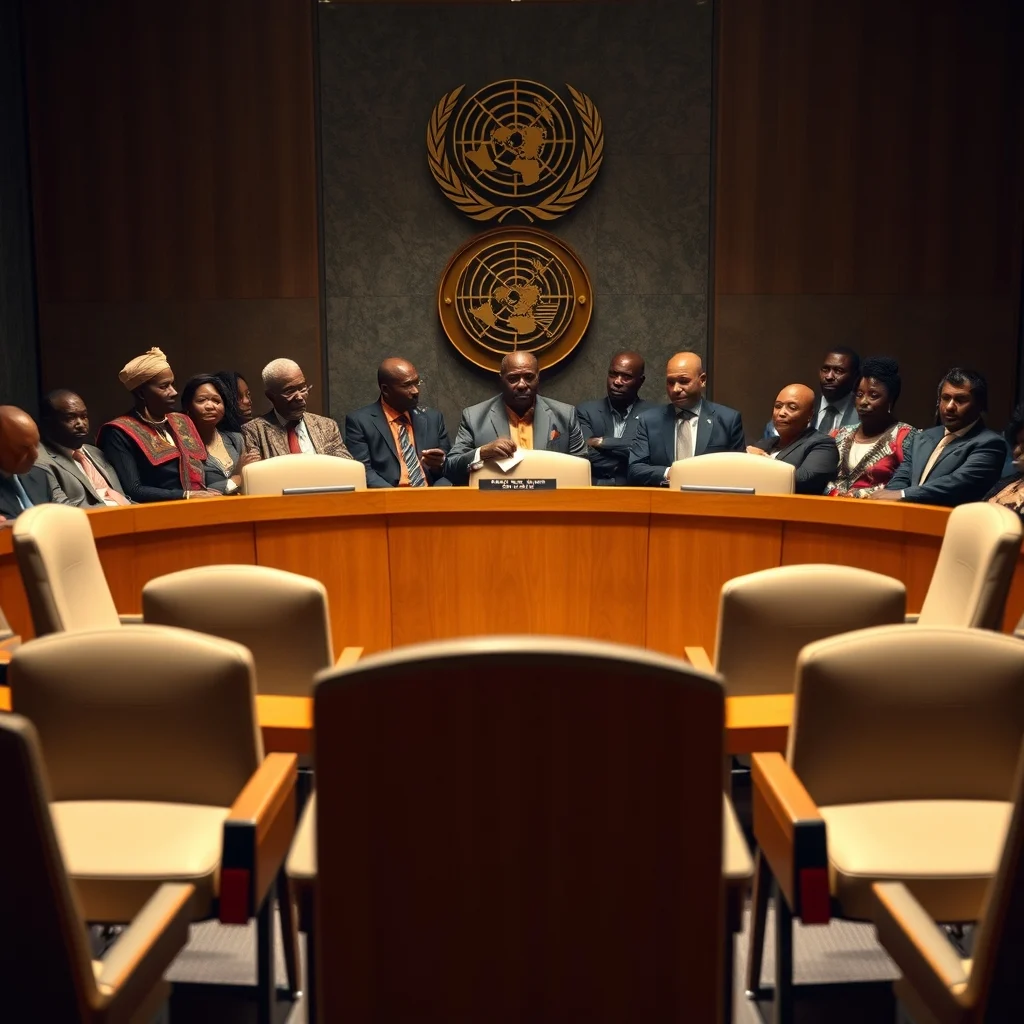
London – Ghanaian President John Mahama renewed his country’s strong advocacy for United Nations reform, specifically calling for permanent representation for Africa on the UN Security Council. He made this impassioned plea during a presentation at London’s Chatham House, framing the exclusion of the continent as a matter of global justice and a critical imbalance in the current international order.
Context: The Post-War Global Order
The United Nations was established in 1945 in the aftermath of World War II. Its foundational principles aimed to prevent future global conflicts and foster international cooperation. The UN Security Council, its most powerful organ, was designed to maintain international peace and security. Its permanent members, holding veto power, are China, France, Russia, the United Kingdom, and the United States – the major Allied powers of that era.
However, the global landscape has dramatically transformed since 1945. Africa, with its 54 member states, represents a significant portion of the UN’s membership and possesses a rapidly growing population. Despite this demographic and political weight, the continent lacks permanent representation on the Security Council, a situation many, including President Mahama, view as an anachronism and a fundamental inequity.
Mahama’s Call for a More Representative UN
President Mahama articulated Ghana’s perspective on “Navigating a Changing Global Order: Ghana’s Strategic Priorities” at Chatham House. He asserted that global governance institutions must evolve to reflect contemporary political realities, not the power dynamics of the mid-20th century.
He argued that the international system’s legitimacy is undermined when substantial parts of the global population are structurally underrepresented in key decision-making bodies. “Africa, with 54 member states at the United Nations and a population projected to constitute nearly one quarter of humanity by 2050, continues to be excluded from permanent representation on the United Nations Security Council,” Mahama stated.
The President labeled this exclusion as more than a procedural anomaly; he described it as a “historical injustice” and a “structural imbalance that undermines the credibility of the multilateral system itself.” Ghana, he affirmed, remains committed to comprehensive UN reform, including equitable African representation on the Security Council.
Erosion of Norms and Growing Fragmentation
Mahama acknowledged the foundational role of the post-1945 international order in establishing norms like sovereign equality and peaceful dispute resolution, which were crucial for many newly independent nations. However, he expressed concern over the current state of international relations.
“Today, however, many of these norms are on the street,” he observed. The President pointed to an increasing “selective application of international law,” the “erosion of multilateral consensus,” and a growing tendency for “strategic competition to take precedence over collective responsibility.”
He highlighted ongoing conflicts that are testing the international system’s credibility and exposing the fragility of its institutions. Furthermore, he noted the unmet climate financing commitments and contracting development assistance, indicating a strain on global cooperation.
Ghana’s Strategic Priorities in a Shifting World
The President characterized the contemporary world as increasingly technologically interconnected yet politically fragmented. For nations in the Global South, the central question is not if the international order is changing, but how to navigate this transition effectively.
Ghana’s strategy, according to Mahama, involves “purposeful engagement” rather than retreat or passivity. The nation’s response is anchored in four broad strategic priorities: reforming global governance, leading African integration, building balanced and mutually beneficial partnerships, and strengthening sovereign agency over its national development trajectory.
Implications for Global Governance and Africa
President Mahama’s call underscores a growing sentiment among African nations and other developing countries for a more inclusive and equitable global governance architecture. The demand for a permanent African seat on the UN Security Council is not new, but its reiteration by a head of state at a prominent international forum highlights its continued relevance and urgency.
The implications are significant. A reformed Security Council with African permanent representation could lead to more balanced global security decision-making, better addressing issues that disproportionately affect the continent. It would also represent a crucial step towards rectifying historical imbalances and enhancing the legitimacy of the UN in the eyes of a vast portion of its membership.
As global power dynamics continue to shift and new challenges emerge, the debate over UN reform is likely to intensify. Observers will be watching closely to see if this renewed advocacy gains further traction and translates into concrete steps towards a more representative and effective United Nations, particularly in how Africa’s voice is heard and incorporated into global decision-making processes.

Leave a Reply