
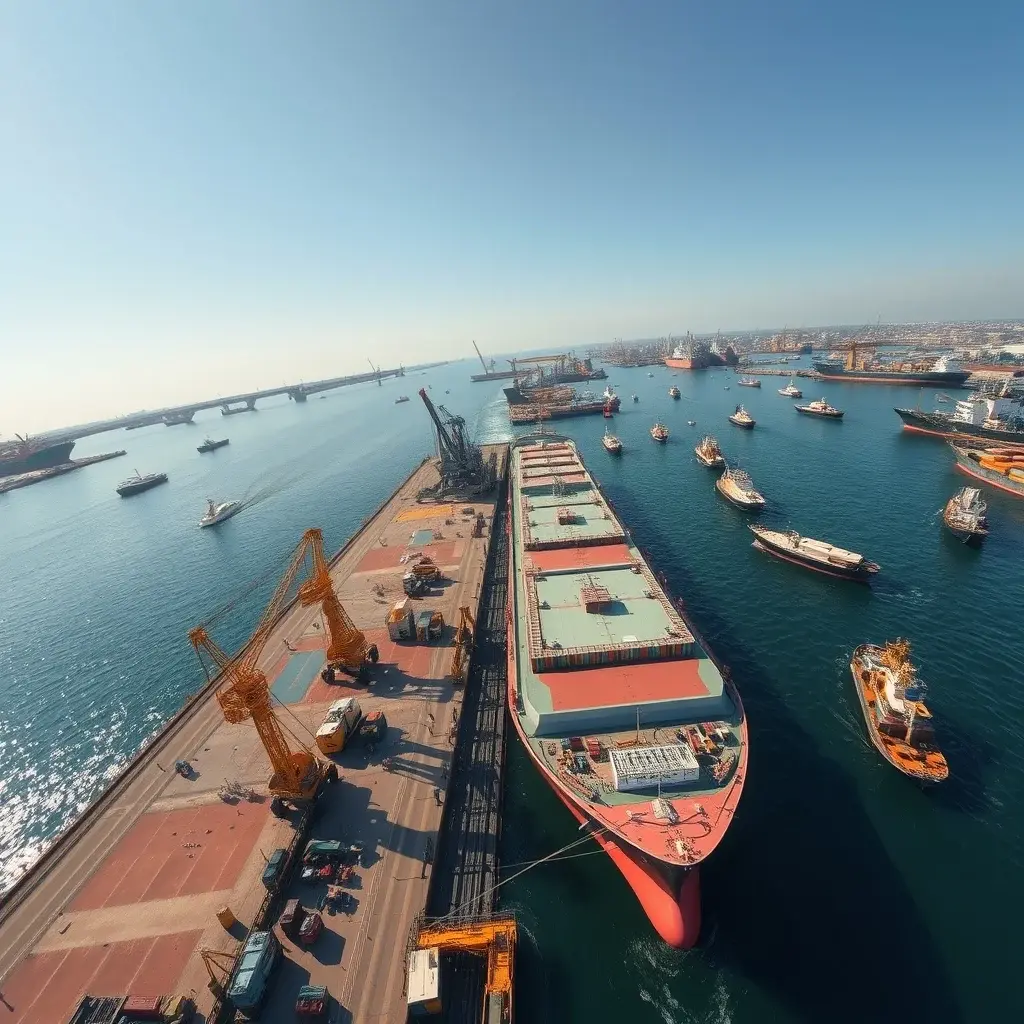
Ghana’s downstream petroleum sector, a cornerstone of the national economy, faces a critical juncture with the urgent need to fast-track the new mooring system project at Tema. This vital infrastructure upgrade is essential to bolster energy security, enhance operational efficiency, reduce logistics costs, and maintain Ghana’s competitive edge in the West African petroleum market. The decision by the Government of Ghana to proceed with this project addresses growing petroleum demand, increased reliance on imports due to domestic refinery limitations, and the vulnerability of existing discharge systems to global supply chain disruptions.
Context: Rising Demand and Refining Challenges
Over the past two decades, Ghana has witnessed a substantial increase in petroleum consumption, driven by rapid urbanization, industrial growth, and expanding energy needs for transportation and thermal power generation. Compounding this demand is the reduced operational capacity of the Tema Oil Refinery (TOR), which has necessitated a greater reliance on imported refined petroleum products. This shift places immense pressure on Ghana’s marine discharge systems and logistics networks, primarily centered in Tema.
Currently, Ghana utilizes four main offshore discharge facilities: the Single Point Mooring (SPM), the Conventional Buoy Mooring (CBM), and the Tema and Takoradi Oil Jetties. The SPM handles crude oil, while the CBM is the primary facility for white products like gasoline and gasoil. However, the CBM has limitations, including a maximum tanker capacity of 50,000 DWT and an allowable draft of 12.2 meters. The Tema and Takoradi Oil Jetties are generally unable to accommodate larger vessels commonly used for regional petroleum deliveries, leaving the CBM as the critical, yet constrained, import point for gasoline and diesel.
Global Shifts and Infrastructure Vulnerabilities
Recent global geopolitical events, such as the Russia-Ukraine conflict and escalating tensions around the Strait of Hormuz, have starkly exposed the fragility of international petroleum supply chains. These disruptions underscore the importance of resilient energy infrastructure, including import facilities, supply chain redundancy, strategic storage, efficient marine logistics, and robust emergency response capabilities. For import-dependent nations like Ghana, these global vulnerabilities translate directly into national security risks.
Congestion and Risks at the CBM
A persistent challenge within Ghana’s downstream petroleum sector is congestion at the Conventional Buoy Mooring (CBM). The increasing volume of imports, coupled with the CBM’s limited discharge capacity, leads to significant vessel-scheduling issues and extended waiting times. To manage this, the National Petroleum Authority (NPA) implemented a laycan scheduling system for Bulk Import, Distribution, and Export Companies (BIDECs).
While this system helps maintain minimum national stock levels, it creates a critical national security risk. A prolonged technical failure, marine incident, or operational shutdown at the CBM could severely disrupt the national fuel supply in a very short period, highlighting the urgent need for alternative discharge infrastructure.
The Critical Importance of a New Mooring System
The construction of a second mooring system for discharging gasoline and gasoil in Tema is paramount for improving national fuel supply security. Relying heavily on a single major CBM system creates a dangerous single point of failure. Potential operational risks include mechanical failures, damage to marine hoses, pipeline integrity issues, fire outbreaks, vessel collisions, severe weather, maintenance shutdowns, and maritime security threats. Infrastructure redundancy, a fundamental principle in petroleum logistics, is essential to ensure continuity of supply. A second mooring system would provide a crucial alternative discharge route during emergencies or operational interruptions.
Furthermore, an additional mooring system would significantly reduce vessel waiting times and associated demurrage costs. These costs, incurred when vessels exceed agreed discharge timelines, are eventually factored into the overall cost of fuel distribution. By improving vessel turnaround time, increasing discharge throughput, and enhancing flexibility, a new system would reduce operational bottlenecks and improve supply reliability.
Strategic Implications for Ghana’s Economy
Beyond immediate operational benefits, the new mooring system aligns with Ghana’s broader vision to become a stronger petroleum and logistics hub in West Africa. Achieving this ambition requires substantial investment in import and marine discharge infrastructure. Efficient discharge systems, modern port facilities, adequate storage, and reliable evacuation systems are critical for attracting regional trade, bunkering services, and distribution activities. The proposed project is, therefore, a strategic economic infrastructure investment.
Moreover, a resilient petroleum import infrastructure directly supports the reliability of Ghana’s thermal power generation, which still relies on liquid fuels during gas supply constraints. Energy infrastructure planning must acknowledge the interdependence between fuel logistics and electricity security. A stable fuel supply is also fundamental for supporting industrialization and economic growth, as mining, manufacturing, and transportation sectors depend on consistent access to petroleum products.
National Security Imperative
Petroleum products are strategic national assets. Prolonged fuel shortages can quickly escalate into broader economic and social instability, affecting transportation, food distribution, emergency services, industrial productivity, and public confidence, while also driving inflation. Many nations classify petroleum import infrastructure as critical national security infrastructure, and Ghana must adopt a similar strategic mindset. The ability to maintain an uninterrupted fuel supply during global crises is a key indicator of national resilience.
Fast-Tracking the Project
Large strategic infrastructure projects in Ghana often face delays due to financing constraints, procurement bottlenecks, institutional disagreements, legal disputes, regulatory hurdles, and political transitions. The proposed mooring system project must circumvent these traditional obstacles. Collaboration among government bodies, regulators, investors, bulk importers, terminal operators, and all relevant stakeholders is crucial to accelerate the process. Delays in developing such critical petroleum infrastructure carry significant long-term national costs.
The proposed new mooring system at Tema represents more than just an infrastructure upgrade; it is a vital national investment directly impacting Ghana’s energy security, economic resilience, industrial growth, and national stability. In the current global energy landscape, countries that fail to invest in resilient petroleum infrastructure expose themselves to severe supply vulnerabilities. Ghana’s continued dependence on limited discharge infrastructure amid rising demand is unsustainable. The decision to construct this mooring system is both necessary and forward-looking, aligning with national development goals and enhancing regional competitiveness. This project must now transition from policy discussion to a fully executed national priority, as Ghana’s future energy security may depend on its swift completion.










Leave a Reply