
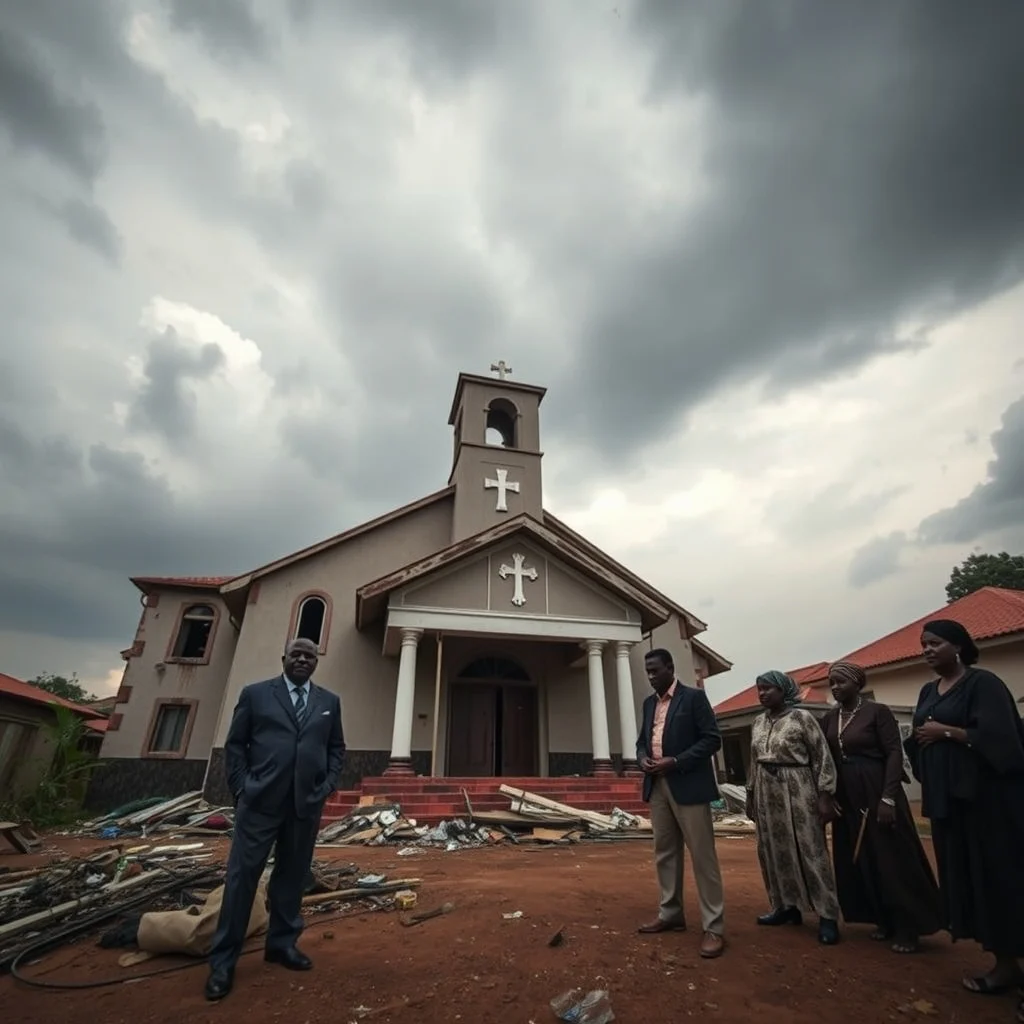
A Nigerian court has sentenced four men to death for their roles in the June 2022 attack on St Francis Catholic Church in Owo, Ondo State, which claimed the lives of 41 worshippers and injured over 100. The sentencing, handed down by a court in Abuja, also included 20-year prison terms for the men for belonging to a terrorist group. Presidential assent is required for any death sentence execution in Nigeria, and the country has not carried out executions in several years.
Context of the Attack
The brutal attack occurred during a Pentecost service, sending shockwaves across Nigeria and highlighting the nation’s escalating security challenges. The perpetrators opened fire on the congregation and detonated explosives, causing widespread devastation.
Trial and Verdict
Justice Emeka Nwite presided over the high-profile trial, which commenced in August 2025 with an order for accelerated hearing. The judge stated that the evidence presented was robust and remained uncontradicted during cross-examination. The prosecution successfully proved their case beyond reasonable doubt, presenting witnesses who identified some of the defendants as attackers.
The nine counts against the convicted men included joining a terror group, and planning and executing the killings. One witness, who lost a leg and an eye due to a dynamite explosion, testified during the proceedings.
Sentencing and Acquittal
The four defendants – Idris Abdulmalik Omeiza, Al Qasim Idris, Jamiu Abdulmalik, and Abdulhaleem Idris – were found guilty on all nine counts. A fifth defendant, Momoh Otuho Abubakar, was discharged and acquitted due to insufficient evidence. Abubakar had been accused of financing the attack by receiving and disbursing funds, but he denied these allegations, claiming the money was from his legitimate farming and cooperative society businesses.
The defense lawyer for the convicted men announced their intention to appeal the sentences. During the trial, the defendants claimed they were subjected to torture, including beatings and electric shocks.
Broader Security Concerns
The Owo church massacre is one of many attacks that have plagued Nigeria, with churches across the country becoming targets amid rising insecurity. These incidents have fueled international concern, with some US political figures accusing Nigeria of failing to protect its Christian population from jihadist violence. However, organizations monitoring political violence in Nigeria indicate that Muslims constitute the majority of victims of these extremist groups.
The Nigerian government has consistently denied claims of systematic persecution of Christians and maintains that it is working to combat all forms of terrorism and insecurity affecting all citizens.
Implications and Future Outlook
The sentencing marks a significant legal development in the pursuit of justice for the Owo attack victims. However, the conviction and sentencing of these four individuals do not resolve the broader issue of insecurity and terrorism plaguing Nigeria. The ongoing appeals process and the requirement for presidential assent for the death sentences mean the final outcome for the convicted men remains uncertain.
The case underscores the persistent threat posed by extremist groups and the complex challenges faced by the Nigerian authorities in ensuring the safety and security of all its citizens. Attention will continue to focus on the government’s efforts to combat terrorism, protect religious sites, and address the root causes of violence across the country. The effectiveness of Nigeria’s judicial system in handling such high-profile terrorism cases and the potential for future attacks will be critical to watch.










Leave a Reply