
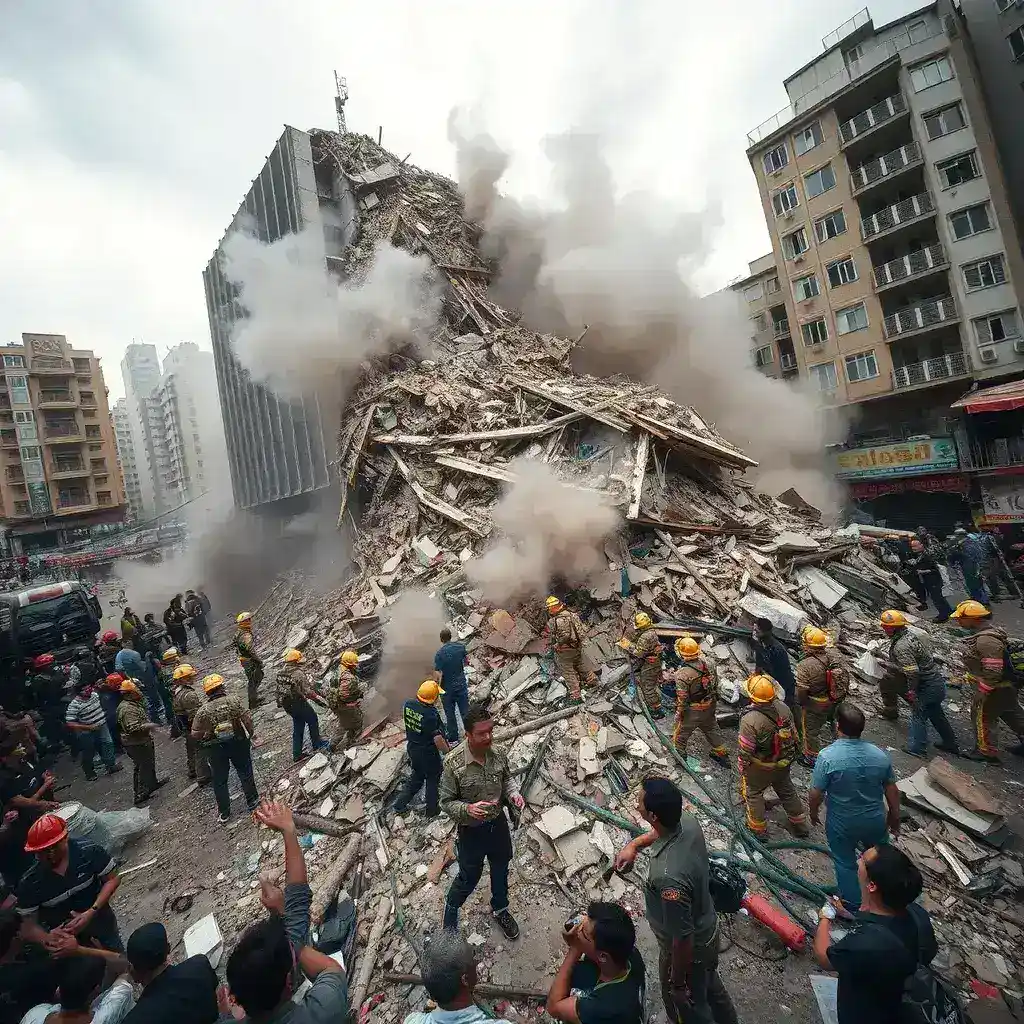
Multiple individuals are feared trapped following the collapse of a storey building at Adenta New Site on Wednesday. Emergency services, including the Ghana National Fire Service (GNFS), are on-site managing rescue operations, with local residents also actively participating in efforts to free those caught beneath the rubble.
Rescue Operations Intensify
The incident, which occurred on Wednesday, June 3, 2026, has drawn immediate attention from emergency responders. Personnel from the Ghana National Fire Service (GNFS) were dispatched swiftly to the scene. Their primary objective is to conduct a thorough search and rescue operation, aiming to extract any survivors from the debris of the collapsed structure.
Eyewitness accounts and initial reports suggest that several people may have been inside the building at the time of its collapse. The exact number of individuals trapped remains unconfirmed as rescue efforts continue. The gravity of the situation was amplified by the immediate arrival of residents and bystanders who, in a display of community solidarity, began assisting in the rescue attempts even before the arrival of official emergency teams.
Community Assistance and Challenges
The involvement of local residents highlights the urgency and concern surrounding the collapse. Many are working alongside emergency personnel, offering assistance in clearing debris and searching for signs of life. This collaborative effort is crucial in the initial stages of such disasters, often speeding up the process of reaching potential victims.
However, the rescue operation faces inherent challenges. The stability of the remaining structure poses a significant risk to both the trapped individuals and the rescuers. Experts often point out that the uncontrolled removal of debris can lead to further collapse, complicating rescue efforts and increasing the danger.
Context of Building Safety
Building collapses in urban areas, while not always frequent, often raise questions about construction standards, adherence to building codes, and the integrity of materials used. While the specific cause of the Adenta New Site collapse is yet to be determined, investigations will likely focus on structural integrity, potential construction flaws, or unforeseen environmental factors.
Ghana, like many rapidly developing nations, experiences significant construction activity. Ensuring that all buildings, from residential to commercial, meet stringent safety regulations is paramount to preventing such tragedies. Regulatory bodies and municipal authorities play a critical role in approving building plans, conducting inspections, and enforcing safety standards throughout the construction process.
Data and Expert Insights
According to data from the National Disaster Management Organisation (NADMO) in Ghana, building collapses, though less common than other disasters, can have devastating consequences. Structural engineers emphasize the importance of regular structural integrity assessments, especially for older buildings, and the need for proper site supervision during new construction projects.
Dr. Kwabena Mensah, a structural engineer, previously commented on similar incidents, stating, “The integrity of a building relies on a combination of sound design, quality materials, and meticulous execution. Any lapse in these areas can lead to catastrophic failures.” He further stressed that local authorities must rigorously enforce building permits and zoning laws to mitigate risks.
Implications for the Community and Industry
The immediate implication of this event is the urgent need for successful rescue operations and support for any injured survivors. The community of Adenta New Site will undoubtedly be deeply affected by this incident.
In the longer term, this collapse could prompt a review of building safety regulations and enforcement within the Greater Accra Region and potentially across Ghana. Increased scrutiny on construction practices, material quality, and adherence to planning laws may follow. Developers and construction firms will likely face heightened pressure to ensure compliance with all safety standards to prevent future occurrences.
What to watch next will be the outcome of the rescue efforts, the official determination of the cause of the collapse, and any subsequent regulatory actions or policy changes aimed at enhancing building safety standards in the region.










Leave a Reply