
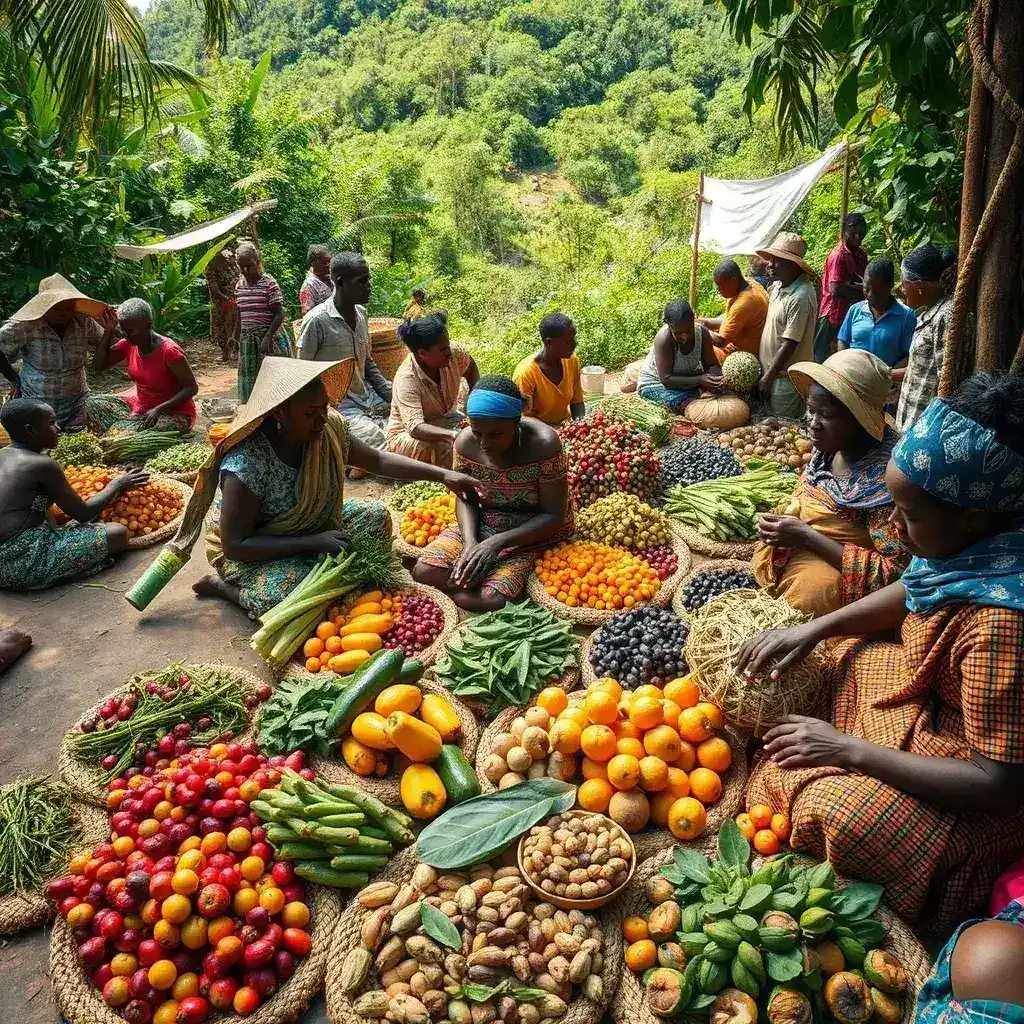
Traditional and indigenous knowledge systems are vital for protecting Africa’s forests, bolstering food security, and sustaining rural livelihoods, according to new research from the African Forest Forum (AFF). The study, supported by the Swedish International Development Cooperation Agency, investigated how communities in three major African biodiversity hotspots utilize, manage, and conserve forest and tree-based food species that have nourished generations.
Researchers conducted country-specific studies in Benin, Ethiopia, and South Africa, focusing on the Guinean Forests of West Africa, the Horn of Africa, and the Maputaland-Pondoland-Albany biodiversity hotspots. These regions are critical for biodiversity and are home to communities deeply reliant on forest resources.
The findings underscore that indigenous knowledge remains central to identifying, protecting, and sustainably harvesting forest foods. These foods are essential for household nutrition, income generation, and the preservation of cultural traditions across these diverse landscapes.
Forest and tree-based food species frequently act as a crucial safety net for communities, especially during times of food scarcity. Beyond sustenance, many of these species also play significant roles in traditional medicine, cultural practices, and local economies, highlighting their multifaceted importance.
In Benin, communities rely on species like bush mango, black plum, African star apple, and African locust bean for food, medicine, and income. However, these vital resources are facing increasing threats from deforestation, land-use changes, overharvesting, and the erosion of traditional conservation systems.
Pastoralist communities in Ethiopia identified 25 edible fruit species, one edible leaf species, and one resin-producing species from forests and trees. The study indicates that drought, urban expansion, and population growth are intensifying pressure on these valuable natural resources.
South Africa’s biodiversity hotspot study documented approximately 115 edible wild forest-associated plant species, representing the first comprehensive inventory of its kind in the region. Wild fruits from trees and shrubs constituted nearly three-quarters of these documented edible species.
While these forest foods are not primary staple crops, they significantly contribute to dietary diversity and nutritional intake, particularly among rural populations and children, according to the research.
Forest Food Supplies Under Pressure
Despite their critical importance, the study revealed a decline in the availability of forest and tree-based foods across all three studied biodiversity hotspots. This decline is a growing concern for the communities dependent on these resources.
Researchers attributed this reduction to a combination of deforestation, climate-related pressures, habitat degradation, and unsustainable harvesting practices. These factors collectively impact the ecological balance and the availability of forest products.
In Benin, factors such as aging tree populations, poor natural regeneration, and agricultural expansion are major drivers of declining productivity. Traditional harvesting and processing methods, coupled with limited post-harvest technologies, also contribute to substantial losses, exacerbating the supply issue.
The demand for indigenous food products is rising, especially in urban centers like Cotonou and Porto-Novo. This growing urban demand leads to increased reliance on imports from neighboring countries, further straining local resources.
In Ethiopia, environmental degradation and climate stress have diminished the supply of wild edible forest products available in local markets. This reduction affects both household consumption and small-scale trade.
South Africa faces additional challenges, including habitat fragmentation, illegal logging, the proliferation of invasive species, and unsustainable harvesting. The study noted that over 70 percent of forest patches in the research area are smaller than 50 hectares, making them highly susceptible to environmental pressures.
Traditional Conservation Systems Still Matter
The research emphasizes the enduring significance of traditional management systems in conserving forest resources. These systems, honed over generations, offer valuable insights into sustainable practices.
In Benin, practices such as maintaining sacred forests, observing customary taboos, adhering to ritual restrictions, and employing lineage-based governance continue to support biodiversity conservation. Community-led initiatives have proven effective by integrating traditional institutions with modern management approaches.
Ethiopian customary rules, enforced by elders and religious leaders, play a role in discouraging the cutting of living trees and regulating harvesting practices. These traditional governance structures help maintain ecological balance.
South Africa’s indigenous ecological knowledge is deeply intertwined with cultural, medicinal, spiritual, and veterinary practices. However, the study warns that weakening traditional authority structures and a decline in knowledge transfer between generations threaten the long-term viability of these vital systems.
While the three countries have established policy and legal frameworks for sustainable forest management, the study identified a significant gap between policy intentions and actual implementation. This disconnect hinders effective conservation efforts.
Limited financing, weak institutional coordination, and inadequate local implementation mechanisms are cited as major obstacles preventing progress. Addressing these systemic issues is crucial for successful conservation.
South Africa possesses some of the most advanced policy frameworks supporting forest conservation and indigenous knowledge. Benin has advanced agroforestry, community-based forest management, and ecosystem-based adaptation initiatives. Ethiopia has adopted numerous national and international policy commitments.
However, the research concludes that strengthened implementation is urgently needed across all three nations to realize the potential of these policies.
Opportunity for a Different Future
Researchers suggest there is substantial potential in combining indigenous knowledge with contemporary conservation strategies. This integration could lead to more effective and culturally relevant solutions.
Traditional practices such as the protection of sacred forests, selective harvesting, the use of agroforestry systems, and seasonal resource management often align closely with scientific principles of sustainability. These practices offer valuable lessons for modern conservation.
The report recommends several key actions: ecological restoration, enhanced community participation, improved market access for forest products, support for local cooperatives, investment in value addition for forest products, and greater recognition of indigenous knowledge within national conservation strategies.
Ultimately, the research highlights that forests and tree-based food systems remain indispensable for rural livelihoods, cultural heritage, and the resilience of ecosystems within Africa’s critical biodiversity hotspots. Their continued protection and sustainable management are paramount for the well-being of both people and the environment.









Leave a Reply