
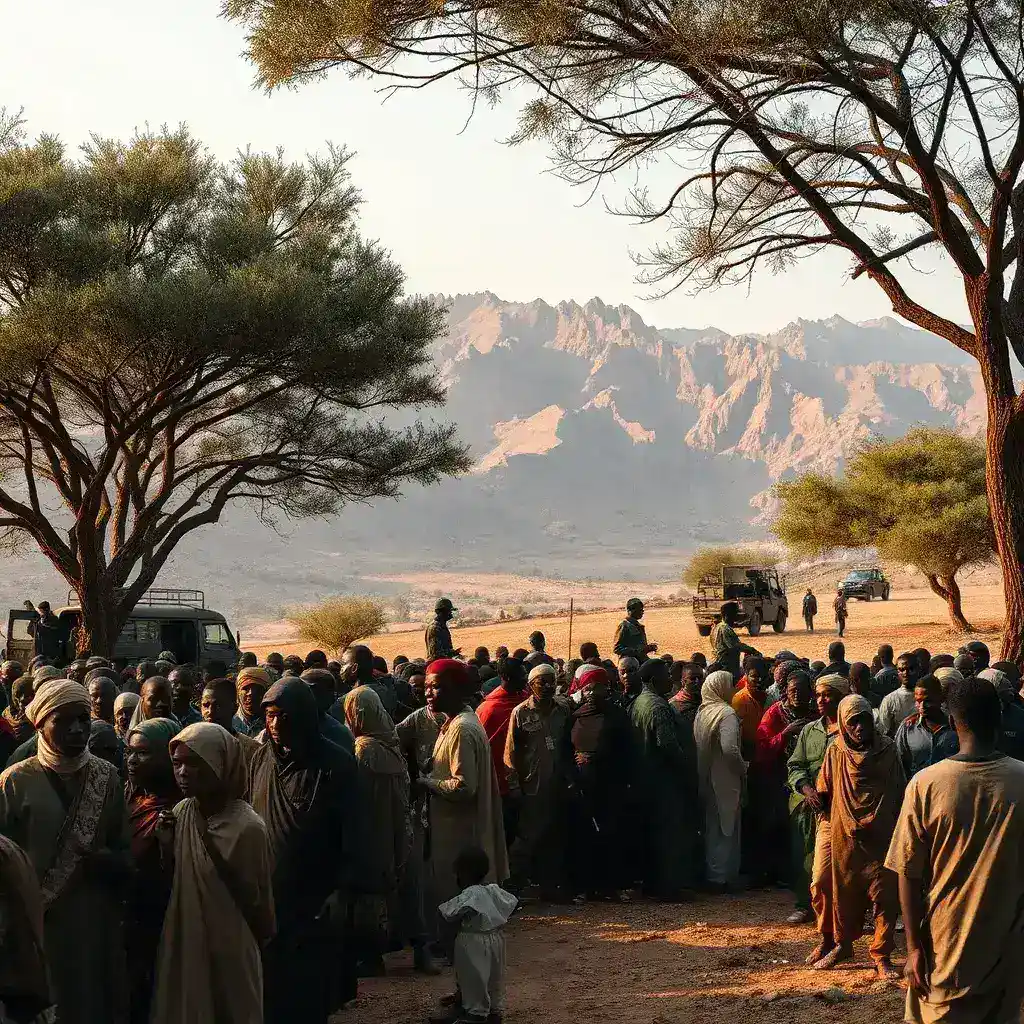
At least 360 individuals, abducted in March by Boko Haram jihadists from a predominantly Muslim community in Nigeria’s northeastern Borno state, have been liberated from a remote mountain hideout. The exact circumstances of their release remain a point of contention between the Nigerian military and local community groups.
Conflicting Narratives of Rescue
The Nigerian Army asserts it executed an extensive, intelligence-led operation, meticulously planned over weeks, which reportedly caught the Islamist militants off guard. Military spokesperson Lt-Col Haruna M Sani described the assault on Boko Haram’s Mandara mountain stronghold, conducted “under cover of darkness,” as one of the military’s “most significant hostage rescue operations” in the region. He stated that the speed, precision, and overwhelming force of the advancing troops led many insurgents to flee, while others surrendered.
Conversely, a local organization, the Borno South Youth Initiative (Bosaya), claims to have mediated the unconditional release of the captives. Samaila Kaigama, president of Bosaya, told journalists that his group had been actively engaged in advocating for the hostages and had established communication channels with the militants. Kaigama expressed frustration, alleging that “government boys” were attempting to claim credit for their group’s efforts.
Context of Mass Abductions in Nigeria
Mass abductions for ransom have become a disturbingly common tactic in Nigeria, with groups like Boko Haram frequently targeting vulnerable populations. Boko Haram first gained international notoriety in 2014 for the mass kidnapping of over 200 schoolgirls from Chibok. This incident, and others like it, have spurred the proliferation of various groups that utilize kidnapping as a means to generate funds, often preying on “soft targets” such as schools, churches, mosques, and remote villages.
While Nigeria has laws prohibiting the payment of ransoms, analysts suggest that payments made by desperate families, intermediaries, or even state authorities often fuel these criminal enterprises. This cycle perpetuates the insecurity and encourages further abductions.
Details of the Operation and its Aftermath
The captives originate from the Ngoshe area, a community with a predominantly Muslim population situated near the border with Cameroon. In early March, Ngoshe was reportedly attacked by Boko Haram fighters while residents were observing the Ramadan fast. The military released videos and photographs showing the freed captives resting under trees after their ordeal.
Authorities confirmed that the rescued individuals are receiving medical attention. However, Daniel Bwala, a special adviser to President Bola Tinubu, shared on X that “sadly, two infants died due to exhaustion from prolonged captivity and harsh terrain.” The government has commended the troops for their efforts amidst ongoing criticism regarding the widespread insecurity in Nigeria.
Some reports indicated that a local government official was seen explaining to news outlets that authorities were working to secure the area to facilitate the return of the captives to their farms. Efforts are also reportedly underway to ensure the safe return of any individuals who may have escaped into Cameroon during the initial abduction.
Broader Security Landscape
Boko Haram initiated its insurgency in northern Nigeria in 2009 with the aim of imposing Islamic rule. While the group no longer controls the vast territories it once did, it, along with its splinter factions, remains an active and dangerous threat. Earlier this year, the United States deployed a contingent of soldiers to Nigeria to assist in training the armed forces and enhancing intelligence capabilities in their fight against escalating security challenges.
These challenges are multifaceted and interconnected, encompassing the Islamist insurgency, kidnapping for ransom, farmer-herder conflicts over land, and separatist unrest. In a related development last month, Nigeria and the U.S. announced the successful joint operation that resulted in the death of a senior Islamic State (IS) leader.
Implications and Future Outlook
The successful rescue, regardless of the precise method, offers a glimmer of hope for communities terrorized by extremist groups. However, the conflicting accounts highlight the complex dynamics and information control surrounding counter-insurgency operations in the region. The continued reliance on or alleged involvement of intermediaries in securing releases, even if indirectly, raises questions about the effectiveness of official anti-ransom policies.
Moving forward, the focus will likely remain on the long-term rehabilitation of the freed captives and the prosecution of those responsible. The government faces continued pressure to address the root causes of insecurity and to present a unified and transparent approach to combating the persistent threats posed by Boko Haram and other armed groups. The effectiveness of international partnerships in bolstering Nigeria’s security apparatus will also be closely watched.







Leave a Reply