
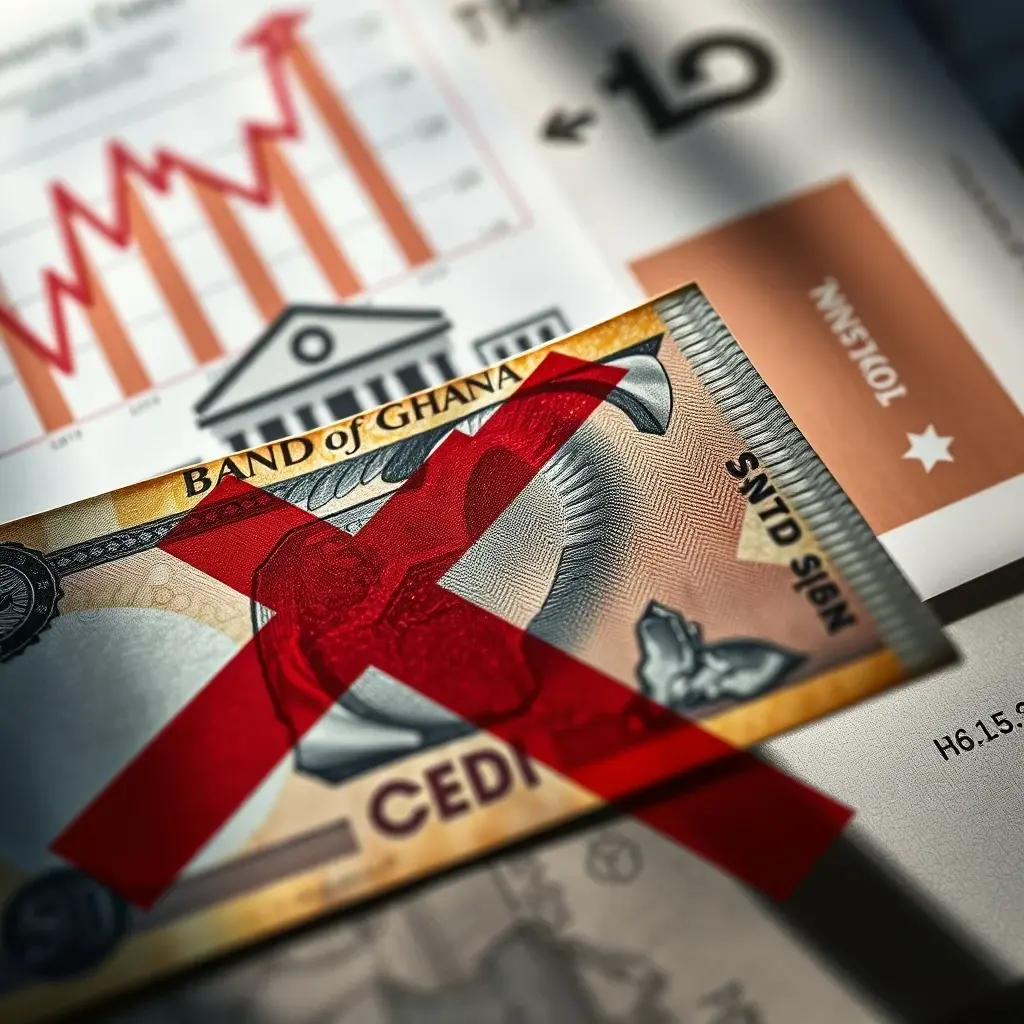
Accra, Ghana – Parliament’s Finance Committee member, Dr. Gideon Boako, has publicly questioned the substantial GH¢15.6 billion loss reported by the Bank of Ghana for 2025, arguing that achieving economic stability should not necessitate such a significant financial toll on the central bank. His remarks, made on JoyNews’ Newsfile program on Saturday, May 2, highlight a growing concern about the methods employed to stabilize Ghana’s economy, even as recent macroeconomic improvements are acknowledged.
Questioning the Cost of Stability
Dr. Boako acknowledged that Ghana has indeed seen a degree of macroeconomic stability recently. However, he strongly contested the price tag attached to it, stating, “You don’t need to incur huge losses before you can stabilise your economy.” This sentiment directly challenges the financial performance reported by the nation’s central bank.
The timing of Dr. Boako’s comments is significant, coming shortly after the Bank of Ghana’s disclosure of its substantial financial deficit. This loss has become a focal point for discussions surrounding fiscal responsibility and monetary policy effectiveness.
Historical Context of Economic Performance
Drawing on past performance, Dr. Boako pointed to the period between 2017 and 2019 as an example of successful economic management without crippling the central bank. During these years, Ghana experienced sustained economic growth, averaging around 7% annually, and maintained single-digit inflation for an extended period. Furthermore, the country achieved improved fiscal balances, including a primary balance surplus.
“There was stability, but we did not incur these huge losses,” Dr. Boako emphasized, contrasting this with the current situation. This historical perspective suggests that alternative, less costly strategies for economic stabilization may exist or have been previously employed successfully.
Acknowledging Crisis Interventions, Demanding Scrutiny
Dr. Boako did concede that the severe economic shocks experienced between 2020 and 2022 necessitated decisive policy actions, including aggressive measures to control inflation. He recognized that such interventions often come with a financial cost.
However, he insisted that the scale of the reported losses must be subjected to rigorous scrutiny. “Yes, there was a crisis, and measures had to be taken. But containing the crisis does not mean we should accept any level of cost without question,” he asserted.
Proportionate and Sustainable Costs
The core of Dr. Boako’s argument rests on the principle of proportionality. He maintained that while economic stabilization efforts inherently involve trade-offs, policymakers have a duty to ensure these costs are both proportionate to the problem being addressed and sustainable in the long term.
This perspective implies a need for greater transparency and accountability in how the Bank of Ghana manages its finances, particularly when implementing policies aimed at macroeconomic stability. The significant loss raises questions about the efficiency and effectiveness of the chosen policy instruments.
Implications for Ghana’s Economy
The substantial loss incurred by the Bank of Ghana has several potential implications. Firstly, it could impact the central bank’s ability to conduct future monetary policy, potentially limiting its tools or requiring more drastic measures. Secondly, such a large deficit may affect Ghana’s overall fiscal health, potentially leading to increased national debt or reduced public spending in other critical areas.
Economists and policymakers will be closely watching how the Bank of Ghana responds to these criticisms and whether adjustments will be made to its operational strategies. The debate underscores the critical balance between achieving economic stability and maintaining the financial integrity of the nation’s central bank. Future policy decisions will likely be scrutinized more intensely for their associated financial costs.







Leave a Reply