
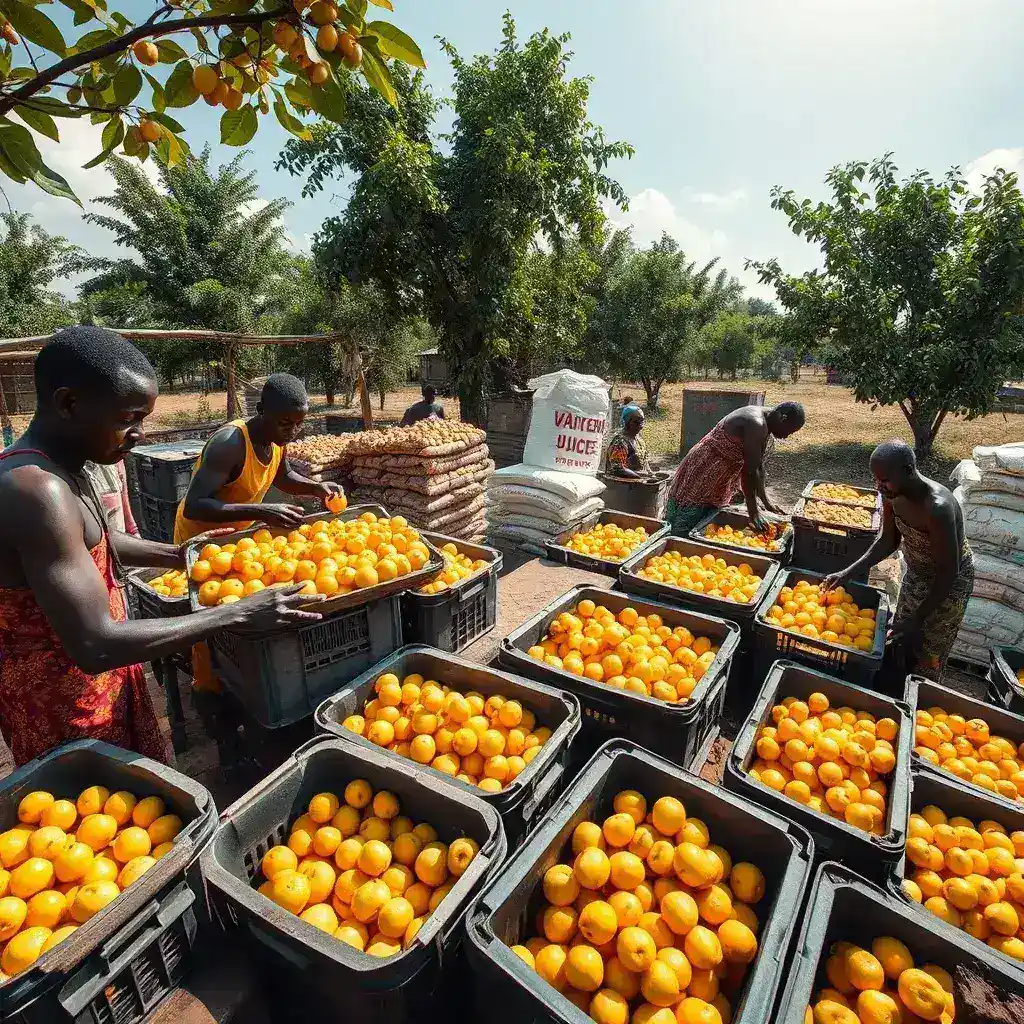
Accra, Ghana – Dr. Andy Okrah, Chief Executive Officer of the Tree Crops Development Authority (TCDA), is spearheading a national drive to unlock Ghana’s vast economic potential by investing in and valorizing the country’s abundant cashew apple production. Speaking at the Regional Cashew Apple Valorization Conference and Exhibition in Accra, Dr. Okrah emphasized that transforming the largely wasted cashew apple into value-added products is the critical next step for the nation’s burgeoning cashew sector.
Turning Waste into Wealth
Ghana has established itself as a major player in raw cashew nut production, yielding over 250,000 metric tonnes annually. However, this success is shadowed by a significant paradox: an estimated 2 million metric tonnes of cashew apples are produced each year, with the overwhelming majority going to waste.
“This represents not just a loss of raw material, but a loss of income for farmers and processors, jobs, and industrial opportunity,” Dr. Okrah stated, highlighting the economic implications of this untapped resource.
The cashew apple, which constitutes nearly 90 percent of the entire cashew fruit, possesses considerable commercial promise. It can be processed into a variety of products, including juices, wines, jams, ethanol, and animal feed, as well as serving as a raw material for industrial applications.
“The opportunity before us is clear: to transform Ghana’s cashew industry from one that is heavily reliant on raw nut exports into a diversified, value-added agro-industrial sector,” he urged.
A Personal Commitment to the Sector
Dr. Okrah shared a personal account that underscored the urgency of the issue. Shortly after assuming his role in February 2025, he visited the Bono and Bono East cashew belts, witnessing firsthand the substantial volumes of cashew apples rotting on farms.
“My greatest concern during that visit was to see large volumes of cashew apples lying waste on farmers’ fields, with many farmers having little or no knowledge of how to utilize them,” he recalled.
This experience, he noted, has made addressing the cashew apple waste a top priority. The Accra conference was positioned as a pivotal moment for mobilizing the necessary investments and practical solutions to harness this resource.
TCDA Policy Framework for Structured Development
To guide this transformation, the TCDA has introduced its Proposed Policy Framework for Cashew Apple Utilization in Ghana. This framework aims to ensure a coordinated and structured development of the cashew apple sub-sector.
“This framework is designed to guide structured development of the cashew apple sub-sector, ensuring that we move from fragmentation to coordination, and from waste to wealth,” Dr. Okrah explained.
The conference itself was designed to identify concrete investment opportunities, attract private capital, foster stronger partnerships, and advance commercialization pathways for cashew apple products.
Call for Collaborative Action
Dr. Okrah stressed that the success of this initiative hinges on collaboration, calling on stakeholders to move beyond discussion and focus on implementation.
“Government alone cannot do it. Development partners alone cannot do it. The private sector alone cannot do it. It will require strong partnerships, coordinated investments, and a shared commitment,” he emphasized.
The Deputy Minister for Trade, Sampson Ahi, speaking on behalf of Trade Minister Elizabeth Ofosu-Adjare, endorsed the initiative, asserting that cashew apples should be viewed as a valuable industrial raw material rather than mere farm waste.
The conference, organized by Deutsche Gesellschaft für Internationale Zusammenarbeit (GIZ) with support from TCDA and co-funding from the European Union, marks a significant step towards realizing Ghana’s ambition to become a leader in cashew apple valorization across Africa.
Implications and Future Outlook
The push to valorize cashew apples holds significant implications for Ghana. It promises increased income for cashew farmers, the creation of sustainable jobs, particularly for youth and women, and the promotion of rural industrialization. Furthermore, it can enhance food security and bolster Ghana’s competitive edge in regional and global agro-industrial markets.
Looking ahead, the focus will be on translating the commitments and plans discussed at the conference into tangible actions. Key areas to watch will include the mobilization of private sector investment, the effectiveness of the TCDA’s policy framework in guiding development, and the establishment of robust value chains for cashew apple products. The success of these efforts could redefine Ghana’s agricultural export landscape and unlock substantial economic benefits.










Leave a Reply