
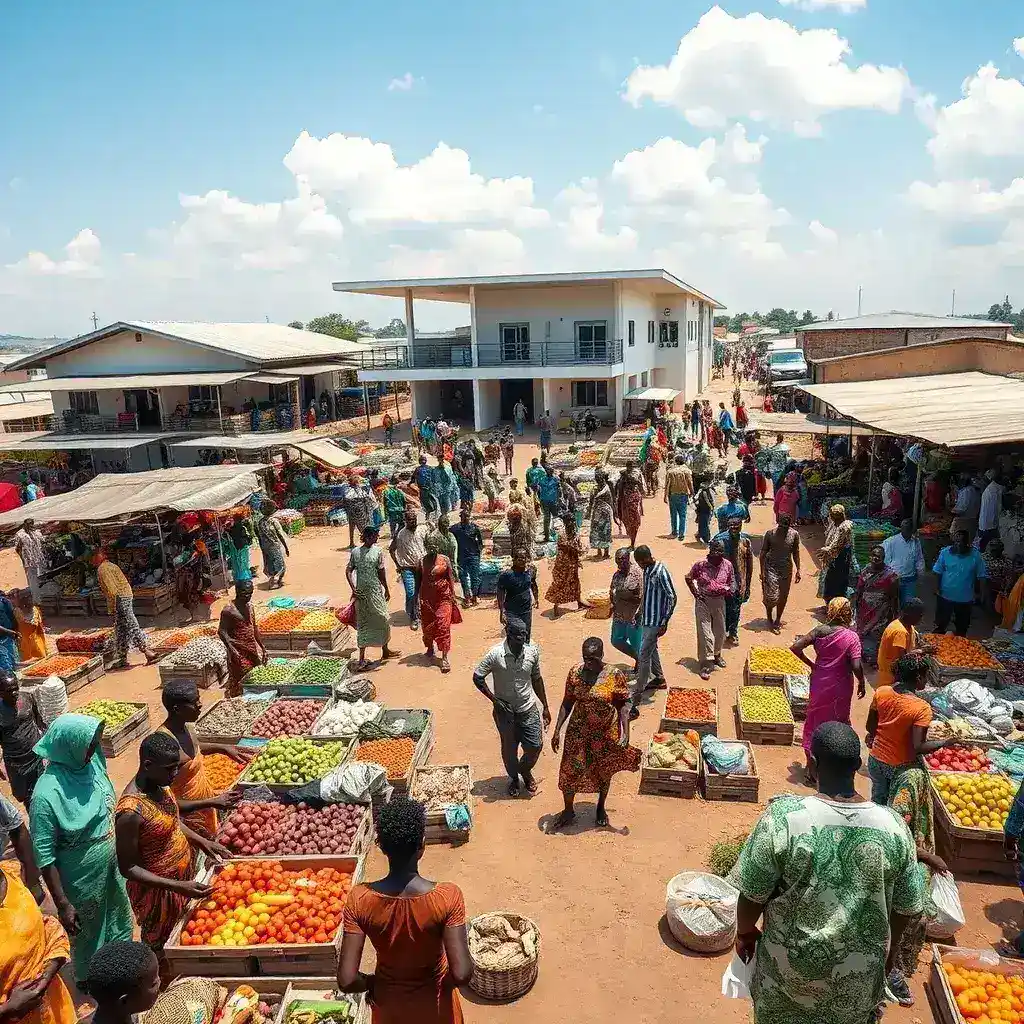
President John Mahama initiated the construction of a modern 24-hour economy model market in Asesewa on [Date of sod cutting, assuming it was recent], a project designed to revitalize the town’s historical standing as a significant commercial hub.
Revitalizing a Historic Trading Center
During a ceremony addressing local residents, President Mahama highlighted Asesewa’s rich past as a bustling market town. He acknowledged that decades of inadequate infrastructure had hampered its economic growth and diminished its influence.
“Historically, Asesewa has been a market town for many years, but over time, the infrastructure has not kept pace, affecting its growth,” the President stated, underscoring the need for modern facilities.
A National Initiative for Local Commerce
This development in Asesewa is part of a larger national strategy to establish 261 modern markets across various district capitals. The overarching goal of this initiative is to invigorate local economies, foster economic activity, and generate lasting employment opportunities.
The new 24-hour market is anticipated to significantly expand trading prospects for local vendors. It aims to improve working conditions and ultimately reposition Asesewa as a competitive and vibrant commercial destination.
Enhanced Trading Environment
The market’s design will incorporate features that support round-the-clock economic activity, a key element in transforming Asesewa into a modern trading hub. These enhancements are expected to attract more traders and buyers, thereby increasing the volume and diversity of goods and services available.
Improved infrastructure, including better storage facilities and access roads, is also a critical component of the project. These upgrades are essential for reducing post-harvest losses and ensuring the smooth flow of goods.
Economic Impact and Job Creation
Beyond revitalizing trade, the project is poised to create numerous jobs during its construction phase and upon completion. Local employment opportunities are expected to arise in various sectors, from construction and market management to retail and related services.
The 24-hour operational model is projected to stimulate economic activity at all hours, potentially increasing revenue for traders and contributing to the overall economic prosperity of the region. This sustained economic pulse could lead to further investment and development in Asesewa.
Broader Implications for Regional Trade
The successful implementation of the Asesewa market project could serve as a blueprint for other district capitals facing similar challenges. It demonstrates a commitment to decentralizing economic development and empowering local communities.
As the nation aims to diversify its economy and reduce reliance on a few major urban centers, such initiatives are crucial. They support the vision of a more balanced and inclusive economic landscape across all regions.
Looking Ahead
With construction underway, attention will now turn to the timely completion of the Asesewa 24-hour model market and its subsequent operational effectiveness. The long-term success will depend on continued support, effective management, and the active participation of the local trading community. The project’s impact on Asesewa’s economic trajectory and its potential to inspire similar developments nationwide will be closely watched.






Leave a Reply