
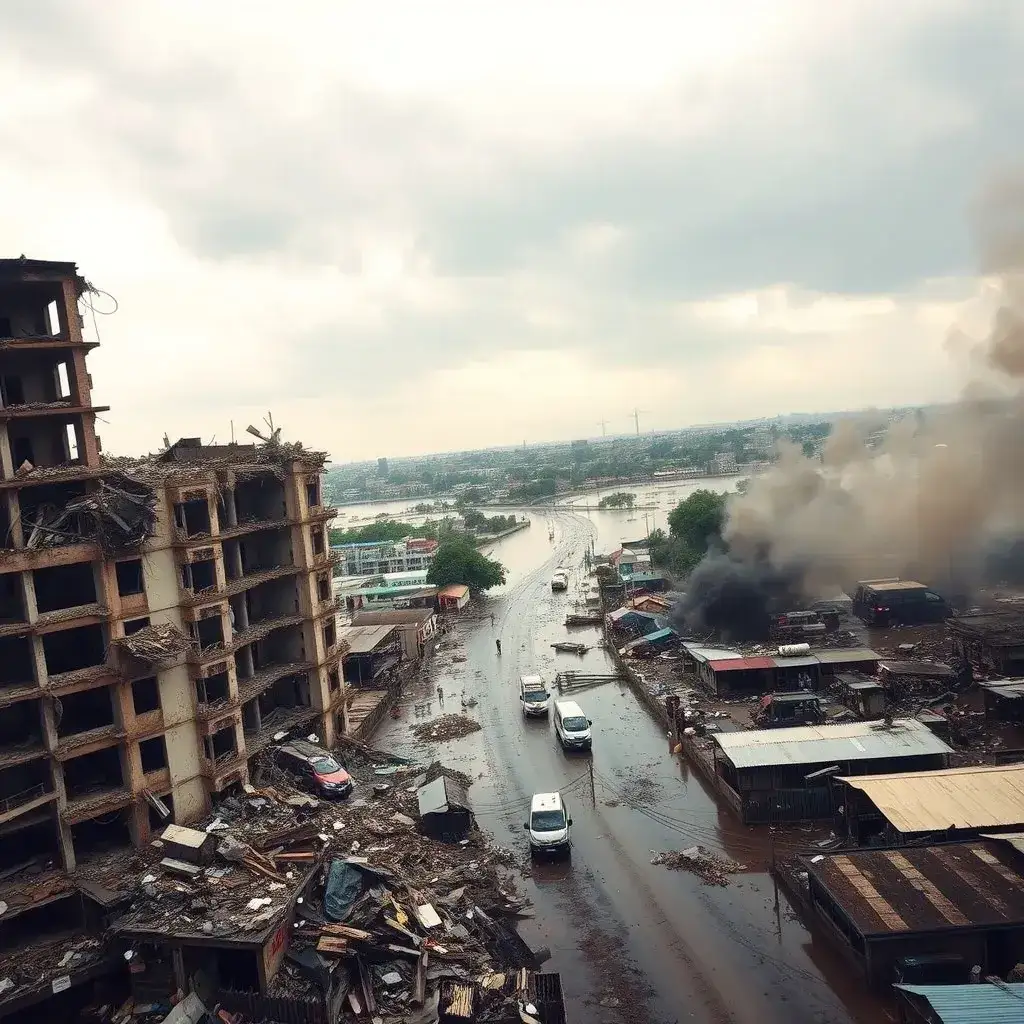
Greater Accra Regional Minister Linda Obenewaa Akweley Ocloo has ordered a comprehensive audit of all multi-storey buildings constructed since June 3, following a series of devastating incidents including a building collapse, a major fire, and widespread flooding in Accra.
The announcement, made on June 4, signals a decisive shift towards stricter enforcement of planning, building, and environmental regulations across the region.
Urgent Response to Recent Disasters
The recent string of disasters, including the collapse of a multi-storey building at Adenta New Site, a destructive fire in the Central Business District, and extensive flooding, have served as a stark wake-up call for regional authorities.
Minister Ocloo expressed deep condolences to the affected families and sympathised with those who suffered property losses.
“Accra will no longer be a sanctuary for indiscipline,” she declared, emphasising the urgent need for change.
Addressing Root Causes of Urban Decay
The Minister identified years of unauthorised construction, indiscriminate waste disposal, encroachment on vital waterways, and weak enforcement as significant contributors to the recurring disasters plaguing the capital.
She acknowledged that the failures are not solely on the public, admitting that lapses within some state institutions have also played a role in the current challenges.
“We must also acknowledge that lapses in oversight and enforcement within some public institutions have contributed to these challenges,” she stated.
Sweeping Regulatory and Enforcement Measures
In response, the Greater Accra Regional Coordinating Council (GARCC) will immediately launch a multi-agency audit of multi-storey developments. This audit will scrutinise buildings that are currently under construction or have been recently completed.
Buildings found to be in violation of approved permits, structural standards, or safety requirements will face stringent legal and administrative sanctions.
Furthermore, intensified enforcement operations will target unauthorised structures that obstruct waterways, drainage reservations, road reservations, green belts, and other public spaces.
The objective of these operations is to improve drainage systems, mitigate flood risks, and safeguard critical infrastructure.
Enforcement agencies have been directed to bolster compliance monitoring. The Regional Spatial Planning Committee will also enhance development control and oversight at the district level.
Focus on Sanitation and Public Reporting
Strengthening sanitation enforcement to curb indiscriminate waste disposal, a major contributor to flooding, is also a key priority.
The government plans to improve reporting mechanisms, enabling residents to easily report illegal developments, environmental violations, and suspected misconduct by public officials.
“The objective is clear: to build a safer, cleaner, more orderly and more resilient region where regulations are respected, and public safety is protected,” Minister Ocloo affirmed.
A Call for Collective Responsibility
The Minister urged all stakeholders, including residents, developers, landlords, traders, transport operators, traditional leaders, religious organisations, and public officials, to support the new measures.
“The future of Greater Accra depends on our collective commitment to discipline, responsibility and respect for the rule of law,” she concluded.
Investigations into the Adenta building collapse and the Central Business District fire outbreak are currently underway.









Leave a Reply