
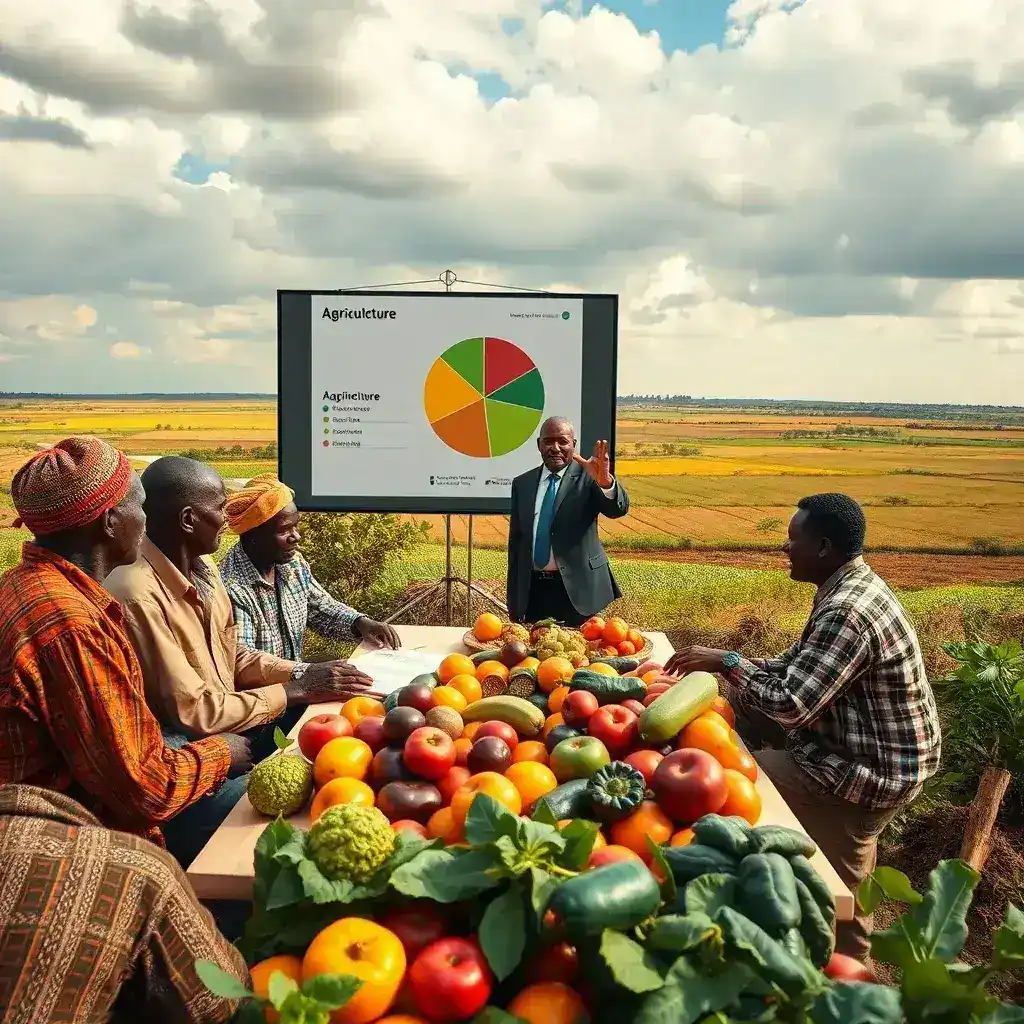
Accra, Ghana – Minister for Food and Agriculture Eric Opoku has sharply criticized the persistently low budgetary allocations to agriculture across Africa, urging governments to commit at least 10 percent of their annual national budgets to the sector. Speaking on Thursday, June 4, at the Inter-Parliamentary Conference on Family, Sovereignty, and Values, Opoku emphasized that inadequate funding is a major impediment to unlocking the continent’s agricultural potential and achieving food security and robust economic growth.
Longstanding Pledges, Weak Implementation
The call highlights a significant gap between continental commitments and on-the-ground realities. African governments originally pledged to allocate a minimum of 10 percent of their national budgets to agriculture and rural development under the Maputo Declaration of 2003, a commitment reaffirmed in the Kampala Declaration.
These declarations aimed to harness the continent’s vast agricultural resources to drive economic transformation. However, Minister Opoku pointed to a stark contrast between these promises and the current investment levels. Evidence suggests that many nations are falling far short of this target.
Alarmingly Low Investment Figures
The minister revealed that in some African countries, agriculture receives less than one percent of the national budget. Others allocate a mere two to three percent, with some as low as 0.6 percent.
Opoku described these figures as “grossly inadequate,” particularly given that agriculture is the primary employer for the majority of Africa’s workforce. This sector is also responsible for feeding the continent’s growing population and holds a critical key to industrialization, poverty reduction, and overall economic development.
Parliament’s Crucial Oversight Role
Minister Opoku placed a strong emphasis on the role of African parliaments in rectifying this situation. He called for parliamentarians to exert stronger oversight and ensure that governments honor their commitments to the agricultural sector.
“Parliaments have a constitutional responsibility to exercise oversight over public expenditure and government policy implementation,” Opoku stated. He urged lawmakers to hold the executive branch accountable for budgetary promises.
This accountability, he stressed, must ensure that promises made to citizens translate into concrete budgetary allocations and measurable development outcomes. Parliamentarians are tasked with scrutinizing national budgets meticulously.
They must “demand answers when agricultural allocations fall below agreed continental targets,” Opoku urged. This includes actively monitoring budget implementation and insisting that agriculture receives the necessary attention and resources to effectively drive national development agendas.
Implications for Food Security and Economic Growth
The persistent underfunding of agriculture has direct implications for food security across Africa. Insufficient investment can hinder the adoption of modern farming techniques, limit access to essential inputs like fertilizers and quality seeds, and impede the development of crucial infrastructure such as irrigation systems and storage facilities.
This, in turn, can lead to lower yields, increased reliance on food imports, and greater vulnerability to climate shocks. For economies heavily dependent on agriculture, this underinvestment also stifles job creation, limits rural income generation, and slows down the broader process of industrialization and poverty alleviation.
Looking Ahead: What to Watch Next
The minister’s strong statement signals a growing urgency to address the funding gap. Attention will now turn to whether African parliaments heed this call for increased oversight and actively challenge governments on their agricultural budget allocations. Observers will be watching for concrete policy changes and whether the 10 percent target, a long-standing continental goal, begins to be met across more nations. The success of initiatives aimed at boosting agricultural productivity and ensuring food security on the continent hinges significantly on increased and sustained financial commitment.










Leave a Reply