
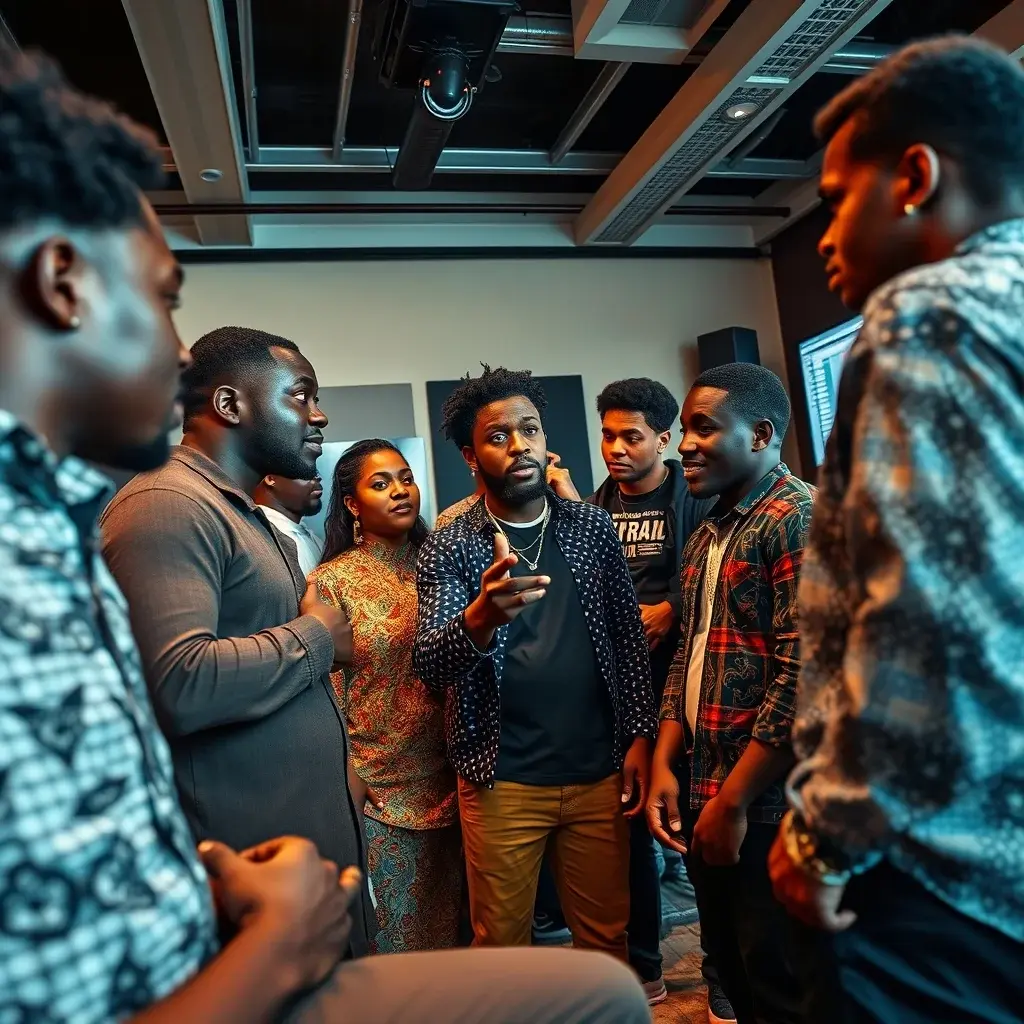
Accra, Ghana – Prominent Ghanaian rapper M.anifest ignited a significant industry debate on Thursday, May 23, 2024, by publicly rejecting the prevailing calls for ‘unity’ within Ghana’s music and creative sectors. Instead, he championed the necessity of cooperation, ethical conduct, and a robust sense of professionalism as the true drivers of industry advancement.
Context: The Recurring Call for Unity
The concept of unity among Ghanaian musicians and creatives has long been a recurring theme, often surfacing during periods of artistic friction, award show controversies, or discussions about the industry’s global standing. Stakeholders have frequently urged artistes to foster mutual support, believing it to be the cornerstone for enhancing the sector’s international competitiveness.
This debate is particularly timely, coinciding with heightened discussions about loyalty, collaboration, and rivalry. Recent developments, such as the public reconciliation between rival artists Shatta Wale and Sarkodie after years of tension, have amplified these conversations.
The renewed public friendship between Shatta Wale and Sarkodie has garnered considerable attention. However, it has also elicited varied reactions from within the industry. Notably, fellow artist Stonebwoy posted a cryptic social media message shortly after, which many interpreted as a veiled commentary on this reunion, fueling speculation about existing dynamics and perceived authenticity within different artist circles.
Adding another dimension to the discourse, Sarkodie, in a recent interview, suggested that close personal friendships are not a prerequisite for successful business collaborations within the creative arts ecosystem.
M.anifest’s Alternative Vision
In a post shared on the social media platform X, M.anifest articulated his stance, stating, “We DON’T need unity in our music/creative scene. Unity is a MYTH and a banner often waved by selfish people when they want everyone to rally behind them.” He elaborated on what he believes is truly needed: “What we need is cooperation, a modicum of ethical behavior, quality control, ball knowledge, as well as application of best practices creatively and in business.”
His statement challenges the long-held belief that a unified front is the singular solution to the industry’s persistent struggles. M.anifest’s perspective shifts the focus from an often-abstract notion of unity to tangible, actionable principles.
Industry Reactions and Data Points
M.anifest’s comments have spurred a lively exchange online. Supporters praise his emphasis on professionalism, ethical standards, and business acumen, viewing these as essential for sustainable growth. Conversely, some argue that a sense of collective solidarity, or unity, remains vital for the overall strength and advancement of the Ghanaian music industry.
Industry observers note that while high-profile collaborations can generate buzz, sustained industry growth often relies on structural improvements. Data from various African music markets, such as Nigeria’s Afrobeats phenomenon, often highlights the role of strong business frameworks, international partnerships, and consistent quality control in achieving global success, rather than solely relying on artist-level unity.
For instance, analyses of the growth of Afrobeats point to the strategic development of distribution channels and investment in production quality as key factors. While artist camaraderie plays a role, it is often complemented by these more systemic elements.
Implications for the Creative Landscape
M.anifest’s intervention prompts a critical re-evaluation of how the Ghanaian music industry defines and pursues progress. His emphasis on cooperation and best practices suggests a path forward that is less about emotional solidarity and more about operational efficiency and ethical governance.
This perspective could encourage a shift towards more structured industry bodies, clearer contractual agreements, and a greater focus on intellectual property rights. It also challenges artists and stakeholders to hold each other accountable for professional conduct and the quality of their output.
What to Watch Next
The debate M.anifest has initiated is likely to continue influencing discussions on industry governance and artist relations. Future developments to watch include whether this discourse leads to concrete proposals for industry reforms, how artists and industry bodies respond to the call for enhanced professionalism and ethical conduct, and whether a more pragmatic approach to industry advancement gains traction over the idealistic pursuit of unity.







Leave a Reply