
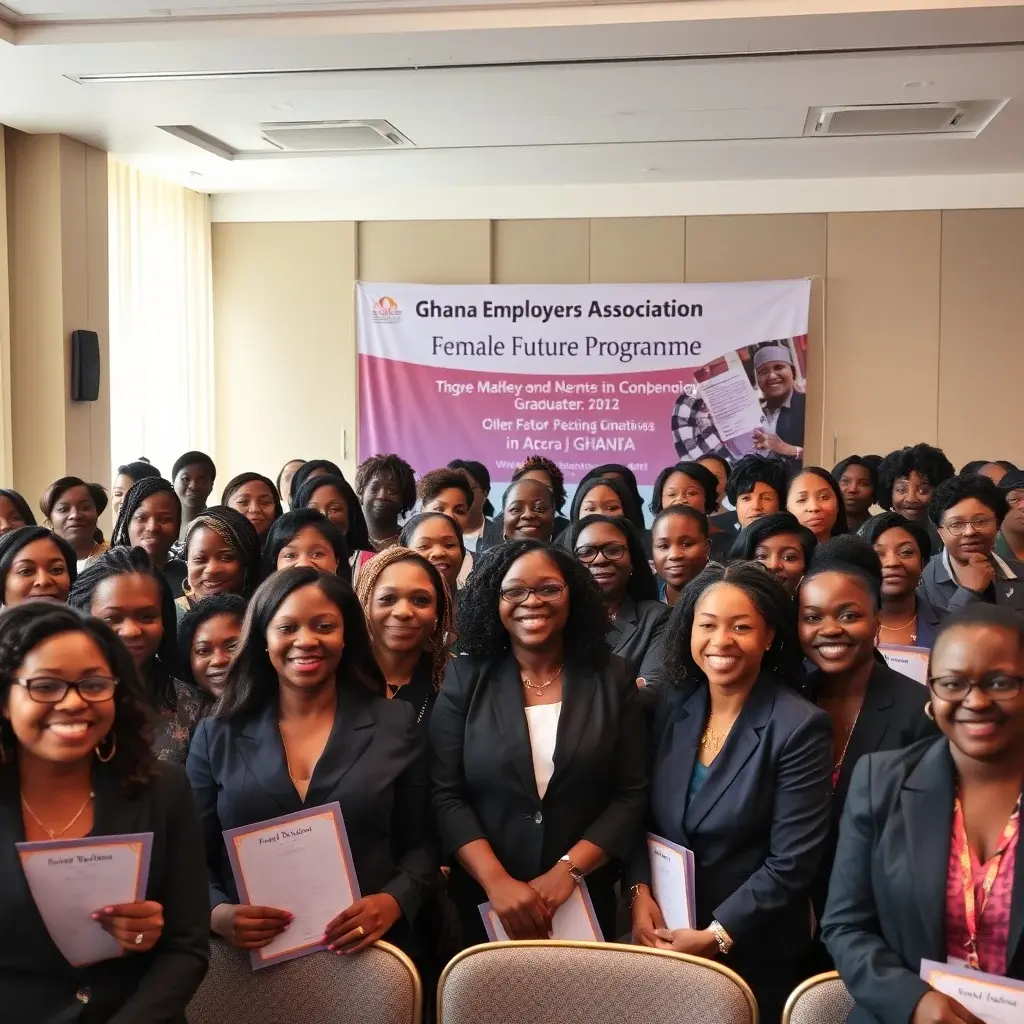
Accra, Ghana – The Ghana Employers Association (GEA) celebrated the graduation of 60 women from its prestigious Female Future Programme this week. The ceremony, held in Accra as part of a leadership conference, highlighted the GEA’s ongoing dedication to fostering women’s leadership and promoting inclusive development across Ghana’s private and public sectors.
Empowering Women for Leadership Roles
The graduates represent Cohorts 9 and 10 of the Female Future Programme. This initiative is specifically designed to equip women with essential leadership skills, provide valuable mentorship opportunities, and expand their professional networks.
Dr. Agnes Naa Momo Lartey, the Minister of Gender, Children and Social Protection, attended the event to congratulate the participants. She underscored the government’s commitment to advancing gender equality, aligning the programme’s goals with the National Gender Policy.
This policy aims to ensure equal access to opportunities, resources, and leadership positions for both women and men throughout the country. Dr. Lartey noted that the Female Future Programme has a proven track record of success.
Many past participants have advanced into significant leadership roles, with some securing coveted appointments to boards and committees. These achievements are seen as crucial steps towards building more inclusive institutions and strengthening national governance systems.
A Platform for Growth and Development
Dr. Emmanuel Adu-Sarkodee Afriyie, President of the GEA, praised the graduates for their perseverance and commitment. He described the Female Future Programme as a vital platform for cultivating a strong pipeline of competent female leaders.
These leaders are expected to contribute significantly to both organizational growth and the broader economic development of Ghana. Dr. Afriyie emphasized that modern leadership demands more than just strategic acumen.
It requires a strong foundation in ethical conduct, accountability, and transparency, as institutions are increasingly evaluated on their methods as much as their results. This reflects a growing global trend in corporate responsibility and governance.
The Evolving Nature of Leadership
The guest speaker, Ms. Salome Azevedo, Managing Director of Nestlé Ghana Limited, shared insights into contemporary leadership paradigms. She urged leaders to embrace inclusive approaches that empower individuals at all organizational levels to participate in decision-making processes.
Ms. Azevedo redefined leadership, moving beyond traditional notions of hierarchy and authority. She stressed that influence, trust, and the creation of supportive environments where individuals can thrive and innovate are now paramount.
She also called on organizations to actively dismantle structural barriers that hinder women’s full participation. According to Ms. Azevedo, inclusive workplaces are not only more equitable but also demonstrably more resilient and better equipped to achieve sustainable success.
Broader Implications for the Workforce
The success of the Female Future Programme signifies a broader shift in corporate and public sector thinking in Ghana. It acknowledges the untapped potential and critical contributions women can make to leadership and decision-making bodies.
By investing in women’s development, the GEA and its partners are working to address gender disparities in leadership positions, which remain a global challenge. The programme’s focus on practical skills, mentorship, and networking provides a comprehensive support system for aspiring female leaders.
The emphasis on inclusive leadership also suggests a move towards more collaborative and people-centered management styles. This approach is increasingly recognized as beneficial for employee morale, innovation, and overall organizational performance.
Looking Ahead
The graduation of these 60 women marks another milestone in the ongoing journey towards gender parity in leadership. The coming years will likely see continued efforts to expand such programmes and integrate their principles into wider organizational cultures. Observers will be watching to see how these newly empowered leaders translate their skills and networks into tangible progress within their respective fields and how their success inspires future cohorts.










Leave a Reply