
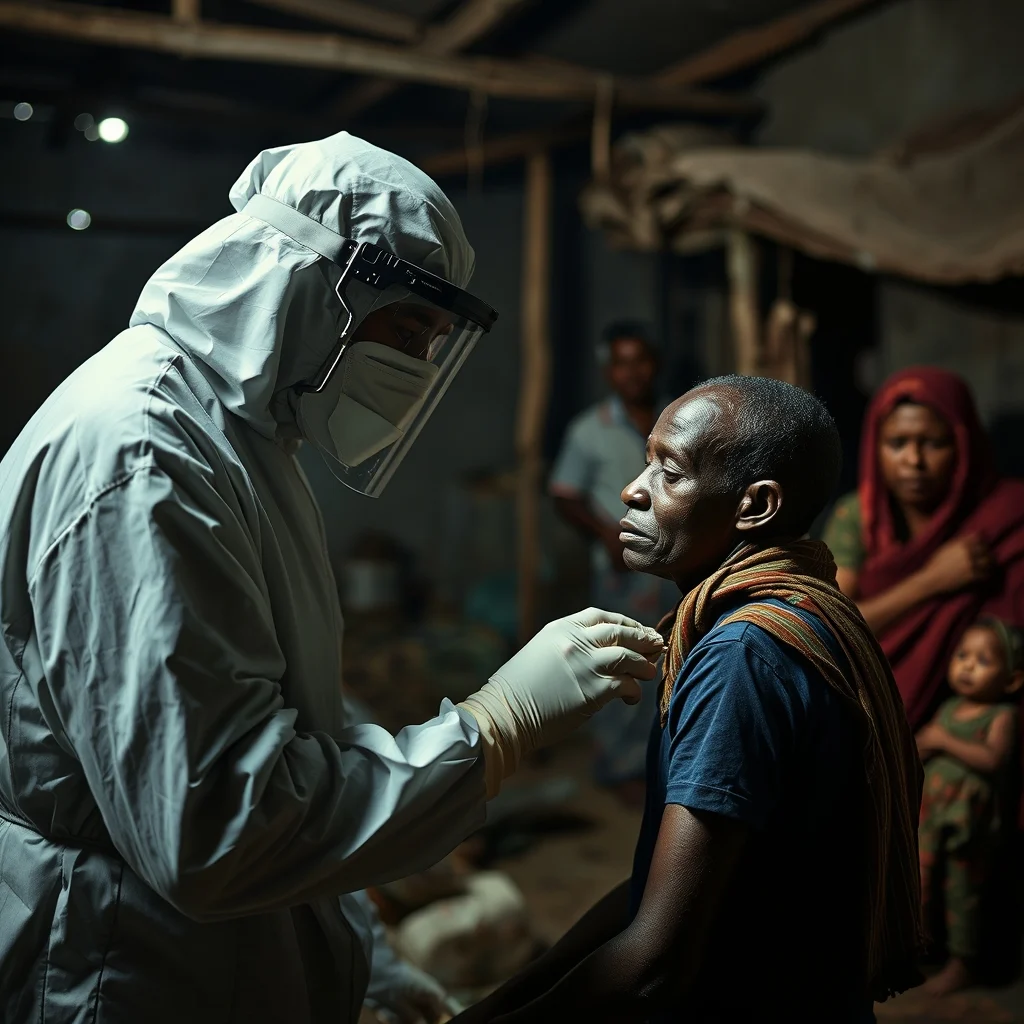
The Democratic Republic of Congo (DRC) and neighboring Uganda are currently grappling with an Ebola outbreak, with official case numbers significantly revised downwards. Authorities in the DRC initially reported over 1,000 suspected cases and nearly 250 suspected deaths. These figures have since been adjusted to approximately 380 confirmed cases in the DRC, resulting in 60 deaths, and an additional 15 confirmed cases with one fatality in Uganda. This reduction in reported numbers, however, does not necessarily indicate a diminished threat from the virus.
Data Refinement and Outbreak Understanding
The apparent decrease in cases is primarily attributed to improved diagnostic capabilities. Laboratories are now more effectively distinguishing between confirmed Ebola infections and other prevalent febrile illnesses in the region, such as malaria. This refinement means the authorities are now reporting confirmed cases, a more accurate reflection of the actual outbreak size than the previously reported suspected cases.
Dr. Tedros Adhanom Ghebreyesus, Director-General of the World Health Organization (WHO), acknowledged that the outbreak had a “big head start.” However, he also stated that response teams are now “catching up,” suggesting progress in containment efforts despite the initial challenges.
Persistent Challenges in Containment
Despite improved data, significant hurdles remain in controlling the spread of Ebola. A critical concern is contact tracing, with only about 45% of individuals directly exposed to infected patients currently being monitored. This incomplete tracing is partly due to the outbreak’s epicenter being located in an area affected by ongoing conflict, which complicates access and security for health workers.
The WHO emphasizes that at least 90% of contacts must be traced to effectively bring an outbreak under control. This benchmark highlights the considerable gap between current tracing efforts and the level required for containment.
Community Trust and Traditional Practices
Mistrust within some affected communities poses another substantial challenge. Reports indicate an attack on an Ebola burial team in South Kivu province, forcing responders to abandon a coffin. Such incidents raise fears of further transmission, as traditional burial practices, which often involve washing and touching the deceased and large funeral gatherings, are high-risk activities for Ebola transmission through contact with infected bodily fluids.
Building trust with local communities is therefore deemed critical by Dr. Tedros for successful outbreak control.
Geographic and Epidemiological Context
The current Ebola outbreak is concentrated in three eastern provinces of the DRC, an expansive region comparable in size to the United Kingdom. Much of this area is rural, remote, and difficult to access, further complicating response efforts. The region is also characterized by significant volatility due to the presence of numerous armed groups.
This outbreak is caused by the Bundibugyo species of Ebola, a rarer strain that has only appeared twice before. The rarity of this strain means that no specific vaccine or proven treatment is currently available, although development efforts are underway by various research teams.
Global Risk Assessment and Preparedness
Dr. Tedros has previously urged for global attention to “invisible enemies” like viruses, drawing parallels between the COVID-19 pandemic’s devastating death toll and the potential impact of other infectious diseases. While he does not anticipate Ebola spreading globally due to its transmission routes not being airborne like coronavirus, the WHO assesses the risk as very high within the DRC.
The risk is considered high in the wider region but low on a global scale. However, the U.S. Centers for Disease Control and Prevention (CDC) has warned that without robust public health interventions, the current outbreak could rival or even surpass the scale of the 2014-2016 West Africa Ebola epidemic. The U.S. has pledged an additional $38 million for response efforts, bringing its total direct funding to over $200 million.
Watchful Waiting on Prevention Measures
In the United Kingdom, officials have decided against implementing temperature checks at airports for flights from affected regions, citing their limited effectiveness. This decision is informed by past experience, where such measures during the 2014 West Africa outbreak failed to detect the sole case that arrived in the UK.
The effectiveness of various containment strategies, the progress in developing treatments and vaccines for the Bundibugyo strain, and the ability of response teams to overcome community mistrust and operational challenges in conflict-affected zones will be crucial indicators to watch in the coming weeks and months.









Leave a Reply