
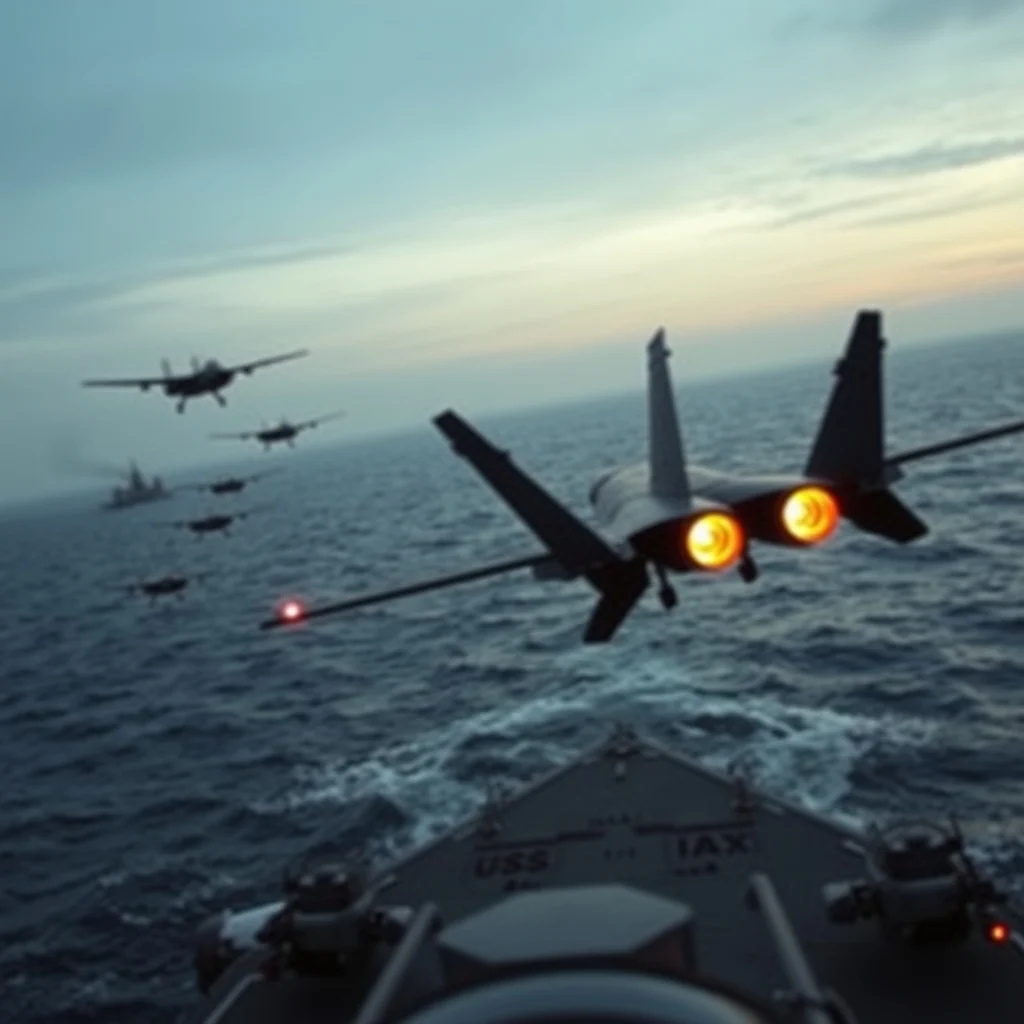
The US military announced Tuesday that it shot down four Iranian “one-way attack drones” targeting the Strait of Hormuz, citing an immediate threat to regional maritime traffic. US forces subsequently struck Iranian coastal surveillance radar sites on Goruk and Qeshm Island to prevent further attacks, according to a statement from US Central Command (Centcom). Iran has not yet issued a public statement regarding the incident.
Escalating Tensions and Retaliatory Strikes
This latest confrontation occurs just days after a significant exchange of strikes between the United States and Iran, which threatened a fragile ceasefire between the two nations. The incident follows a period of heightened conflict that began on February 28th with wide-ranging strikes by the US and Israel against Iran. Iran retaliated by targeting Israel and US-allied states in the Gulf, impacting global oil prices by effectively closing the vital Strait of Hormuz.
The Strait of Hormuz is a critical chokepoint for global energy trade, with approximately 20% of the world’s oil and liquefied natural gas passing through it annually. The disruption to this waterway has significant implications for international markets and economic stability.
Disputed Airport Attack
Compounding the tensions, Iran’s Islamic Revolution Guard Corps (IRGC) had previously denied responsibility for a drone strike on Kuwait’s international airport earlier in the week. Local officials reported one fatality and over 60 injuries from that incident. The IRGC claimed the damage was a result of an error by a US missile interceptor, a statement Centcom refuted.
Centcom asserted that Iran was responsible for the airport strike, labeling it a “deliberate, calculated and unjustified attack.” The IRGC had earlier stated its intention to target US bases in the Gulf in retaliation for US strikes on an Iranian oil tanker and Qeshm Island.
Stalled Ceasefire Negotiations and Blockade
These escalations have occurred against a backdrop of stalled ceasefire negotiations between the US and Iran. A potential deal to end the ongoing conflict has failed to gain traction. Following the agreement of a ceasefire in early April, the US implemented a blockade of Iranian ports.
President Donald Trump stated that the blockade would remain “in full force and effect until an agreement is reached, certified, and signed.” This policy aims to exert economic pressure on Iran as part of broader diplomatic and security objectives.
Regional Maritime Security Concerns
The repeated targeting of drones and radar sites near the Strait of Hormuz highlights ongoing concerns for regional maritime security. The US military’s actions underscore its commitment to ensuring freedom of navigation and protecting commercial shipping lanes from potential threats.
The strategic importance of the Strait of Hormuz means that any disruption or threat to its security can have far-reaching economic and geopolitical consequences. The international community closely monitors developments in this critical waterway.
Future Implications and Watch Points
The recent drone downing and subsequent radar site strikes indicate a continued volatile situation in the Persian Gulf. Observers will be watching closely to see if Iran responds to the latest US military actions and whether this further complicates the already challenging ceasefire and diplomatic negotiations. The effectiveness and duration of the US port blockade will also be a key factor to monitor, alongside the broader impact on global energy markets and regional stability.









Leave a Reply