
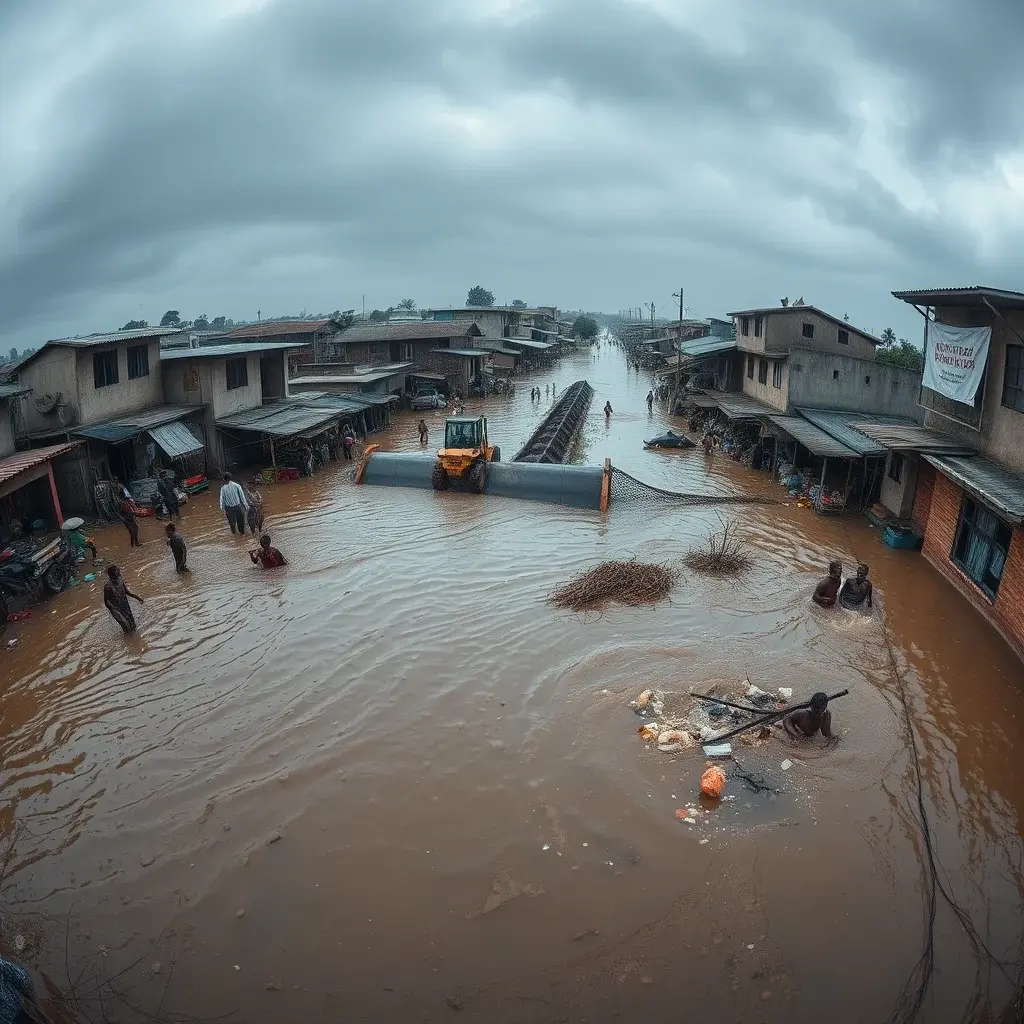
Accra, Ghana – June 5, 2026 – The perennial and deadly annual flooding that once again submerged parts of Accra highlights a critical failure in governance, with critics pointing to inadequate leadership rather than citizen behavior as the primary cause. This recurring crisis, which has led to loss of life and widespread devastation, continues to plague the capital city despite repeated promises and ample time for solutions.
Decades of Unaddressed Vulnerability
Accra has long grappled with the devastating impact of seasonal rains, a problem exacerbated by rapid urbanization and inadequate infrastructure. The city’s geography, coupled with a history of development encroaching on natural waterways, creates a perfect storm for flooding during the rainy seasons.
This year’s inundation follows a pattern of severe flooding events, including the tragic June 3, 2015 disaster that claimed approximately 150 lives and left many more injured or permanently disabled. The recurrence of such events underscores a lack of sustained, effective intervention from successive administrations.
Shifting the Blame: Leadership vs. Citizenry
A common narrative attributes the flooding to citizens who dump refuse into drainage systems and those who build on waterways. While such actions contribute to the problem, experts and critics argue that this perspective deflects responsibility from the government’s core duties.
Drawing parallels with urban management in the United Kingdom, one observer noted the stark contrast in municipal services. Cities like Leicester, despite facing similar challenges with litter from public activities, demonstrate effective waste management through proactive cleaning services deployed by local councils. This is supported by a robust system of household waste collection funded by local taxes and enforced regulations on waste disposal and building permits.
Failed Governance and Inaction
The article criticizes both past and present leadership for failing to implement basic, yet effective, measures to combat flooding. It argues that blaming citizens absolves elected officials and appointed administrators of their mandate to provide essential services and enforce laws.
Specific shortcomings highlighted include the failure to establish and enforce by-laws requiring households to have proper waste bins, the lack of consistent refuse collection services, and the absence of decisive action against illegal construction on waterways. The article asserts that these are not complex, insurmountable problems but rather require political will and efficient administration.
Proposed Solutions for Effective Management
The author proposes a series of practical steps that local assemblies and central government could implement. These include mandating and subsidizing household rubbish bins, contracting private entities for regular waste collection funded by property rates, and clearing all waterways and illegal structures year-round.
Furthermore, the proposal calls for the prosecution of individuals who build on waterways, with the recovery of demolition costs through legal means, including the auctioning of properties. Such measures, it is argued, would create a disincentive for destructive practices and hold offenders accountable.
Implications for Accra’s Future
The persistent failure to address Accra’s flooding issues has significant implications for public safety, economic stability, and the city’s overall development. The recurring destruction of property and infrastructure incurs substantial economic losses, while the loss of life leaves indelible scars on affected communities.
Moving forward, the focus must shift from assigning blame to implementing comprehensive, sustainable solutions. The effectiveness of Accra’s urban planning and disaster management will depend on the commitment of its leaders to prioritize infrastructure development, enforce regulations, and ensure the efficient delivery of basic municipal services. The coming years will be critical in determining whether Accra can break free from the cycle of devastating floods or continue to suffer the consequences of inadequate governance.










Leave a Reply