
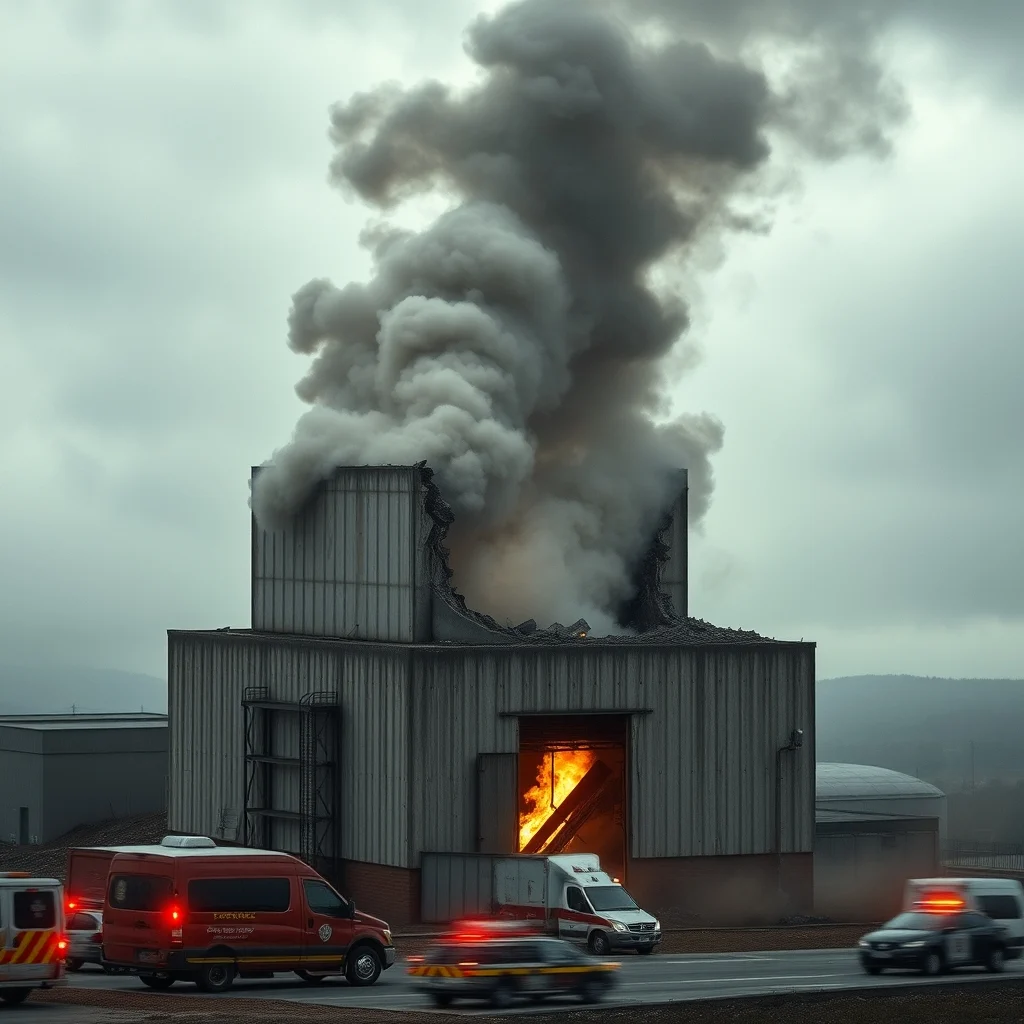
Ukrainian President Volodymyr Zelensky condemned a “vile Russian strike” on a spent nuclear fuel storage facility near the Chornobyl power plant on Sunday, just hours before he was set to meet with UK Prime Minister Sir Keir Starmer, French President Emmanuel Macron, and German Chancellor Friedrich Merz in London to discuss European support for Ukraine. Officials in Kyiv reported that a drone hit the facility, causing a fire that was quickly extinguished with no injuries and stable radiation levels. Simultaneously, separate Russian attacks claimed at least three lives in a village near Zaporizhzhia in southeastern Ukraine, which has been a frequent target of recent assaults.
Context of Escalating Attacks
The incident at Chornobyl underscores the ongoing escalation of the conflict, with both sides engaging in increasingly sophisticated and strategically significant attacks. Ukraine’s state-owned nuclear operator, Enerhoatom, confirmed that the strike “partially destroyed” the spent nuclear fuel storage building. The organization criticized Moscow for what it described as a deliberate threat to nuclear safety, a sentiment echoed forcefully by President Zelensky.
Zelensky emphasized the deliberate nature of the strike, identifying the targeted facility as “extremely critical infrastructure.” He highlighted this incident in the context of a wider Russian offensive, stating that Moscow had launched 88 missiles, over 3,250 drones, and 1,800 guided bombs across 13 Ukrainian regions in the preceding week.
Ukraine’s Evolving Defence Capabilities
This latest attack comes amid reports of Ukraine’s own retaliatory actions within Russian territory. On Saturday, Ukraine targeted St. Petersburg and its surrounding areas with a drone attack during a major economic forum. Days prior, Kyiv launched an attack on the outskirts of the same city, approximately 1,000 kilometers from Ukraine, sending a significant plume of black smoke over the city’s skyline as President Vladimir Putin’s flagship forum commenced.
These actions demonstrate Ukraine’s developing defence sector, which has evolved to the point of regularly hitting targets deep within Russia, a capability that has grown significantly since the full-scale invasion began four years ago.
Diplomatic Efforts Amidst Conflict
The meeting in London brings together leaders from the E3 group – the UK, France, and Germany – who are among Ukraine’s staunchest allies. These nations are key proponents of the “coalition of the willing” initiative, which aims to provide security guarantees for Ukraine as part of a future peace process.
This gathering follows a similar E3 summit in London in December, a period when the United States was actively seeking a swift truce between Moscow and Kyiv. However, US mediation efforts have since waned, with Washington reportedly shifting its focus to the conflict in Iran.
The diplomatic backdrop is further complicated by recent statements from Russian President Vladimir Putin. On Friday, Putin rejected a proposal by President Zelensky for direct face-to-face talks to end the war, stating he saw no point in meeting the Ukrainian leader. Zelensky had previously issued an open letter calling for direct negotiations, arguing that “it would be wrong to simply wait” for the conflict to regain prominence in US attention.
During the economic forum on Friday, Putin reiterated his stance, asserting that a truce would only serve to allow Ukraine to regroup and that the war would only end when Russia’s objectives are met.
Implications and Future Outlook
The “vile” drone strike on Chornobyl, occurring just before critical discussions on European support, highlights the precariousness of nuclear safety in active conflict zones and could serve as a galvanizing point for increased international pressure on Russia. The ability of Ukraine to strike targets within Russia, exemplified by the recent attacks near St. Petersburg, signals a strategic shift and raises questions about Russia’s own air defence capabilities and the potential for further escalation.
The upcoming London talks will be closely watched for any unified stance from the E3 on future security guarantees for Ukraine and potential diplomatic pathways. President Zelensky’s urgent call for direct negotiations, coupled with Putin’s rejection, underscores the significant challenges ahead in finding a peaceful resolution. Observers will be looking for any signs of evolving strategies from the E3 nations in response to Russia’s persistent military actions and its dismissal of diplomatic overtures.






Leave a Reply