
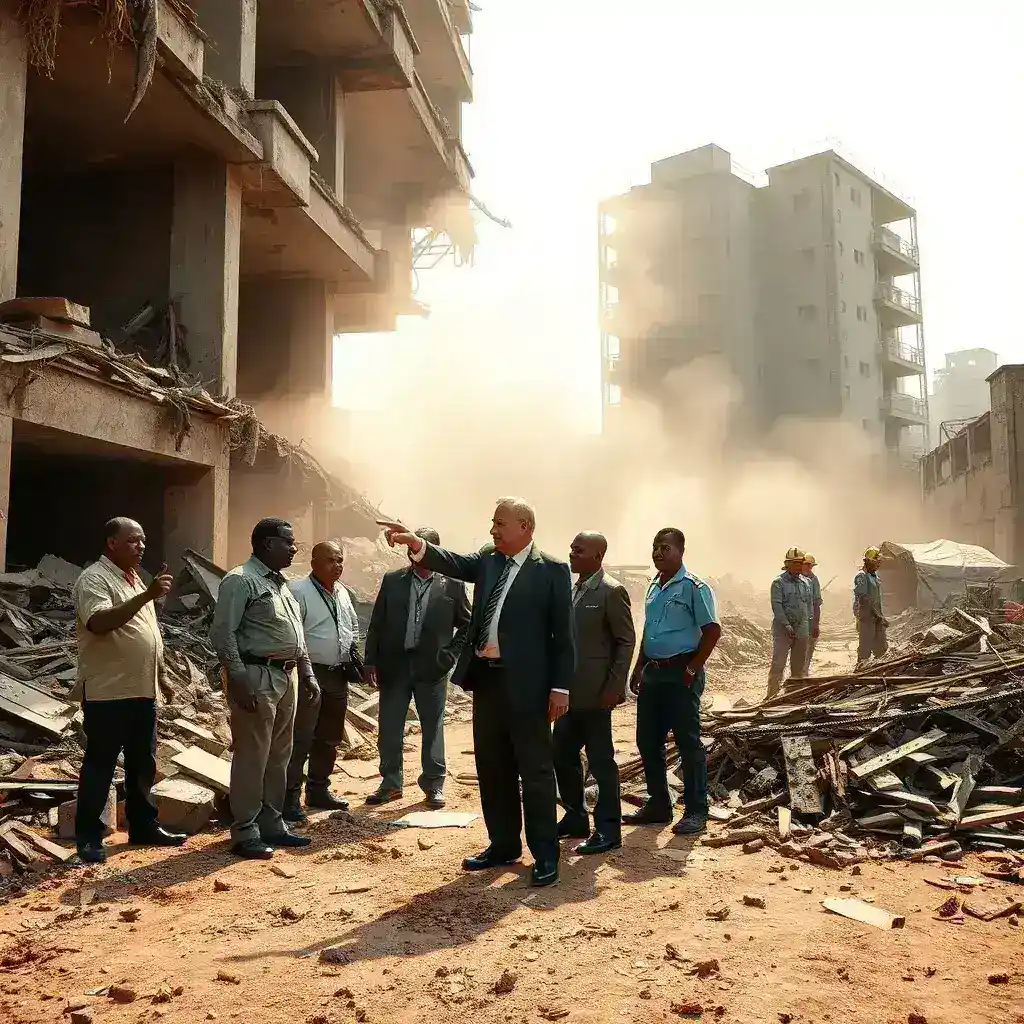
Accra, Ghana – Following the recent collapse of a building in the North Industrial Area, Interior Minister Muntaka Mohammed-Mubarak has issued a stern directive to Metropolitan, Municipal, and District Chief Executives (MMDCEs) to rigorously enforce existing building regulations. The call aims to prevent future construction-related disasters and underscores the critical role of local authorities in ensuring public safety.
Local Authorities’ Primacy in Building Permits
Minister Mohammed-Mubarak emphasized that the primary responsibility for issuing building permits rests solely with district assemblies and their technical departments. He clarified that other state agencies, such as the Ghana National Fire Service and the Police Service, while crucial for safety compliance, do not possess the mandate to approve building locations or initial construction permits.
“In terms of building permits, it is the district assembly that is responsible. That is why I am calling on the local government ministry and the assemblies to rise up,” the Minister stated at the scene of the collapsed structure.
He further explained that the roles of the Fire Service and Police are primarily focused on safety inspections and adherence to regulations during and after construction, not on the initial decision-making process regarding where a building can be sited.
“A fire service personnel cannot come and decide if a building should be put here or not. The police and fire service come in for safety issues, but the permit to build always comes from the assembly,” he clarified.
Call for Proactive Enforcement and Planning
The Interior Minister urged assemblies and their technical teams, including engineers and planners, to adopt a more proactive stance in enforcing approved development plans. This includes ensuring that all construction adheres strictly to the specifications outlined in the permits and approved urban planning frameworks.
“We want the assemblies and their engineers to be up and doing so we can support them to ensure a safe environment,” Mohammed-Mubarak urged.
He warned that a failure by local authorities to uphold their enforcement duties weakens the entire system designed to ensure safe construction practices and contributes to the prevalence of unsafe building activities.
“Without their mandate, we cannot cross it and do their work for them. That would even undermine the laws of our country,” he added, stressing the importance of respecting jurisdictional boundaries to maintain legal integrity.
Clampdown on Unauthorized Developments
Minister Mohammed-Mubarak also appealed to local government authorities to actively identify and clamp down on unauthorized developments. He stressed the need for strict compliance from developers, whether they possess permits or are undertaking construction without proper authorization.
“I hope our colleagues in local government will rise to the occasion by engaging the MMDCEs so that those without authorization are stopped, and those with permits will stick strictly to approved specifications,” he said.
The recent collapse in the North Industrial Area has brought renewed attention to long-standing concerns regarding the lax enforcement of building codes and urban planning regulations in parts of Ghana. Experts have frequently highlighted inadequate monitoring, corruption, and a lack of technical capacity within some local assemblies as contributing factors to substandard construction practices.
Looking Ahead: Strengthening Oversight and Accountability
The Minister’s directive signals a potential shift towards greater accountability for local government officials in overseeing construction activities. Observers will be watching to see if this translates into tangible improvements in building permit processes, site inspections, and the prosecution of developers who flout regulations. The capacity of assemblies to effectively monitor and enforce building standards, particularly in rapidly urbanizing areas, remains a critical factor in preventing future tragedies and ensuring the safety of Ghana’s built environment.










Leave a Reply