
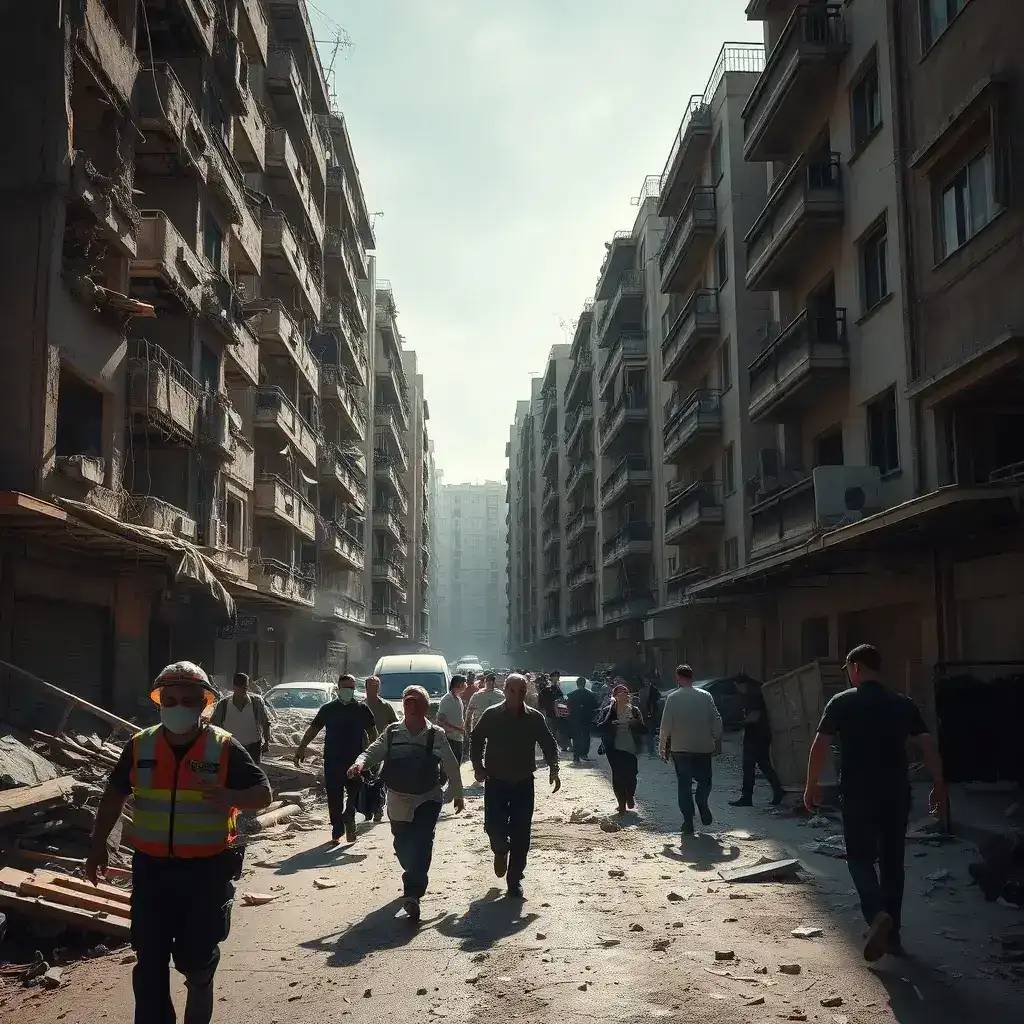
Israel launched air strikes on a southern Beirut suburb on Sunday, targeting what Prime Minister Benjamin Netanyahu described as “terrorist headquarters,” just days after a U.S.-brokered truce was announced. The attacks, which hit two apartment buildings in the Dahieh district, a stronghold of Iran-backed Hezbollah, killed two people and injured at least 17, according to Lebanon’s state news agency. This marks the first strike on the Lebanese capital since the truce, raising concerns about the fragility of the de-escalation efforts.
Context of Escalating Conflict
Lebanon was drawn into the ongoing conflict on March 2nd, following Hezbollah’s rocket launches into Israel. This action was reportedly in retaliation for an Israeli strike that killed Iran’s supreme leader. Israel responded with an extensive air campaign across Lebanon and initiated a ground invasion in the south, with tensions escalating significantly in recent weeks.
A ceasefire had been in place since April 17th, though it has been repeatedly violated by both sides, rendering it largely symbolic. While Israel continued its air strikes in southern Lebanon throughout the weekend, Sunday’s attack on Beirut represents the third strike on the capital since the ceasefire officially began. The previous two strikes had specifically targeted Hezbollah commanders.
US Pressure and Diplomatic Efforts
Israel had previously limited its attacks on Beirut under pressure from the United States. Washington expressed concern that strikes on the capital could jeopardize broader peace initiatives with Iran, which has insisted on a complete and total ceasefire in Lebanon. A week prior to the June 3rd truce, Israel had threatened a large-scale offensive on Dahieh, leading to a significant exodus from the suburb and intensive diplomatic engagement from the U.S.
Following a call with Prime Minister Netanyahu, President Trump announced on Truth Social that no U.S. troops would be deployed to Beirut. The U.S. also informed Qatar, a key mediator in de-escalation efforts, that Israel had been instructed to stand down. However, in a separate interview, Trump indicated he was not demanding Lebanon’s inclusion in any potential peace deal with Iran, attempting to separate the two diplomatic tracks.
Hezbollah’s Position and Regional Reactions
Hezbollah has not officially commented on the recent strikes. However, an Israeli army spokesperson on X stated that “Hezbollah terrorist infrastructure” was being targeted, suggesting further actions were imminent with the post “To be continued.” The Israeli military also reported intercepting two projectiles crossing into Israeli territory from Lebanon, though Hezbollah has not claimed responsibility for them.
The foreign policy and national security committee spokesperson for the Iranian parliament, Ebrahim Rezaie, vowed a “decisive and painful response” to the Israeli attack on Beirut, highlighting the regional implications of the escalation.
Lebanese Political Landscape and the Truce
Lebanon’s Parliament Speaker Nabih Berri, leader of the Amal movement and an ally of Hezbollah, has criticized the U.S.-brokered deal. He referred to the agreement as a “trap” because it fails to mention a parallel Israeli withdrawal from occupied territories in southern Lebanon. Hezbollah itself is not represented in the U.S.-brokered talks.
Hezbollah’s deputy leader, Naim Qassem, stated in a written message that disarming the group would amount to fulfilling “the enemy’s objectives,” underscoring the group’s stance on its own security capabilities.
Implications and What to Watch Next
Sunday’s strike on Beirut signifies a significant escalation, potentially undermining the recent U.S.-brokered truce and complicating broader regional diplomatic efforts involving Iran. The response from Hezbollah and its allies, along with potential further Israeli military actions, will be critical in determining the immediate future of the conflict. Observers will be closely watching whether this incident triggers a wider retaliatory cycle or if diplomatic channels can be re-established to prevent further bloodshed and instability in the region.






Leave a Reply