
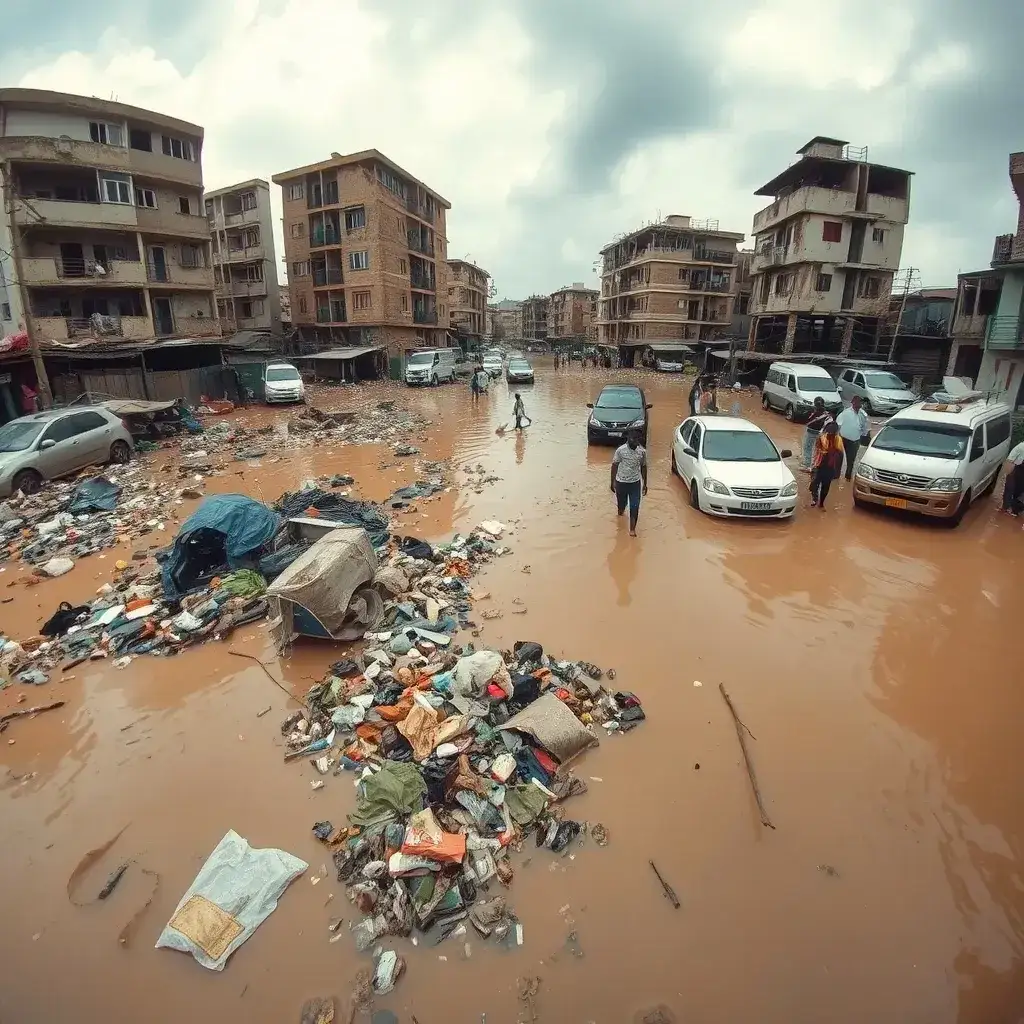
Accra is once again grappling with its perennial flooding problem, and a key political figure is calling out the current administration for its perceived inaction. Dennis Miracles Aboagye, Director of Communications for the Bawumia Campaign Team, asserted on Monday that the Mahama government has failed to present a clear, comprehensive strategy to tackle the recurring deluge that disrupts lives and livelihoods in the capital.
Criticism Over Perceived Inaction
Speaking on JoyNews’ AM Show, Mr. Aboagye accused the government of merely lamenting the persistent flooding rather than offering concrete solutions to reassure affected residents. He emphasized that leadership carries a fundamental responsibility to safeguard citizens’ welfare, safety, and prosperity, and governments must be held accountable for fulfilling these expectations.
“A country entrusts its resources, freedoms, and rights to a select few so that they can guide the people and lead them towards prosperity, growth, and safety,” Mr. Aboagye stated. “So when the leaders we have given that responsibility are merely lamenting to us, it becomes a serious problem.”
Lack of a Clear Roadmap
Aboagye further contended that despite being fully aware of Accra’s vulnerabilities to flooding, the government has not communicated a clear roadmap for resolving these challenges. He described the situation as “hopeless” and stressed the need for a defined plan of action.
“They have failed to tell the people of this country what their roadmap is in solving flooding in Accra. A clear-cut roadmap. We are in a hopeless situation,” he declared.
Recalling Past Disasters and Promises
The Bawumia campaign spokesperson dismissed any notion that the current administration is only now grasping the scale of Accra’s flooding issues. He pointed out that President John Dramani Mahama, having served as president before, possesses firsthand knowledge of the problem.
“This government should not pretend as if they just came into office and all of a sudden they are realising how Accra is,” he said. Aboagye referenced the devastating June 3, 2015, disaster, which claimed numerous lives and caused widespread destruction, as a critical lesson that should have informed future mitigation efforts.
“Our president has been president before. In fact, one of the most devastating flood disasters this country has seen in its history happened under his presidency during his first term,” he noted. He questioned the effectiveness of measures implemented after the 2015 disaster, recalling pledges by former President Mahama to re-engineer Accra and the establishment of a committee to address the situation.
“His Excellency John Dramani Mahama, immediately after the June 3 disaster, set up a committee. In fact, he indicated that he was re-engineering Accra. What happened?” Aboagye asked, implying that the continued severe flooding raises doubts about the success of past interventions.
Experience as a Campaign Mantra
Mr. Aboagye highlighted that many Ghanaians supported President Mahama’s return to office based on the belief that his prior experience would enable him to tackle long-standing national challenges more effectively. He noted that “experience” was a prominent theme in Mahama’s campaign, a message that resonated with voters.
“One of the reasons why a lot of Ghanaians went to vote for His Excellency John Dramani Mahama was because they felt that he would have learned something from the experience he had in the past,” he explained. “Eight years in opposition, you come into office with experience. In fact, His Excellency said during the campaign period that we want experience. It was one of his mantras, and a lot of people bought into it.”
He further pointed to Mahama’s substantial electoral victory, a 1.7 million vote difference, as an indicator of the high expectations placed upon his administration. “People were very hopeful. A 1.7 million vote difference speaks a lot. It is a huge mandate,” he observed.
Questioning Current Assessment Efforts
Aboagye also questioned the government’s ongoing efforts to identify flood-prone areas months into its tenure, arguing that such assessments should have been completed already, given the president’s past experience. “A president that some people believed in and voted for on the back of your experience, you spend one and a half years out of your few years in office identifying hotspots. That is where the problem is,” he asserted.
Call for Practical Solutions
He urged the government to shift its focus from assigning blame, such as to citizens building in waterways, and instead present practical solutions with clear timelines. “Tell the people what your roadmap is in ensuring that moving forward, when it rains for 30 minutes, they will be able to get to their homes. That’s what they want to hear,” Aboagye stressed.
He maintained that the ultimate responsibility for flood prevention and effective urban planning lies with state institutions, which are expected to provide residents with a clear strategy and measurable actions to address this persistent challenge.
Looking Ahead
As Accra continues to face the threat of seasonal floods, the focus remains on whether the current administration will articulate and implement a robust, long-term strategy. The public will be watching closely for tangible actions and clear communication regarding flood mitigation efforts, particularly in light of past promises and the recurring nature of the problem. The effectiveness of any new plans will be measured not just by their design, but by their ability to provide genuine relief and security to residents during the rainy seasons.






Leave a Reply