
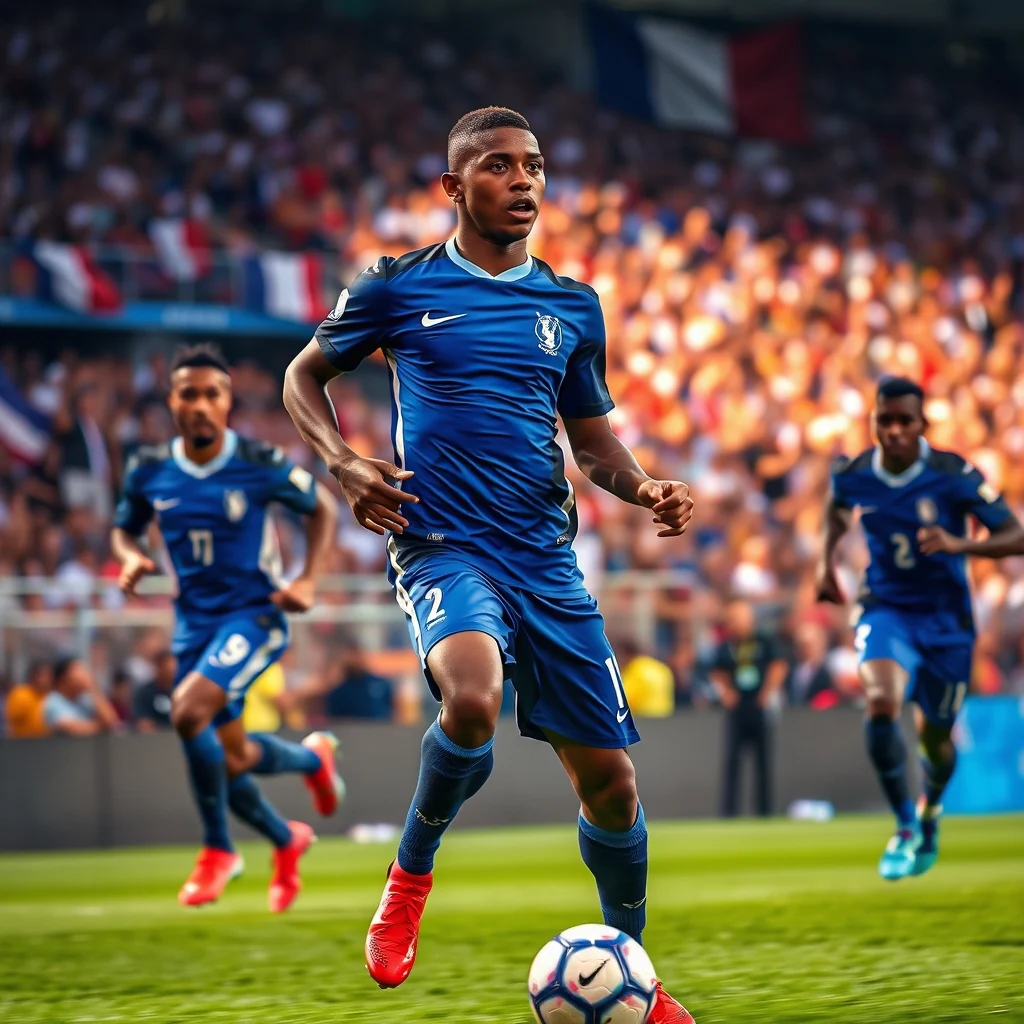
France’s journey towards the 2026 World Cup is marked by a strategic dilemma: how to harness an abundance of attacking talent without compromising the defensive solidity that has defined their recent success under Didier Deschamps. Despite reaching the semi-finals of Euro 2024 with a notably conservative approach, where scoring from open play proved challenging, the team is exploring a more expansive style, as hinted at during recent friendlies in the United States.
The Evolving Tactical Blueprint
Antoine Griezmann’s observation that France’s style, while ‘painful to watch,’ is ‘winning’ encapsulates the prevailing sentiment around Les Bleus. The Euro 2024 campaign saw limited open-play goals, with only Randal Kolo Muani finding the net from open play in the semi-final defeat to Spain. The team’s other goals originated from penalties or own goals, underscoring a pragmatic, albeit sometimes uninspiring, tactical approach.
However, indications suggest a potential shift. During a March tour of the US, France showcased a more attacking flair, scoring five goals in two matches against Brazil and Colombia. Coach Didier Deschamps acknowledged a desire for his team to be ‘less predictable and readable,’ while simultaneously admitting that the team had been ‘a bit on the limit’ at times.
Defensive Foundations and Attacking Firepower
Despite the exploration of a more offensive strategy, the defensive backbone remains a priority. France conceded fewer goals than most European nations in qualifying for the tournament. Yet, the emergence of exceptional attacking talent presents a compelling case for a more dynamic approach.
Players like captain Kylian Mbappé, Ballon d’Or winner Ousmane Dembélé, and rising star Michael Olise form an attacking unit that many, including defender Lucas Hernandez, believe is ‘the best in the world.’ The challenge for Deschamps lies in integrating these individual talents into a cohesive and effective unit, a task made more complex by the international retirement of Olivier Giroud in 2024.
The March friendlies offered a glimpse of a potential balance, but the crucial question remains whether this more expansive prototype will be deployed on the grandest stage of the World Cup. Deschamps’s tenure has been characterized by success achieved through pragmatism, a philosophy that has drawn both admiration and criticism.
Deschamps: The Pragmatic Architect
Didier Deschamps has established himself as a benchmark for international management. His conservative and pragmatic methods have influenced other coaches, such as Gareth Southgate during his time with England. Despite leading France to two World Cup finals and a Euros final over his 12-year reign, Deschamps has consistently faced criticism regarding his team’s style of play.
‘Watch something else, then,’ was his characteristic response to such jibes, emphasizing that his success justifies his unwavering approach. With his tenure set to conclude this summer, Deschamps is unlikely to deviate significantly from his proven methods. Having previously enjoyed success with club sides Monaco and Marseille, he has expressed openness to a return to club management.
Star Power and Emerging Talents
Kylian Mbappé remains the focal point of France’s formidable attack. Having evolved from an electrifying winger to a prolific goalscorer, the Real Madrid star now operates as a No. 9. Mbappé is set to surpass Olivier Giroud as France’s all-time leading scorer, cementing his status as the cornerstone of the team’s offensive strategy.
Alongside Mbappé, Ousmane Dembélé, a Ballon d’Or recipient, and Michael Olise, a strong contender for future individual accolades, add significant firepower. The integration of these talents is key to France’s ambitions.
In midfield, 20-year-old Warren Zaire-Emery is a player to watch. After a meteoric rise that saw him debut for France at 17, followed by injury setbacks, he has made a spectacular comeback. Now a vital component of Paris Saint-Germain’s midfield, Zaire-Emery is vying for a more significant role with the national team. His versatility was demonstrated when he successfully filled the right-back position in a Champions League match against Bayern Munich, potentially offering a solution to a perceived weakness in Deschamps’s squad.
Dayot Upamecano is another player who has added consistency and composure to his game. While William Saliba has garnered praise for his performances at Arsenal and for France, Upamecano’s presence at center-back is crucial. The Bayern Munich defender, now in his prime, started most of France’s World Cup qualifiers, keeping strong competition at bay.
Fan Support and Expectations
While ticket pricing has been a concern for many fans, an estimated 1,000 supporters are expected at each match. The Irrésistibles Francais (IF), the largest organized fan group, anticipates around 650 members for the opening game against Senegal. The IF are known for their vocal support, contributing to the atmosphere with chants like ‘Allez Les Bleus’ and ‘Qui ne saute pas n’est pas Francais,’ alongside renditions of the national anthem, La Marseillaise.
The probable starting XI for France is anticipated to be: Maignan; Kounde, Saliba, Upemacano, L.Hernandez; Tchouameni, Zaire-Emery; Dembélé, Olise, Doué; Mbappé (4-2-3-1 formation).
Looking Ahead
As France prepares for the 2026 World Cup, the tactical evolution under Didier Deschamps will be closely monitored. The ability to seamlessly integrate their array of attacking stars while maintaining defensive discipline will be paramount. The coming months will reveal whether France can strike the perfect balance between their pragmatic foundations and their potent attacking capabilities, potentially leading them to global glory.










Leave a Reply