
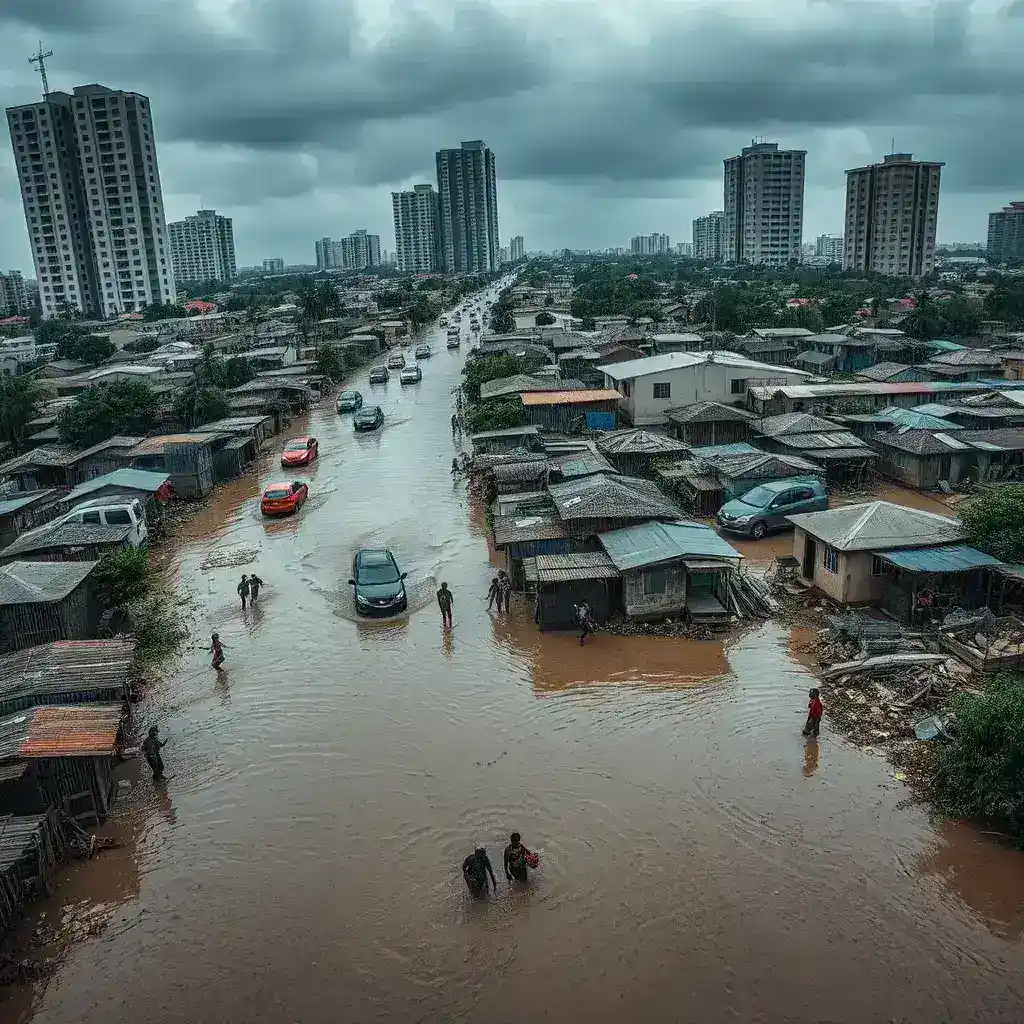
Accra, Ghana – The persistent flooding that plagues Ghana’s capital city, Accra, is a direct consequence of decades of inadequate urban planning, weak enforcement of regulations, and an over-centralization of national development, according to James Kwabena Bomfeh, Chief Executive Officer of the Centre for Citizenship, Constitutional and Electoral Systems (CenCES). Bomfeh articulated these views on JoyNews’ AM Show on Monday, June 8, highlighting the strain on the city’s infrastructure due to its rapidly expanding population.
Overpopulation and Centralization Strain Infrastructure
Bomfeh, speaking from a development research perspective, questioned the capacity of Accra’s existing infrastructure to support its burgeoning population. He stated that the sheer volume of roads, buildings, and the city’s terrain indicate it is overpopulated. The fundamental question, he argued, is who permitted this growth, with the answer pointing to the state’s role.
The expert criticized the heavy concentration of opportunities and essential services in Accra, which makes it exceedingly difficult for citizens to establish successful lives outside the capital. “We have made Accra Ghana, and Ghana Accra,” Bomfeh remarked, illustrating how essential services, from passport applications to vehicle licensing, are primarily accessible in the capital.
While acknowledging recent announcements regarding decentralization efforts, Bomfeh maintained that the core issue remains significant. He referenced data from the 2021 Population and Housing Census, which indicated that four regions – Greater Accra, Ashanti, Eastern, and Central – collectively house approximately 54.6 percent of Ghana’s population, with Greater Accra having the largest share. This demographic concentration, he stressed, necessitates immediate, medium-term, and long-term interventions.
Mismanagement of Urban Planning and Development
Beyond population pressures, Bomfeh pointed to the mismanagement of urban planning and the poor implementation of development schemes as key contributors to the flooding. He asserted that Accra was originally designed with robust drainage and sewage systems, but these plans have largely been ignored.
Concerns were raised regarding unauthorized construction in natural waterways and areas prone to flooding, particularly in the vicinity of the airport. “People have been complaining about these developments, yet new structures continue to emerge. Who is granting these permits?” Bomfeh questioned, calling for accountability from engineers and planning authorities.
Call for Collective Responsibility and Integrity
Bomfeh emphasized that the flooding issue transcends political affiliations, cautioning against what he termed “cheap, cowardly politics” that exploits natural disasters like heavy rains for partisan gain. “This is not about NDC or NPP. That kind of politics is killing Ghana,” he stated, urging a unified national approach to address the crisis.
He lamented the erosion of integrity within the political sphere, suggesting a lack of basic accountability standards. “Where is the line of honour in our politics?” he asked.
Furthermore, Bomfeh identified citizen indiscipline, particularly in waste disposal habits that lead to clogged drains, as a contributing factor. He also criticized the continued construction of open gutters, many of which remain incomplete, exacerbating sanitation challenges within the city.
The expert concluded by calling for stronger oversight and personal responsibility at all societal levels. “We must ask ourselves how many of us are resisting the temptation to engage in actions that ultimately harm us all,” he urged. Addressing Accra’s complex challenges, Bomfeh stressed, will require a holistic and sustained effort combining effective governance, responsible citizenship, and a renewed commitment to comprehensive, long-term urban planning.
Looking Ahead
The ongoing flooding in Accra highlights the critical need for a paradigm shift in urban development. Future interventions must prioritize not only infrastructure development but also the strict enforcement of planning regulations and a commitment to decentralizing opportunities. The resilience of Accra against future climate shocks will depend on the collective will of its leaders and citizens to move beyond partisan politics and embrace sustainable urban planning practices.





Leave a Reply