
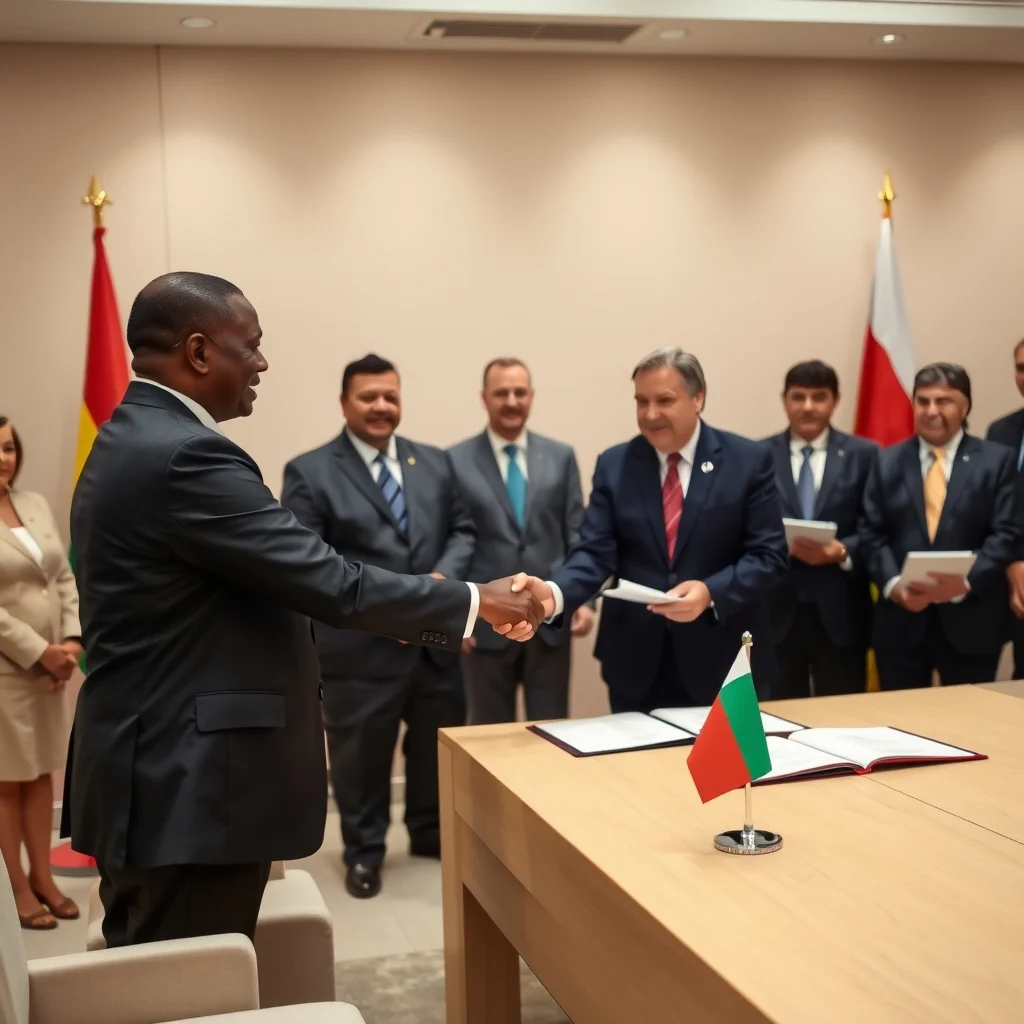
President John Dramani Mahama of Ghana signed three Memoranda of Understanding (MoUs) with Belarus in Minsk during an official visit, marking a significant milestone in bilateral relations and ushering in a new era of economic, agricultural, and technological cooperation. The agreements, signed recently, aim to create a practical framework for enhanced collaboration between government institutions, businesses, and citizens of both nations.
Establishing a Foundation for Cooperation
The MoUs cover three key areas: the establishment of a Joint Commission on Cooperation in Trade and Economy, collaboration between the chambers of commerce of Ghana and Belarus, and a specific focus on cooperation in the agricultural sector. President Mahama emphasized that these accords are designed to yield tangible benefits, including increased trade, investment, technology transfer, and people-to-people exchanges.
“This visit marks an important moment in the relations between our two countries,” President Mahama stated during the signing ceremony. “It provides us with an opportunity to reaffirm our shared commitment to building a modern and forward-looking partnership founded on mutual respect, sovereign equality and practical cooperation.”
Shared Aspirations and Agricultural Focus
Ghana and Belarus have maintained cordial diplomatic relations since 1992, and this visit seeks to build upon that foundation. Both nations share common goals of fostering prosperity, strengthening economic resilience, advancing technological development, and building inclusive societies capable of addressing contemporary global challenges. Agriculture was highlighted as a central theme, with Ghana expressing its ambition to transform the sector through mechanization, innovation, and value addition.
President Mahama outlined Ghana’s vision to create a modern, technology-driven agricultural sector that generates employment, supports industrialization, enhances food security, and improves rural livelihoods. The government is implementing policies to boost productivity, expand irrigation, reduce post-harvest losses, and promote agro-processing. Belarus’s expertise in agricultural mechanization, farm technology, equipment manufacturing, and research was identified as a valuable asset for Ghana’s development goals.
Expanding Horizons Beyond Agriculture
Cooperation is not limited to agriculture. The discussions also identified potential for deeper collaboration in manufacturing, pharmaceuticals, mining support services, renewable energy, transport and logistics, industrial development, and technical and vocational education. Ghana has extended an invitation to a Belarusian delegation to explore opportunities within its mining sector.
President Mahama also used the occasion to promote Ghana as an attractive investment destination in West Africa. He highlighted the country’s political stability, strategic location, expanding regional markets, improving infrastructure, and a youthful population as key advantages for foreign investors. Ghana’s economic transformation agenda and export-led industrialization program are designed to create significant opportunities for international business partnerships.
Navigating Global Shifts Through Partnership
The President acknowledged the current global landscape, characterized by significant economic and geopolitical shifts, including changing supply chains, concerns over food and energy security, and increasing climate-related vulnerabilities affecting developing countries. He stressed the importance of practical, equitable, and mutually beneficial international partnerships to address these challenges.
“Ghana remains committed to building diversified partnerships across all regions of the world because we believe that stronger cooperation among nations of the Global South, complemented by constructive engagement with partners everywhere, is essential for creating a more balanced and inclusive international order,” he stated. He expressed optimism that the visit would open new avenues for collaboration and mark a new chapter in Ghana-Belarus relations.
Measuring Success by Tangible Benefits
Ultimately, President Mahama emphasized that the success of these agreements will be measured by the concrete benefits they deliver to the citizens of both countries, rather than the signing ceremonies themselves. Ghana is committed to ensuring the effective implementation of the MoUs and working closely with Belarus to identify further areas of cooperation. The potential exists to build a strong partnership that significantly contributes to economic development, technological advancement, food security, and shared prosperity.
The visit underscores a strategic move by Ghana to diversify its international partnerships and leverage specialized expertise to accelerate its development agenda. The focus on practical outcomes and mutual benefit suggests a pragmatic approach to international relations aimed at delivering tangible improvements in the lives of citizens. Observers will be watching to see how quickly these agreements translate into concrete projects and economic activity between the two nations in the coming months and years.







Leave a Reply