
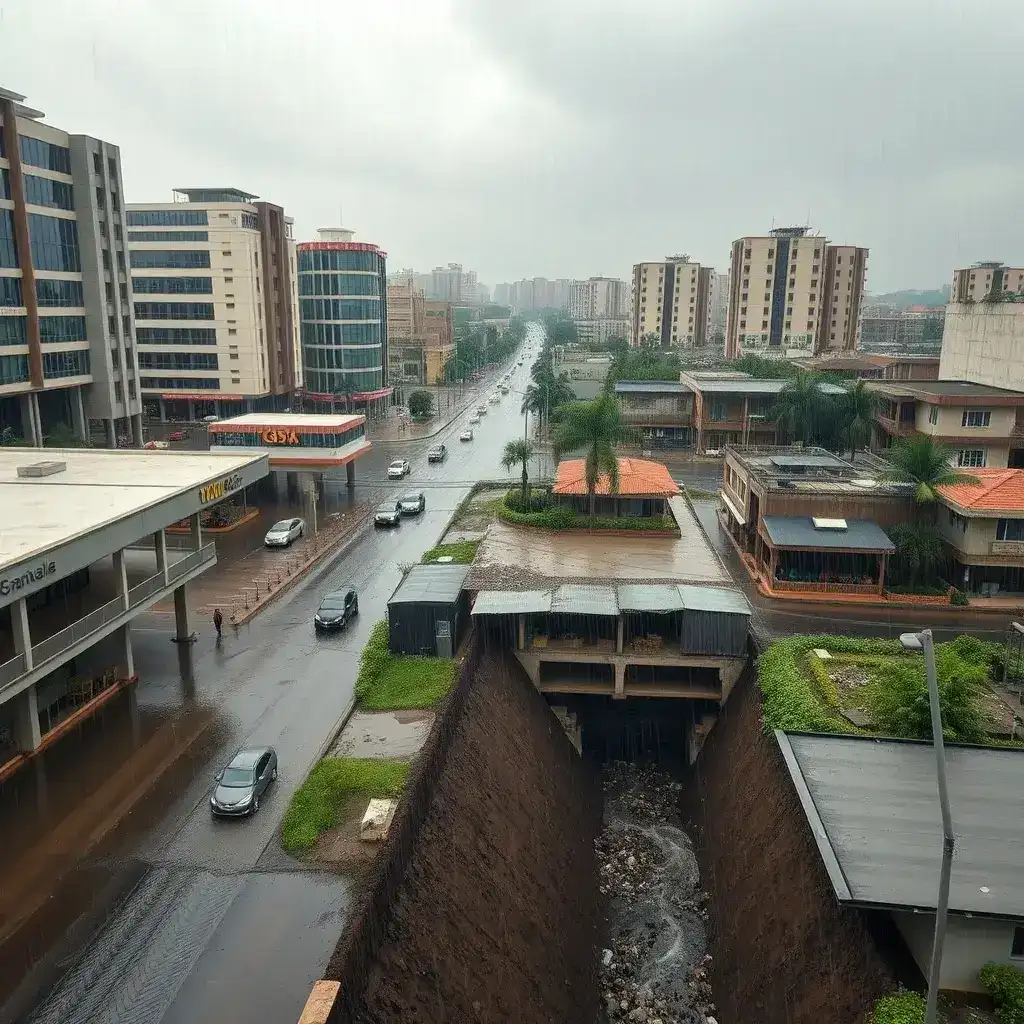
Ghana is exploring a novel ‘Rainfall Tax’ policy as a proactive measure to finance flood resilience and shift away from its traditional reactive approach to disaster management. This potential environmental financing mechanism, proposed in response to decades of recurring flood damage and the high costs associated with emergency relief and reconstruction, aims to address the growing threat of urban flooding exacerbated by climate change and rapid urbanization. The discussion highlights the need for innovative domestic funding solutions to complement international aid and reduce the economic burden on the nation.
Context: The Cycle of Flooding and Reactive Spending
For years, Ghana has grappled with the annual cycle of floods, treating them primarily as emergencies. Government agencies, corporations, religious organizations, and individuals consistently mobilize resources for relief efforts, repair damaged infrastructure, clear choked drainage systems, and compensate victims. This reactive approach diverts significant public and private funds that could otherwise be invested in long-term national development projects.
Scientific evidence increasingly links urban flooding in Ghana to rapid development that replaces natural vegetation with extensive impermeable surfaces. These surfaces, such as rooftops, concrete compounds, shopping centers, and parking lots, prevent rainwater from infiltrating the soil. Instead, the water rapidly flows into already overburdened drainage systems filled with waste, overwhelming infrastructure and triggering floods.
Research in Accra indicates that large parts of the city have become natural runoff convergence zones. Approximately one-third of the metropolis is classified as flood-prone, with another quarter experiencing frequent flooding due to a combination of topography, drainage patterns, and unchecked urban development.
Historical Precedent and Economic Toll
Flooding in Accra and surrounding areas is not a new phenomenon. Major flood events have been documented for decades, with the catastrophic June 3, 2015, flood and fire disaster serving as a stark reminder of the devastation. This event alone resulted in over 150 deaths, affected more than 53,000 people, and caused extensive damage to homes, transportation, water infrastructure, and businesses.
The direct economic damage from the 2015 disaster exceeded US$55 million, with reconstruction needs estimated at approximately US$105 million shortly after. Beyond these headline figures, the cumulative economic burden is immense, encompassing destroyed property, disrupted productivity, and significant fiscal pressure on Ghana’s constrained budget.
Shifting Towards Proactive Resilience
Academics, researchers, and development practitioners advocate for a strategic shift from reactive disaster response to proactive investment in resilience, risk reduction, and integrated urban water management. The proposed ‘Rainfall Tax’ is positioned as a key policy innovation to facilitate this transition.
The core principle of the tax is straightforward: developments that increase rainwater runoff will contribute financially to the management of that runoff. The revenue generated would be channeled into a dedicated, legally protected Rainwater Management Fund.
This fund would exclusively finance essential infrastructure and projects. These include drainage expansion, waterway desilting, rainwater harvesting systems, retention ponds, wetland restoration, green infrastructure development, and advanced flood forecasting systems, all crucial for climate adaptation.
Incentivizing Sustainable Practices
Beyond revenue generation, the ‘Rainfall Tax’ could serve as an incentive for environmental stewardship. Rebates or reduced tax burdens could be offered to properties that implement sustainable drainage technologies. Examples include installing rainwater harvesting systems, permeable pavements, or green roofs, thereby encouraging property owners to mitigate their impact on urban water runoff.
Climate Change and Funding Needs
With climate change intensifying extreme rainfall events across West Africa, Ghana faces an urgent need for innovative domestic financing mechanisms. Such mechanisms are vital to complement international climate finance and reduce the nation’s reliance on costly emergency expenditures following disasters.
The fundamental policy question is not whether to tax rain itself, but whether developments that significantly increase runoff should contribute to the public costs associated with managing its consequences. The cost of inaction—measured in lives, livelihoods, and millions of cedis in infrastructure damage annually—is substantial.
The Choice: Disaster Recovery vs. Resilience Financing
A well-designed ‘Rainfall Tax’ has the potential to transform rainfall from a recurring disaster into a predictable source of funding for climate resilience, safer urban environments, and sustainable development. Ghana faces a clear choice: continue to bear the high costs of repeated flood recovery, or strategically invest in managing rainfall before it escalates into a disaster.
The decision boils down to choosing between recurring disaster recovery and strategic resilience financing. The ‘Rainfall Tax’ offers a tangible pathway to convert an escalating climate risk into structured investment, enhancing national protection, infrastructure durability, and long-term economic stability.










Leave a Reply