
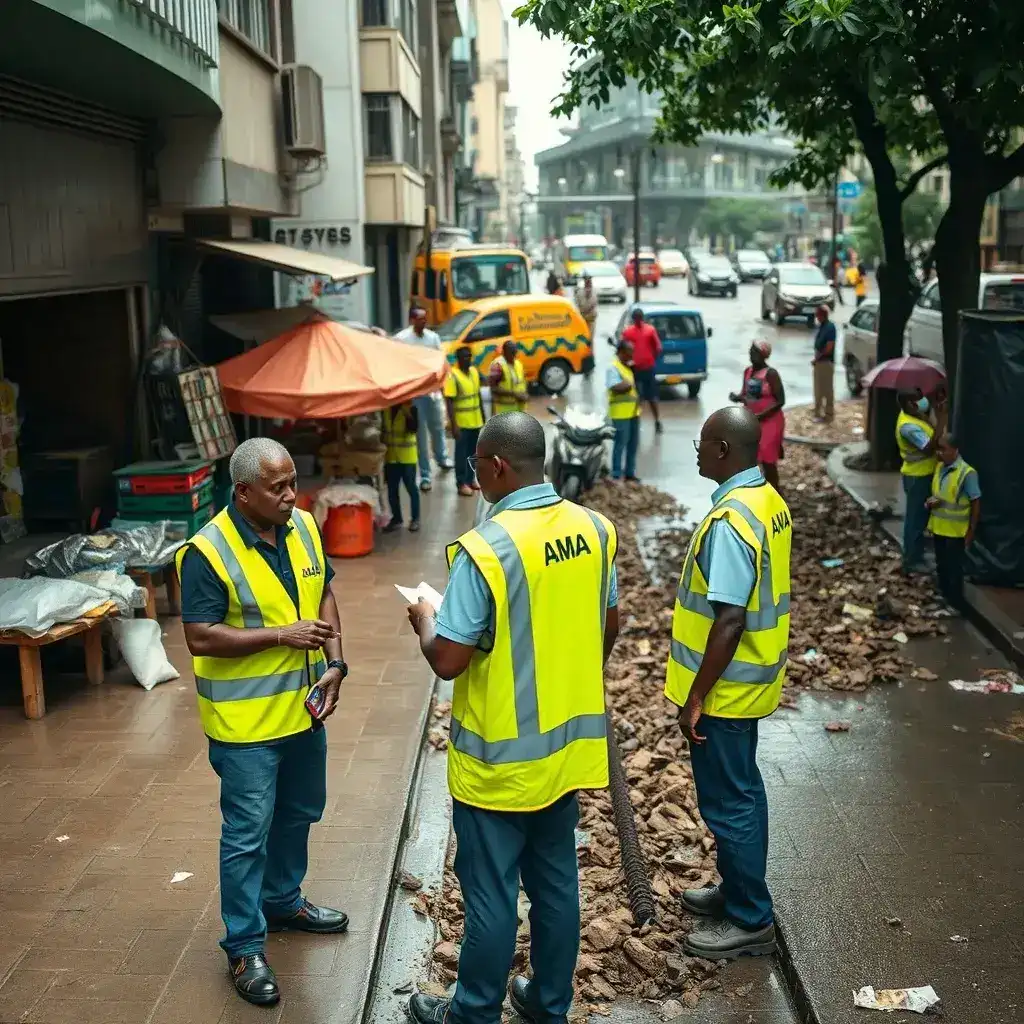
The Accra Metropolitan Assembly (AMA) has levied spot fines on 13 individuals and business operators in the Central Business District (CBD) for non-compliance during the National Sanitation Day (NSD) exercise. This action underscores the AMA’s intensified efforts to enhance sanitation and combat the persistent flooding issues plaguing Ghana’s capital.
Context of the National Sanitation Day Exercise
The National Sanitation Day, reintroduced after a four-year hiatus, aims to foster environmental cleanliness and improve drainage systems to mitigate flooding. The exercise typically involves community clean-up operations, including drain clearing and waste removal, encouraging widespread participation from residents, traders, and businesses.
Enforcement Amidst Challenging Conditions
During the recent exercise on Monday, June 8, the AMA reported fining six shop owners, four traders, and three drivers. These sanctions were issued for various violations, including neglecting to clean fronting drains and continuing business operations during the designated clean-up period. Drivers were fined for parking in unauthorized zones within the city center.
Despite heavy rainfall commencing the night before, AMA officials, sanitation workers, and volunteers persevered with the clean-up. Mayor Michael Kpakpo Allotey emphasized the assembly’s commitment, stating that staff and participants worked through the rain to ensure the initiative’s success.
Addressing Compliance and Civic Responsibility
Mayor Allotey noted that some shop owners failed to participate and maintain their surrounding areas, prompting the invocation of sanitation regulations. He stressed that sanitation is an ongoing responsibility, not confined to a single day, and requires continuous engagement from all citizens.
The Mayor acknowledged that many are still adjusting to the return of the NSD. He called for enhanced public education and a greater sense of civic duty to achieve the exercise’s objectives. The AMA also committed to cleaning areas that were not fully covered due to the adverse weather.
Root Causes of Flooding and AMA’s Response
Mayor Allotey attributed Accra’s recurring flooding primarily to human activities. These include indiscriminate dumping of refuse into drains, unauthorized construction on waterways, and the obstruction of drainage channels by structures and merchandise.
In response, the AMA is actively clearing all obstructions from waterways and drainage systems to ensure unimpeded water flow. The Mayor revealed that he personally supervised the demolition of several unauthorized structures that were impeding waterways just prior to the sanitation exercise.
Offenders who dispose of waste into drains and watercourses face prosecution, with potential penalties including fines or imprisonment. This strict enforcement aims to deter further environmental degradation.
Innovative Whistleblower Scheme Introduced
To bolster enforcement and encourage public involvement, the AMA is introducing a whistleblower incentive scheme. Individuals providing credible information that leads to the arrest and prosecution of sanitation offenders will receive a cash reward of GH¢200.
This initiative seeks to empower residents to become active partners in environmental protection and assist authorities in identifying and prosecuting those who violate sanitation laws. It aims to foster a collective sense of ownership over the city’s cleanliness.
Infrastructure Development Update
Regarding ongoing infrastructure projects, the Mayor provided an update on the reconstruction of the Rawlings Park road. The first phase at CMB is complete, while the second phase at Rawlings Park has faced delays due to continuous rainfall.
Construction materials are on-site, and work is expected to resume once weather conditions improve. The AMA is optimistic about achieving substantial completion of the project within the following week.
Looking Ahead
The AMA’s multi-pronged approach, combining strict enforcement, public education, and infrastructure improvements, signals a determined effort to address Accra’s long-standing sanitation and flooding challenges. The success of the reintroduced NSD and the whistleblower scheme will be critical indicators of progress. Citizens’ sustained engagement and adherence to sanitation regulations will be paramount in transforming Accra into a cleaner and more resilient city. Future monitoring will focus on the long-term impact of these measures on flood reduction and overall environmental health.










Leave a Reply