
Taiwan’s President Lai Ching-te arrived in Eswatini, the island’s sole diplomatic ally in Africa, following a deliberately unannounced trip that highlights the intensifying diplomatic battle with Beijing. The visit, which occurred days after his government revealed a previous itinerary was scuttled by Chinese pressure on several African nations, underscores Taiwan’s determination to maintain international engagement despite mounting challenges.
Context of Diplomatic Isolation
For decades, China has systematically sought to isolate Taiwan diplomatically, adhering to its “one China” principle which asserts that Taiwan is an inalienable part of China. Beijing leverages its significant economic and political influence to pressure countries into severing official ties with Taipei. This has dwindled Taiwan’s formal diplomatic allies to a handful of smaller nations across the globe, with Eswatini being the last remaining partner on the African continent.
President Lai’s original trip, scheduled for late April, was intended to commemorate the 40th anniversary of Eswatini’s King Mswati III’s accession. However, this plan was abruptly suspended when Taiwan reported that Seychelles, Mauritius, and Madagascar had rescinded flight permissions for Lai’s aircraft. Taiwan’s government directly attributed these cancellations to Chinese coercion, a tactic Beijing frequently employs to undermine Taiwan’s international presence.
An Unannounced Arrival and Defiant Stance
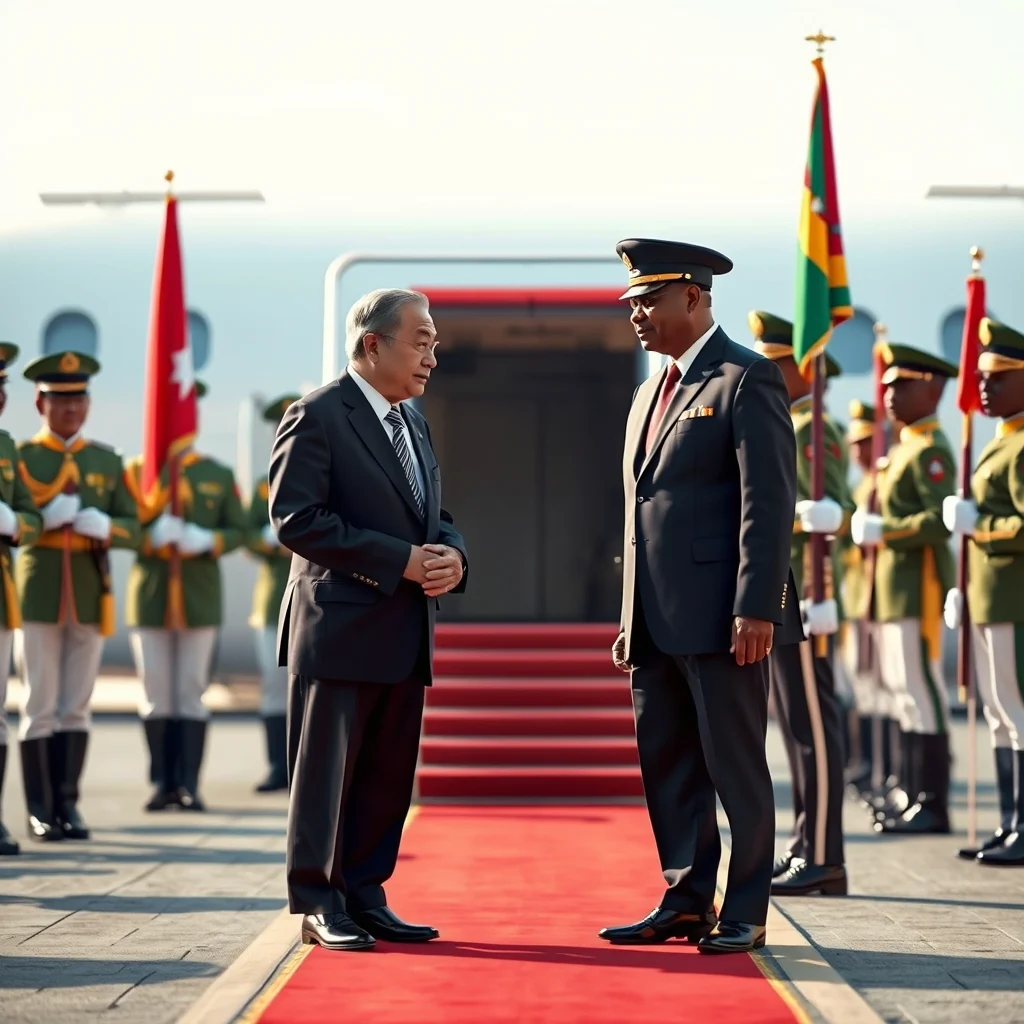
The successful, albeit unannounced, arrival in Eswatini was the result of “days of careful arrangements by the diplomatic and national security teams,” President Lai stated upon landing. While details of the revised travel route remain undisclosed, the trip signals Taiwan’s resolve not to be intimidated. Images from the arrival showed Lai being warmly received by Eswatini Prime Minister Russell Dlamini, passing through a guard of honour.
The Taiwanese delegation included Foreign Minister Lin Chia-lung and National Security Council Adviser Alex Huang, according to Taiwan’s presidential office. President Lai took to social media to express his determination, stating, “Taiwan will never be deterred by external pressures. Our resolve & commitment are underpinned by the understanding that Taiwan will continue to engage with the world – no matter the challenges faced.”
Lai specifically lauded Eswatini for “standing firm against various diplomatic and economic pressure, speaking out for Taiwan’s international place through concrete actions.” He expressed hope that the visit would deepen the bilateral friendship through enhanced economic, agricultural, cultural, and educational ties, thereby promoting Taiwan’s international cooperation.
Beijing’s Reaction and Economic Levers
China’s Ministry of Foreign Affairs reacted swiftly and harshly to the visit, dismissing it as a “stowaway-style escape farce” and calling President Lai an “international laughing stock.” A spokesperson stated, “No matter how the Democratic Progressive Party authorities collude with external forces or in what form they ‘buy the loyalty of others’, it is all a futile effort that cannot change the fact that Taiwan is part of China.” Beijing urged Eswatini to “see clearly the general trend of history” and not to support “Taiwan independence” separatists.
Adding a layer of economic pressure, China recently announced tariff exemptions for goods from all African countries, with the notable exception of Eswatini. This move, occurring shortly after Lai’s visit, is widely interpreted as a punitive measure against the kingdom for maintaining ties with Taiwan.
Implications and Future Outlook
President Lai’s trip to Eswatini, despite the obstacles, serves as a powerful message of resilience and a commitment to maintaining diplomatic relationships. For Taiwan, preserving these few remaining alliances is crucial for its international standing and a symbolic defiance against Beijing’s increasing assertiveness. Eswatini, in turn, demonstrates its commitment to its long-standing partnership with Taiwan, even in the face of potential economic repercussions from China.
The incident highlights the increasingly complex geopolitical landscape in Africa, where nations often find themselves navigating the competing interests of China and Taiwan. The effectiveness of China’s pressure tactics and Taiwan’s ability to circumvent them will continue to be a critical factor in the island’s diplomatic efforts. Observers will be watching closely to see if other nations follow Eswatini’s lead in resisting Chinese pressure or if economic realities compel them to align more closely with Beijing.









Leave a Reply