
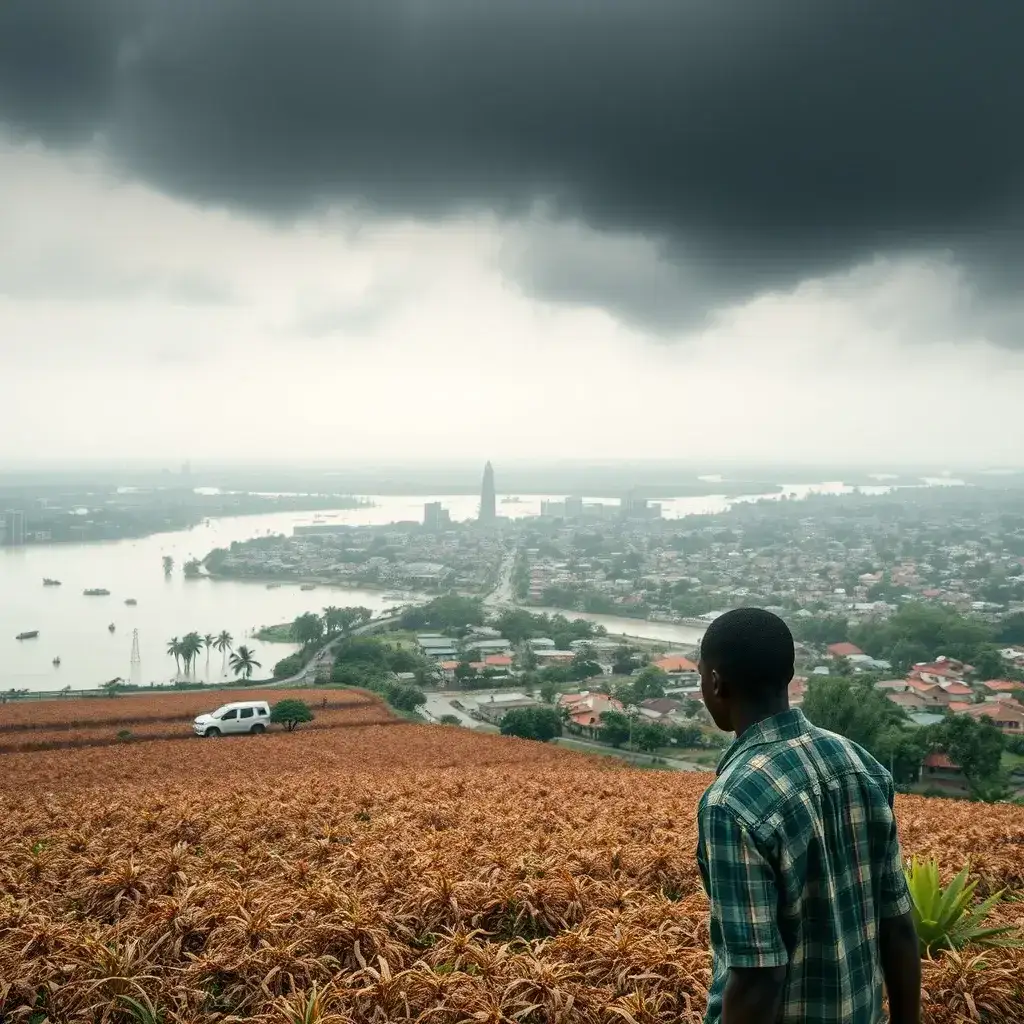
The World Meteorological Organization (WMO) has indicated that El Niño conditions may develop in 2026, raising concerns among climate scientists that global temperatures could remain elevated into 2027, potentially approaching record levels. For countries such as Ghana, the greater concern is not the temperature record itself, but the knock-on risks of disrupted rainfall, flooding, and pressure on food and energy systems.
Context: Rising Temperatures and Variable Rainfall
Data from the Ghana Meteorological Agency show that temperatures in Ghana are rising and rainfall patterns are becoming more variable. Scientists attribute these trends to intensifying heat extremes and an increased risk of floods and droughts, with significant implications for infrastructure, agriculture, and public health.
Climate shocks are becoming more complex, characterized by rising temperatures occurring alongside shifts in rainfall timing and intensity. These shifts can disrupt farming cycles and increase the risk of both drought and flooding in different parts of the country.
Agriculture at Risk in a Rain-Fed Economy
Agriculture remains one of Ghana’s most climate-sensitive sectors, as production depends heavily on rainfall rather than irrigation. Farming systems across much of the country rely on seasonal rains, making crop yields highly vulnerable to delayed or inconsistent rainfall patterns.
Historical climate records reveal that water scarcity has been a recurring challenge in northern Ghana, with drought conditions occurring periodically over the past decades. Research analyzing rainfall trends from 1960 to 2015 found persistent variability in rainfall across the savannah zone, reinforcing concerns that future climate shocks could intensify agricultural risks.
Recent evidence highlights the sensitivity of agricultural output to weather conditions. In 2025, the Ghana Cocoa Board warned that prolonged rainfall and reduced sunlight were increasing the spread of fungal diseases, particularly black pod, raising the risk of lower cocoa yields and a potential decline in national production.
Even moderate shifts in rainfall timing can disrupt rain-fed crop cycles, especially for staples dependent on precise planting windows. Where adaptive capacity is limited, these disruptions can translate into yield variability, localized price increases, and income stress among smallholder farmers.
Flooding: A Structural Risk in Urban Ghana
Scientific assessments, including GIS-based flood modelling and institutional studies by organizations like the CSIR-Water Research Institute and the World Bank, show that parts of Accra lie on low-lying coastal and lagoon plains that naturally accumulate runoff.
These physical conditions interact with rapid urban expansion, encroachment on waterways, and limited drainage capacity, making flooding a recurring risk even during moderate rainfall events. Researchers have identified multiple drivers of flooding beyond rainfall alone, including blocked drains, insufficient culverts, and construction on waterways.
These factors increase the likelihood that intense rainfall events will translate into urban disasters. Accra’s flood risk is structurally embedded in its geography and urban form, with climate variability events such as El Niño acting as amplifiers that increase the probability of extreme rainfall overwhelming already constrained drainage systems.
The deadly 2015 Accra Flood and Fire Disaster serves as a stark reminder of how extreme weather combined with infrastructure limitations can produce cascading impacts, including loss of life, displacement, and economic damage.
Energy Security Depends on Rainfall
Ghana’s electricity supply is closely tied to water availability, as a significant share of national power generation depends on hydropower from the Akosombo Dam.
Scientific studies show that water levels in the reservoir fluctuate significantly in response to rainfall and seasonal climate variability. These fluctuations can affect the dam’s capacity to generate electricity, particularly during prolonged dry periods.
Global energy studies by the IPCC and the International Energy Agency indicate that rising temperatures tend to increase electricity demand, especially through higher cooling loads. The combination of these supply and demand pressures can create stress on electricity systems during climate variability events, including El Niño conditions, when rainfall patterns and temperature anomalies may simultaneously affect generation capacity and consumption.
Rising Temperatures Already Changing Ghana’s Climate
Climate assessments from the IPCC and regional West African climate studies show that temperature increases in Ghana and surrounding regions are spatially uneven. Evidence suggests that minimum (nighttime) temperatures are rising faster than daytime temperatures.
This reduction in nighttime cooling is part of a broader pattern of asymmetric warming observed in tropical regions. Agricultural and public health research indicates that elevated nighttime temperatures can reduce crop recovery from heat stress and increase human heat exposure, particularly in urban environments already affected by heat retention.
The Real Risk Is System Stress, Not Just Heat
Climate scientists emphasize that early warnings about El Niño are not predictions of disaster but signals of elevated risk. The most serious impacts often occur when multiple systems are stressed simultaneously.
In Ghana, these stress points are already visible: Agriculture depends heavily on rainfall, cities face recurring flood risks, hydropower relies on stable water levels, and temperatures are steadily rising. When these pressures converge during a strong climate event, disruptions can spread quickly across the economy and public services.
A Narrow Window for Preparation
Climate and disaster risk experts emphasize that the current decade represents a critical window for climate adaptation. Strengthening drainage systems, improving water resource management, supporting farmers with climate-resilient seeds, and expanding early warning systems are widely identified as key measures that can significantly reduce the impacts of extreme weather events.
For Ghana, the emerging climate outlook is less a distant scientific projection than a practical governance test. If a strong El Niño develops, the scale of disruption will depend not only on the weather but on how effectively institutions respond before the crisis arrives.





Leave a Reply