
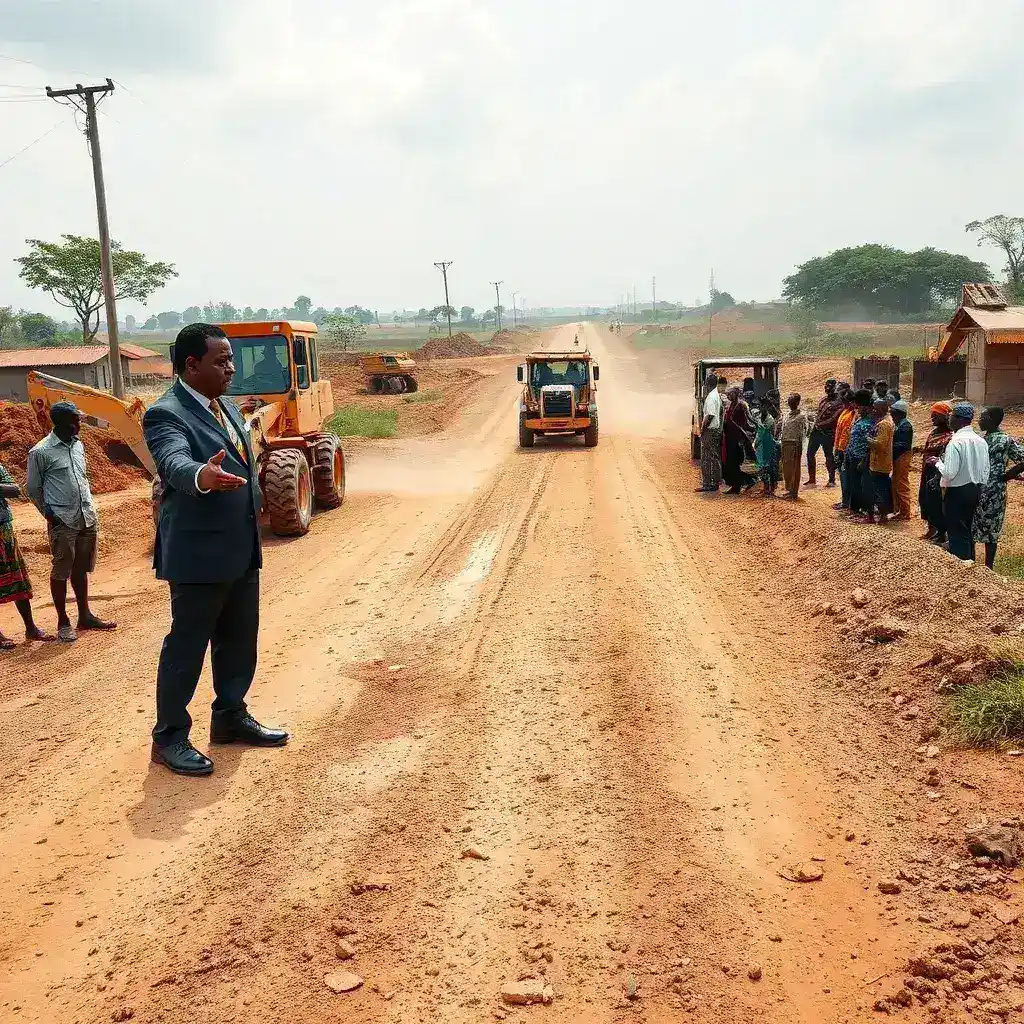
Minister of Roads and Highways, Kwame Agbodza, issued a stern ultimatum to underperforming contractors involved in the government’s flagship Big Push infrastructure program. During a working tour of the Bono, Savannah, and Upper West regions, the Minister warned that non-compliant contractors face contract termination, legal action, and project reallocation if they fail to demonstrate significant progress. The warning comes after the Minister observed widespread issues including slow project advancement, last-minute mobilization, and unfulfilled promises.
Assessing Project Progress
The Minister’s tour highlighted critical concerns regarding the execution of several road projects. He specifically criticized some contractors for accepting government contracts without possessing the necessary intention or capacity to complete the work. This observation points to a potential systemic issue of contractors overcommitting or lacking the resources to deliver on their contractual obligations.
Maripoma Construction became a focal point of the Minister’s dissatisfaction. He directly questioned the company’s commitment, noting their late mobilization to the site, which he attributed to the Minister’s impending visit. The Minister set a clear benchmark, demanding a 20% completion within two months, and warned of swift action if this target is not met.
Accountability and Political Ramifications
Minister Agbodza emphasized the accountability of contractors, questioning the political fallout from failed projects. He posed a direct question regarding why the President should endure public criticism for projects that contractors are failing to deliver. This highlights the government’s concern about the reputational damage caused by infrastructure project delays and failures.
When contractors failed to provide adequate justifications for delays, the Minister reiterated his firm stance. “No contractor is bigger than government. I will terminate you and we will meet in court,” he declared, signaling a no-tolerance policy for excuses and a readiness to pursue legal avenues.
Key Infrastructure Projects Under Scrutiny
The pace of work on the Wenchi-Bole-Wa Highway, a vital link between the Bono and Savannah regions, also drew criticism. The Minister expressed his dissatisfaction, stating, “I am not impressed with the speed of work on the Wenchi-Bole-Wa Highway, and we will abrogate if necessary to reward serious contractors.” This indicates a willingness to reassign contracts to more capable firms.
He challenged contractors who had actively lobbied for these projects, reminding them of their prior assurances of capability. The Minister questioned the discrepancy between their initial claims and their current performance, underscoring a perceived lack of diligence.
Addressing a Culture of Delays
Minister Agbodza identified a prevailing culture of delays within the road construction sector, particularly among local contractors. He suggested that the absence of penalties for late completion has fostered a relaxed approach to project timelines. However, he stressed that the Big Push program operates under different expectations, with timely completion being a critical factor.
Interestingly, the Minister observed that smaller contractors participating in the Big Push program were, in some instances, outperforming larger, more established firms. This suggests that size and experience do not automatically equate to efficiency, and the government is committed to rewarding performance regardless of the contractor’s scale.
Regional Support and Public Sentiment
The Savannah Regional Minister echoed the national Minister’s sentiments, revealing that regional authorities had intervened to prevent public unrest stemming from stalled projects. He confirmed that demonstrations had been averted and pledged to take decisive action against any contractor in the Savannah region failing to deliver.
This unified front between national and regional ministers underscores the seriousness with which the government is treating project delivery and contractor accountability. The intervention to prevent demonstrations highlights the growing public frustration with delayed infrastructure development.
Future Implications
The Minister’s firm stance and the potential for contract terminations signal a significant shift in how infrastructure projects will be managed under the Big Push program. Contractors can expect increased scrutiny and stricter adherence to timelines. The government’s willingness to reallocate projects to more efficient firms could reshape the landscape of the construction industry, favoring those who can demonstrate reliability and timely execution. Stakeholders will be closely watching which contractors are able to adapt to these new demands and which projects are reassigned in the coming months.










Leave a Reply