
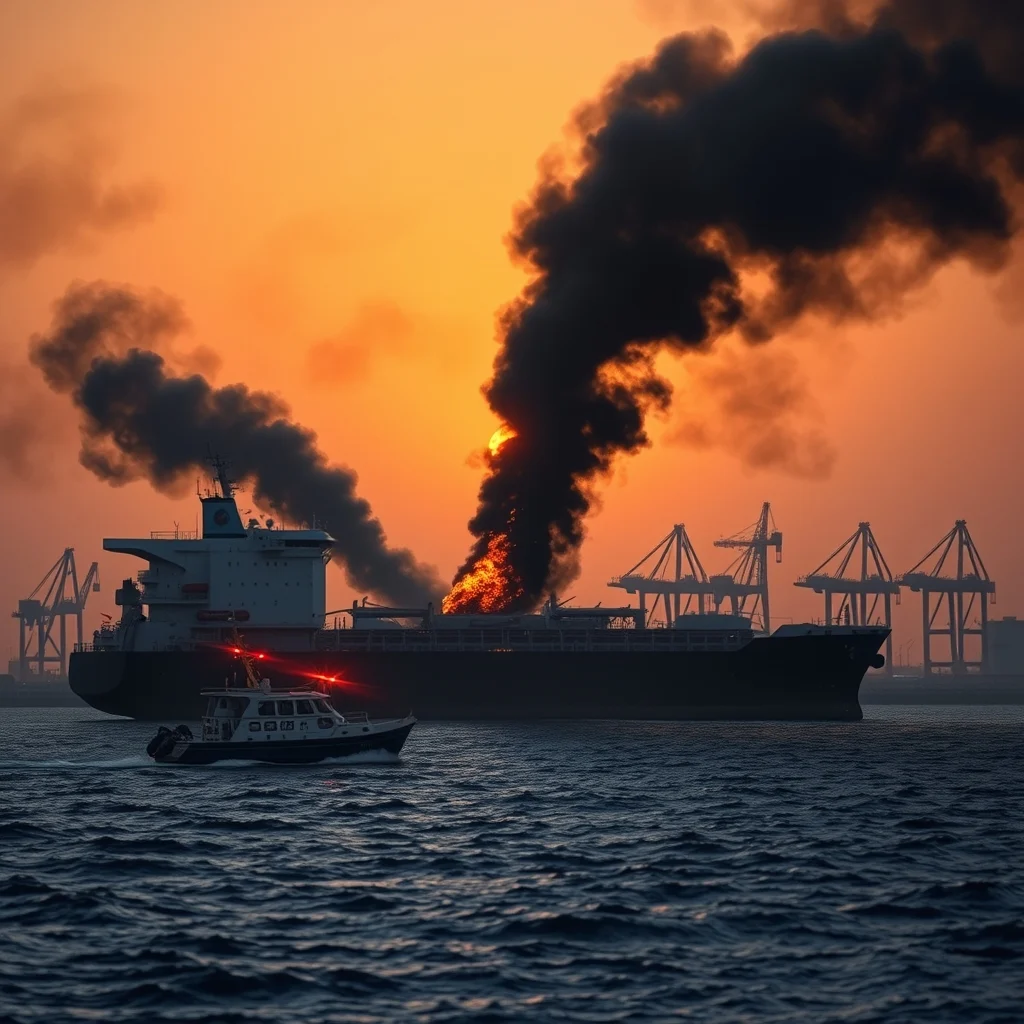
The United Arab Emirates (UAE) reported a significant escalation in regional tensions on Monday following a drone attack that ignited a large fire at the key oil port of Fujairah, with officials accusing Iran of launching the strike. The incident, which injured three Indian nationals, occurred amidst a backdrop of heightened military activity and a complex geopolitical standoff involving Iran, the US, and neighboring Gulf states.
Rising Tensions in Strategic Waterway
The attack on Fujairah, located on the UAE’s east coast outside the Strait of Hormuz, followed an earlier announcement by the UAE defense ministry of intercepting three missiles launched from Iran, with a fourth missile falling into the sea. A tanker affiliated with the UAE’s state-owned oil company, Adnoc, was also reported to have been hit in the Strait of Hormuz.
The UAE government swiftly condemned the actions as a “dangerous escalation.” Iran, however, through its state media, quoted an unnamed military official denying any intention to target the UAE, stating “no plans to target the UAE.” This denial comes as the US reported its navy destroyers and US-flagged merchant ships were transiting the Strait of Hormuz.
A Blockaded Strait and Diplomatic Fallout
The Strait of Hormuz, a vital chokepoint through which approximately 20% of the world’s oil and liquefied natural gas passes, has been a focal point of recent geopolitical friction. The region has experienced significant disruptions since February, following air strikes by the US and Israel on Iran, which Tehran responded to by effectively blocking the waterway. Although a ceasefire was announced in early April, with Iran reportedly ending drone and missile strikes on Gulf countries, maritime transit has remained severely limited.
Adding to the instability, South Korea reported an explosion on one of its ships anchored off the UAE coast on Monday. Neighboring Qatar voiced condemnation of the attack on the Adnoc-affiliated tanker and called for the “unconditional reopening” of the strait. In Oman, two individuals were injured when a residential building in Bukha, along the Strait of Hormuz coastline, was targeted.
US Involvement and Humanitarian Concerns
The situation has drawn in the United States, with President Donald Trump announcing on Sunday that the US would assist stranded vessels attempting to navigate the shipping lane. An estimated 2,000 ships and 20,000 seafarers have been affected by the ongoing blockade. Trump stated that the US had received requests from numerous countries to help free their ships, emphasizing their “neutral and innocent” status.
The US President threatened to use force if the “Humanitarian process” of freeing the vessels was interfered with. Concerns have been mounting over dwindling supplies and the severe impact on the physical and mental health of sailors trapped at sea. However, details on how the US plans to facilitate safe passage remain unclear.
Economic Repercussions and Future Outlook
The attacks and heightened tensions have had an immediate impact on global oil markets. The benchmark Brent crude oil price surged past $115 a barrel shortly after reports of the Fujairah attack, marking an increase of over 5% for the day. Fujairah’s strategic location allows for crude oil loaded onto tankers via a pipeline from Abu Dhabi’s oilfields to bypass the Strait of Hormuz, making it a critical alternative export route.
The escalating conflict in the Strait of Hormuz and its implications for global energy security are a significant concern. As the UAE lodges accusations against Iran and the US signals its intent to intervene, the region faces a critical juncture. Observers will be closely watching for de-escalation efforts, the effectiveness of US intervention in the strait, and the potential for further economic and political ramifications across the Middle East and the global energy market.










Leave a Reply