
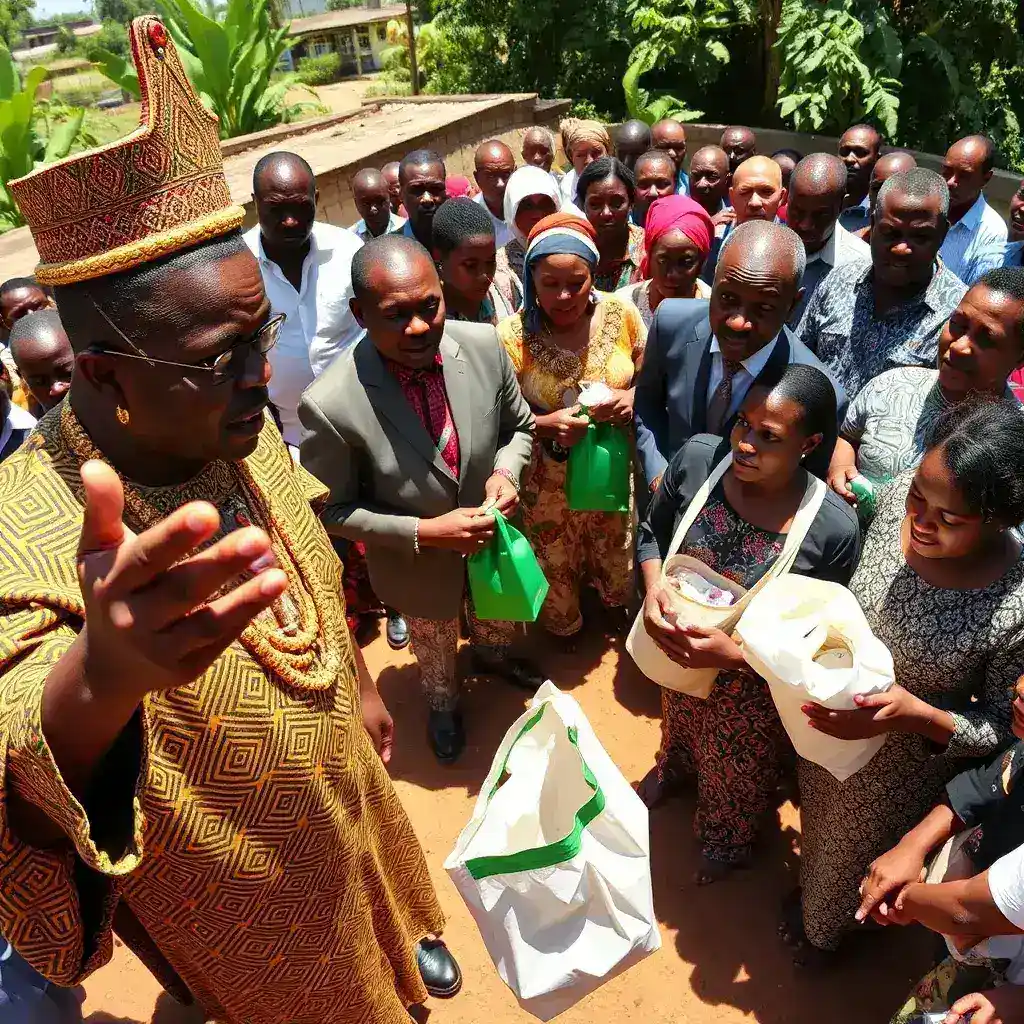
The Paramount Chief of Asante Akyem Domeabra, Nana Baffour Owusu Bediako I, has officially endorsed a new recycle-and-reuse initiative by the Green Africa Youth Organisation (GAYO) aimed at tackling the escalating sanitation crisis within the Asante Akim North Municipality and the broader Ashanti Region. This partnership, formalized through a Memorandum of Understanding (MoU) between the Domeabra Traditional Authority, the Asante Akim North Municipal Assembly, and GAYO, marks a significant step towards sustainable waste management.
Context: A Growing Sanitation Challenge
Ghana faces persistent challenges with waste management, with many metropolitan, municipal, and district assemblies (MMDAs) struggling to cope with the sheer volume of waste generated. Landfills are often overflowing, and inadequate disposal methods contribute to environmental degradation and public health risks. The National Sanitation Day, a government initiative, has seen limited success in instilling long-term behavioral change regarding waste disposal habits.
The Asante Akim North Municipality, like many others, has grappled with finding effective solutions. Despite efforts like monthly clean-up exercises mandated by the President, the municipality’s existing landfill is full, creating a critical need for alternative and more sustainable waste management strategies.
The Zero Waste Project Initiative
The core of this new initiative is GAYO’s ‘Zero Waste Project,’ which focuses on waste prevention rather than just disposal. The project champions a circular economy model where all materials are either reused, repaired, or recycled. This approach aims to significantly reduce the amount of waste sent to landfills or incinerators, thereby mitigating their environmental impact.
Key components of the Zero Waste Project include promoting segregation of waste at the source, enhancing recycling and composting efforts, and fostering a culture of reuse. GAYO also intends to create green jobs by supporting waste entrepreneurs within the circular economy framework.
A Call for Attitudinal Change
Nana Baffour Owusu Bediako I highlighted the critical need for a shift in public attitudes towards waste disposal. He expressed disappointment that previous efforts to redirect waste disposal practices had failed, indicating a deep-seated complacency with unhygienic conditions. “We seem too comfortable with filth,” he stated, emphasizing that poor sanitation habits hinder progress and pose a severe threat to public health.
The Paramount Chief sees GAYO’s Zero Waste initiative as a timely intervention that will not only help reduce waste but also generate employment opportunities, particularly for the youth. He urged collective responsibility, stressing that waste-related diseases can be fatal and that indiscriminate dumping is incompatible with the vision of clean communities.
Municipal Support and Collaboration
Sarah Amoakoaa, the Municipal Chief Executive (MCE) for Asante Akim North, affirmed the Assembly’s full support for the project. She acknowledged GAYO’s efforts and expressed confidence in the successful implementation of the Zero Waste Project.
The MoU outlines a clear division of responsibilities. The Traditional Authority and the Municipal Assembly will spearhead community sensitization campaigns and provide necessary land for waste aggregation centers. GAYO, in turn, will provide the technical expertise, manage collection logistics, and establish market linkages for individuals and businesses involved in waste recycling and upcycling.
Broader Regional Impact and Future Outlook
Asante Akim North is not the first municipality in the Ashanti Region to partner with GAYO on waste management. The Green Africa Youth Organisation has similar collaborations underway with other MMDAs, including Atwima Nwabiagya. GAYO’s Operations Manager, Samuel Gyimah Kwadwo Asante, indicated that the organization plans to extend its Zero Waste Project to MMDAs nationwide, positioning it as a comprehensive solution to Ghana’s sanitation crisis.
The success of this partnership hinges on sustained community engagement and a genuine transformation in individual and collective waste disposal habits. The initiative promises to not only improve environmental conditions but also unlock economic potential through the creation of green jobs, offering a hopeful path forward for Asante Akim North and potentially other regions facing similar environmental challenges.







Leave a Reply