
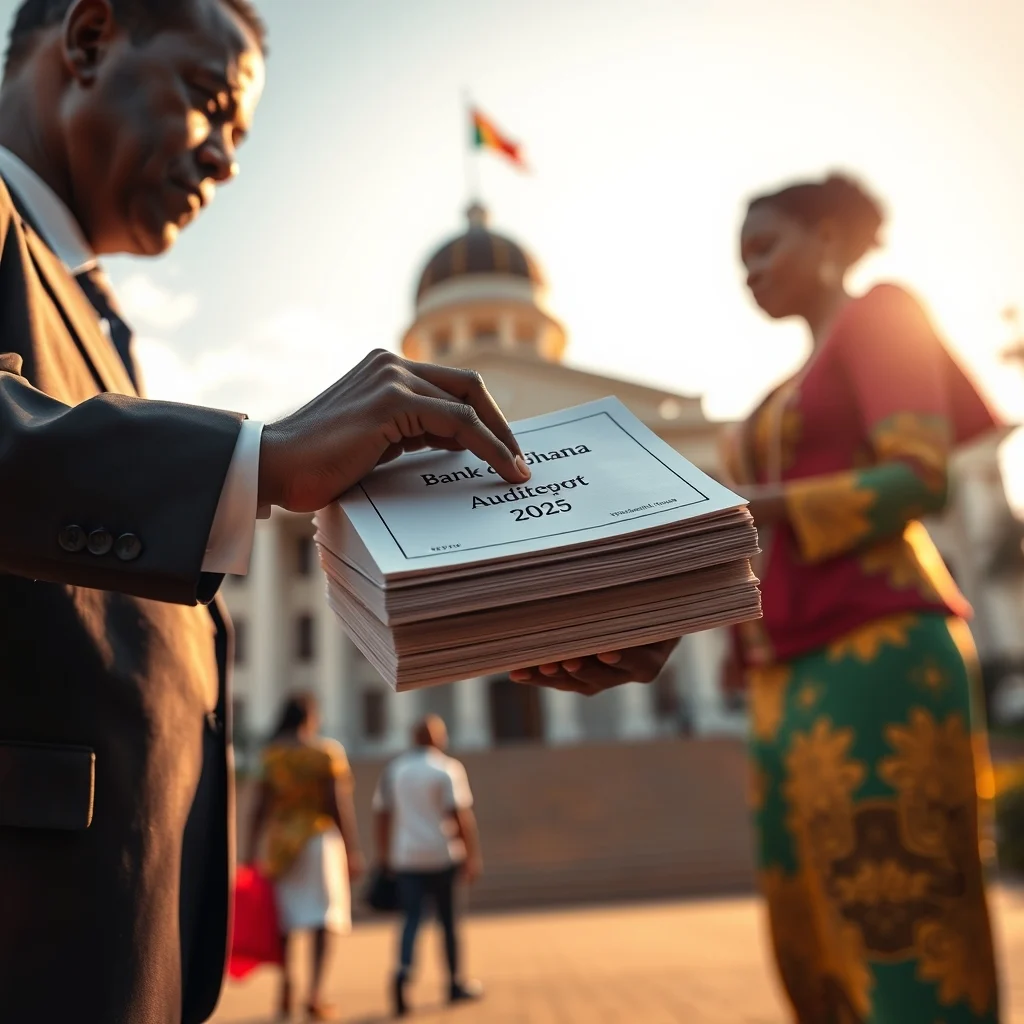
Accra, Ghana – A controversy has erupted over the handling of the Bank of Ghana’s (BoG) 2025 audited annual report, with accusations that the process risks politicising the crucial financial institution. The criticism, voiced by Kojo Oppong Nkrumah, Ranking Member of Parliament’s Economy and Development Committee, centres on the report allegedly being handed to the opposition National Democratic Congress (NDC) instead of following the established parliamentary procedure.
Established Procedure Under Scrutiny
According to Mr. Oppong Nkrumah, the standard legal and procedural framework dictates that the Bank of Ghana’s audited annual report must first be submitted to the Minister of Finance. The Finance Minister then reviews the report, potentially adding commentary, before it is officially laid before Parliament for scrutiny.
Speaking on Asempa FM’s Ekosii Sen Show on Monday, May 4, Oppong Nkrumah highlighted that this established pathway was bypassed. He stated that the 2025 report was allegedly given directly to the NDC party, who then made its contents public. This deviation from the norm, he argues, sets a dangerous precedent.
Concerns Over Politicisation
The core of the criticism lies in the potential for politicisation of the central bank. Oppong Nkrumah warned that allowing political parties direct access to such sensitive financial reports, outside of parliamentary oversight, could compromise the BoG’s independence and credibility. He described the alleged action as a “blatant illegality” and urged against its recurrence.
“What they are doing is setting a precedent that will lead to the politicisation of the Bank of Ghana,” Oppong Nkrumah asserted. He further cautioned the leadership of the Bank of Ghana against permitting political influence to sway their adherence to legal obligations.
Undermining Institutional Independence
The Bank of Ghana Act mandates the submission of audited annual reports to Parliament. This process is designed to ensure transparency and accountability, allowing lawmakers to review the central bank’s performance and financial health. By allegedly circumventing this process, critics argue, the integrity of these checks and balances is undermined.
“Are we supporting the bank’s independence and credibility, or are we undermining it?” Oppong Nkrumah questioned. He stressed that the governors of the Bank of Ghana must not allow any political party to dictate how they fulfill their statutory duties under the Bank of Ghana Act.
Broader Implications for Financial Governance
The handling of the BoG’s 2025 report raises broader questions about the governance of independent state institutions in Ghana. The independence of a central bank is critical for maintaining economic stability, controlling inflation, and fostering investor confidence. Any perception of political interference can erode trust in the nation’s financial management.
Analysts suggest that such controversies, regardless of the specific details, can have ripple effects on international financial markets and potential investors. A central bank perceived as politically influenced may struggle to implement monetary policy effectively, potentially leading to economic uncertainty.
What to Watch Next
Moving forward, attention will be on how Parliament addresses these allegations and whether a formal investigation is launched. The response from the Bank of Ghana and the Ministry of Finance will be closely watched for clarity on the report’s transmission. Observers will also monitor whether the established procedural norms for submitting such critical financial reports are reinforced to safeguard the central bank’s autonomy and uphold public trust in Ghana’s financial governance structures.










Leave a Reply