
Roads and Highways Minister Kwame Governs Agbodza concluded a two-day tour of the Upper West Region this week, assessing progress on the government’s “Big Push” road agenda and addressing significant public anger over delays and abandoned projects. The tour, prompted by threats of a picket at Wa Airport, resulted in commendations for some contractors, stern warnings for others, and a renewed commitment to infrastructure development, notably influenced by the minister’s observation of local women’s resilience.
Context of Public Dissatisfaction
For months, residents of the Upper West Region have voiced growing frustration over the slow pace and poor quality of road construction projects under the government’s flagship “Big Push” initiative. Reports of abandoned sites, pervasive dust, and unaddressed potholes had fueled public discontent, culminating in planned protests.
Ministerial Assessment and Site Visits
Minister Agbodza’s itinerary included critical road stretches known for their dilapidated conditions. His first stop was the 37-kilometre Bulenga–Yaanyuo-Yiri road, a project plagued by dust and flood damage. ASTEE Ghana Limited, which recently took over the site, received praise from the Ghana Highway Authority’s Upper West Regional Director, Lovestone Damalie, for its impressive progress in the last three months.
Further along, the Mankuri–Han section, a 10-kilometre stretch completed by P&W Ghanem, drew high marks from Ghana Highway Authority Chief Executive Mallam Issa Ishak. Ishak stated the authority had “no regret” awarding the contract, highlighting the contractor’s speed and quality.
Contractor Accountability and Ultimatum
Not all contractors fared well during the tour. Malpourma Enterprise Limited faced scrutiny for significant delays on the Sawla–Wa highway, six months after its sod-cutting ceremony, and for falling behind schedule on the Jeffisi–Tumu stretch. Additionally, three other companies—MO&MO Limited, Ganhali Limited, and M A Constance Limited—were found to have no presence, workers, or machinery at their designated sites.
In response to these widespread delays, Minister Agbodza issued a firm ultimatum: contractors must return to their sites immediately or face contract termination. This decisive action signals a shift towards stricter accountability in the execution of public works.
A Defining Image: Women and Grain
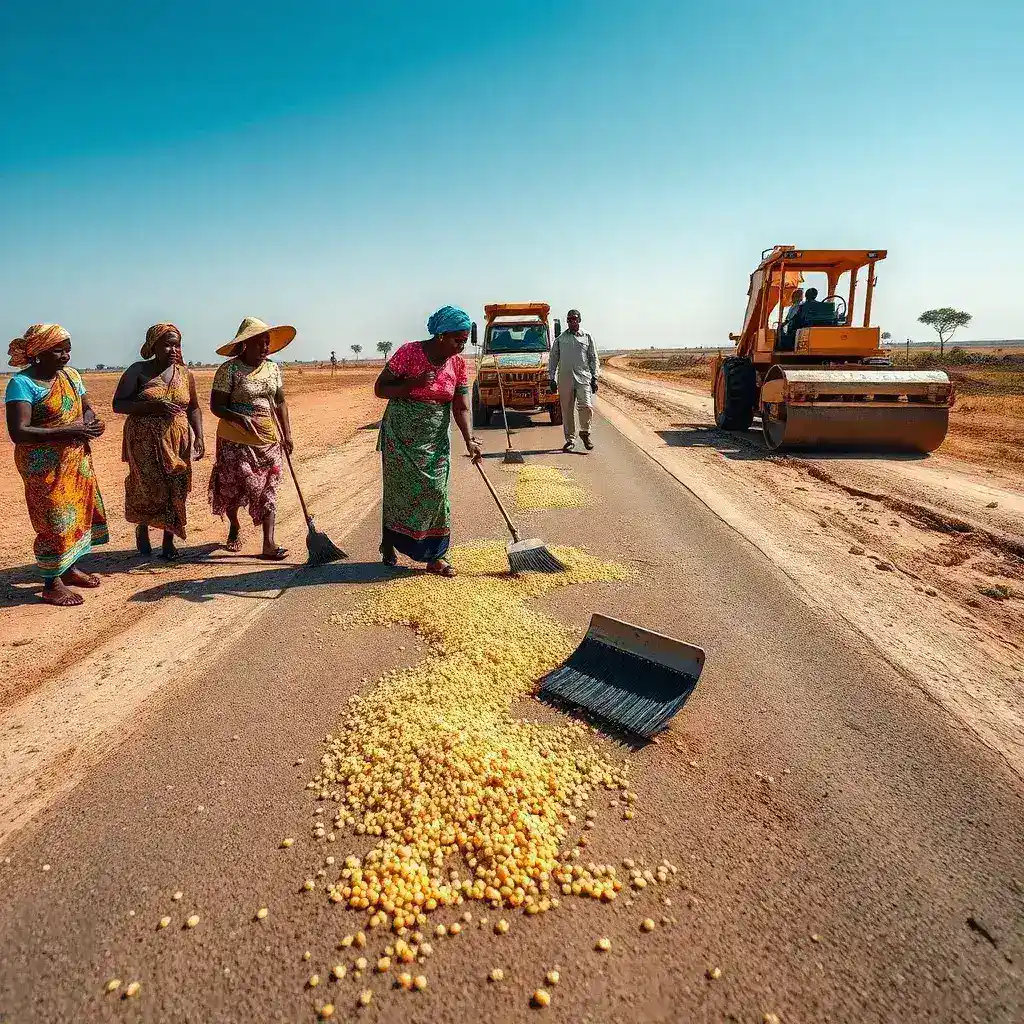
Beyond the technical assessments, a poignant observation by Minister Agbodza during the tour significantly impacted his perspective. He recalled witnessing women near Nandow–Waala–Jeffisi sweeping maize grains from the road a year prior, a scene caused by trucks struggling with the damaged road surface. This image of local resilience amidst infrastructure challenges has remained with him, underscoring the human impact of delayed road development.
Work is reportedly progressing well on the Jeffisi–Tumu road, with Mawums Ghana Limited earning commendations from local chiefs and the Member of Parliament for Tumu, Mohammed Issa Battaglia. This section is credited with reducing travel time to the Upper East regional capital to approximately two hours.
Government’s Stated Objectives
Deputy Roads Minister Alhassan Suhuyini clarified that the inspection was not intended to shame contractors but to ensure the fulfillment of President John Dramani Mahama’s road development agenda. The aim is to accelerate project delivery and improve connectivity across the region.
Easing Tensions and Future Outlook
The minister’s tour and subsequent actions appear to have de-escalated the public’s frustration. Road works are reportedly gaining momentum, and the planned picket at Wa Airport has been called off, indicating a more positive outlook for the region.
The coming weeks will be crucial in determining if the current pace of work can be sustained. Continued progress on these key road projects will be vital for the government to maintain public confidence and avoid future roadblocks, both literal and figurative.










Leave a Reply