
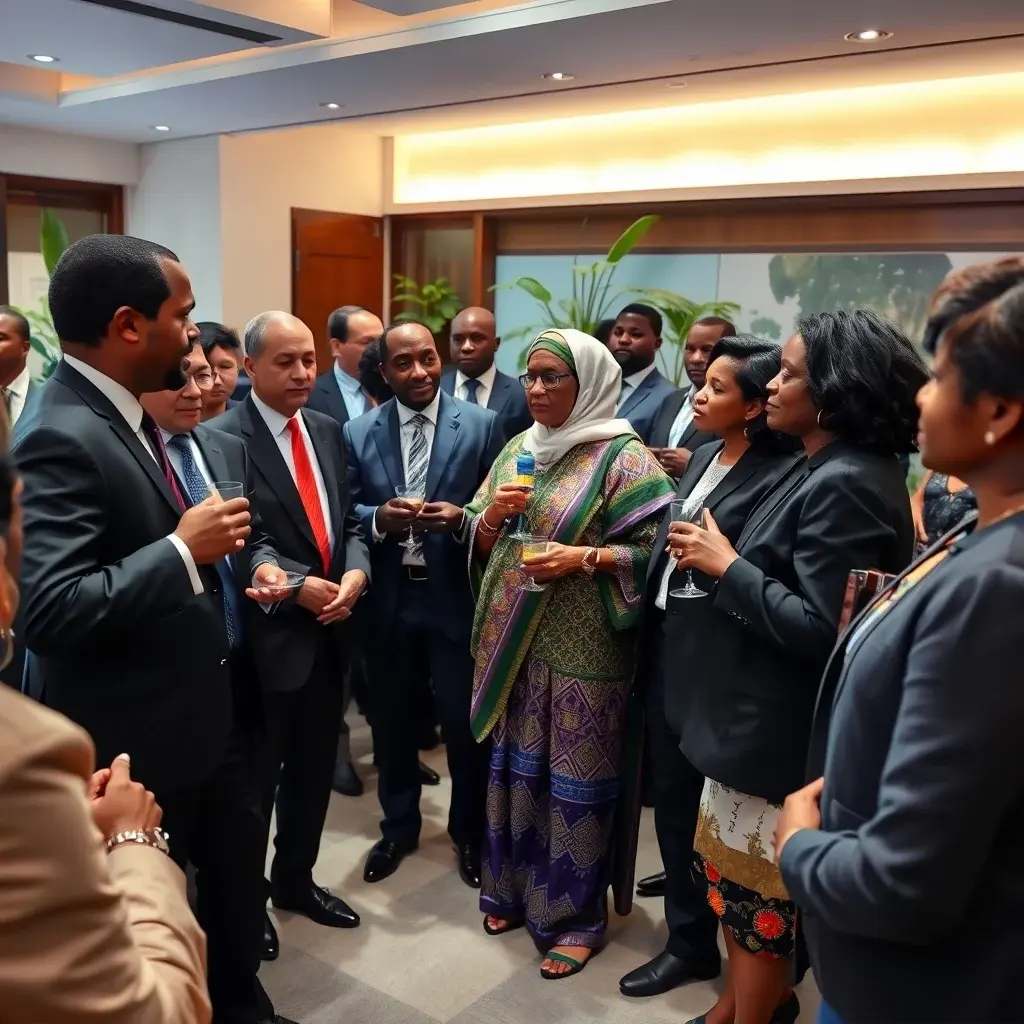
The Africa Centre for Nature-Based Climate Action (AC4NCA) recently hosted a high-level Nature-Talks Soirée in Accra, Ghana, bringing together diplomats, government officials, academics, and climate advocates to launch its strategic plan for advancing nature-based solutions across the continent. The event highlighted the growing urgency for collaborative climate action in Africa as the continent faces severe environmental challenges despite contributing minimally to global greenhouse gas emissions.
Context: Africa’s Climate Vulnerability and Natural Capital
Africa, despite being the least responsible for historical greenhouse gas emissions, stands as one of the most vulnerable continents to the impacts of climate change. Escalating environmental challenges, including extreme weather events, rising sea levels, and biodiversity loss, threaten livelihoods and ecosystems. However, the continent also possesses vast natural resources, such as extensive forests, wetlands, mangroves, and grasslands, which are crucial for both climate mitigation and adaptation.
Advancing Nature-Based Solutions
The AC4NCA’s strategic plan aims to leverage these rich natural assets by placing nature at the core of Africa’s climate strategy. Samuel A. Jinapor, Global Lead of AC4NCA, emphasized that nature-based solutions offer a powerful pathway not only to reduce emissions but also to restore degraded ecosystems, build resilience against climate shocks, and foster sustainable economic development. These solutions are designed to be locally grounded, socially inclusive, and economically transformative.
The strategic plan underscores the potential of nature-based solutions to address multiple development goals simultaneously. By investing in the conservation and restoration of natural capital, African nations can enhance carbon sequestration, protect vital water resources, improve soil health, and safeguard biodiversity. This integrated approach promises to deliver climate action that benefits both people and the planet.
International Support and Collaboration
The Nature-Talks Soirée saw significant engagement from international partners, signaling strong support for AC4NCA’s initiative. Rune Skinnebach, the European Union Ambassador to Ghana, reaffirmed the EU’s commitment to Africa’s climate action, stating, “The European Union will remain a stable partner to Ghana for the next 50 years and beyond. We recognise that Africa’s natural ecosystems are central to the global climate solution.”
Jakob Linulf, the Danish Ambassador, stressed the importance of sustained collaboration and investment, noting that effective climate initiatives require strong partnerships between governments, civil society, and development actors. Türkiye, represented by Deputy Head of Mission Dilara Cesar, also reaffirmed its commitment to global climate cooperation and supporting platforms that promote sustainability and resilience.
The Role of Research and Local Action
Academic perspectives were also central to the discussion. Prof. Gordon Awandare, Pro Vice-Chancellor of the University of Ghana, highlighted the critical role of research institutions in generating knowledge and innovation. He stressed the need for close collaboration between researchers, policymakers, and practitioners to translate scientific findings into practical, scalable climate solutions tailored for the African context.
Rev. Joyce R. Aryee, Board Chair of AC4NCA, described the strategic plan launch as “a declaration of intent” and “a commitment to place nature at the centre of Africa’s climate and development agenda.” She emphasized that Africans are custodians of their natural resources and called for bold action, innovation, and inclusive growth guided by the new strategy.
Bridging Gaps and Driving Outcomes
The soirée served as a vital platform for dialogue, fostering new partnerships and reinforcing existing ones among governments, development partners, and civil society organizations. Discussions focused on practical steps to scale up investments in nature-based solutions, strengthen relevant policy frameworks, and drive innovation in climate interventions. Platforms like Nature-Talks are crucial for bridging communication gaps and ensuring that discussions lead to actionable outcomes.
Future Outlook
The AC4NCA’s strategic plan marks a significant step towards integrating nature-based solutions into Africa’s broader climate and development agenda. The commitment from international partners and the emphasis on local collaboration and research suggest a promising future for harnessing the continent’s natural capital. Moving forward, the focus will be on translating this strategic intent into concrete projects on the ground, mobilizing necessary funding, and ensuring that these initiatives deliver tangible benefits for both climate resilience and sustainable development across Africa. Continued monitoring of policy implementation and the scaling of successful pilot projects will be key indicators of progress.










Leave a Reply