
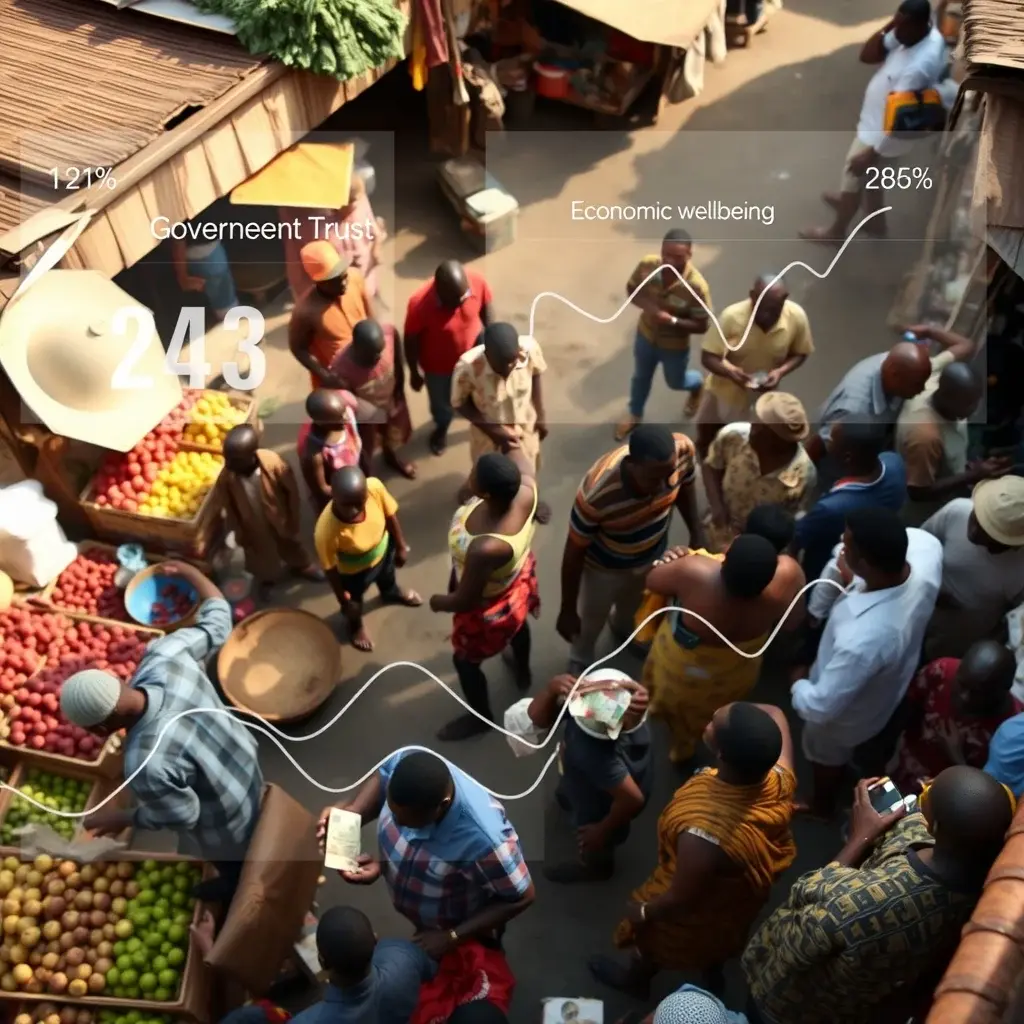
The Africa Policy Lens (APL), a policy think tank, has launched two comprehensive national tracking tools—the Ghana Wellbeing Tracker and the Governance Trust Barometer—in Accra. These initiatives aim to measure citizens’ perceptions of governance performance and their actual economic realities, providing data-driven insights into institutional trust and household economic conditions.
Context: Bridging the Gap Between Policy and Lived Experience
Understanding the true state of governance and economic wellbeing often requires looking beyond official statistics and formal structures. Policy decisions are most effective when they align with the everyday experiences and challenges faced by citizens. Traditional methods of assessment may not always capture the nuanced realities of how institutions function or how economic pressures impact households.
The Governance Trust Barometer: Assessing Perceptions of Governance
The Governance Trust Barometer (GTB) is designed to capture the lived experiences of citizens to evaluate how governance is perceived in practice. Dr. Hayford Ayerakwa, Director of Research at APL, stated that the GTB offers a systematic, citizen-centred evaluation of governance quality and institutional trust in Ghana.
“It is grounded in the lived experiences and perceptions of citizens, capturing how individuals assess the performance, responsiveness, and credibility of the state across core governance functions,” Dr. Ayerakwa explained. This approach moves beyond formal institutional structures to examine how governance is experienced in daily life.
The GTB consolidates eight critical domains into a single index, scaled from 0 to 100. These domains include institutional trust, perceptions of corruption, accountability and the rule of law, government communication, citizen voice, electoral confidence, political security, and civic participation. APL emphasizes that this framework acknowledges the complexity of governance, recognizing that democratic quality is shaped by continuous interaction between citizens and state institutions, not solely by elections.
The Ghana Wellbeing Tracker: Monitoring Economic Realities
Complementing the GTB, the Ghana Wellbeing Tracker focuses specifically on how households experience prevailing economic conditions. “The Ghana Wellbeing Tracker offers a citizen-centred evaluation of prevailing economic conditions, focusing on how households navigate day-to-day realities,” Dr. Ayerakwa elaborated.
The tracker examines key dimensions that directly affect household economic health. These include the pressures of the cost of living, employment conditions, income dynamics, the health of local businesses, and the financial resilience of households. These various indicators are aggregated into the Ghana Wellbeing Index (GWI), a composite score also ranging from 0 to 100, offering a comprehensive overview of economic wellbeing across the nation.
Implications for Policy and Citizens
APL anticipates that these two tracking tools will significantly support policy analysis and contribute to more responsive governance. By providing data that directly reflects the lived realities of citizens, policymakers can better align decision-making with the actual needs and perceptions of the populace. This citizen-centred approach is expected to foster greater accountability and more effective policy interventions.
For citizens, these trackers offer a potential avenue for their experiences to be formally recognized and addressed. The data generated can serve as a vital resource for advocacy groups, researchers, and the public in understanding and discussing the state of governance and economic conditions in Ghana. The ongoing measurement provided by these barometers will allow for the tracking of trends over time, highlighting progress or areas needing urgent attention.
Looking Ahead: Data-Driven Governance
The launch of the Ghana Wellbeing Tracker and the Governance Trust Barometer marks a significant step towards evidence-based policymaking in Ghana. The success of these initiatives will depend on their continued implementation, the transparency of their methodologies, and their uptake by policymakers and the public. As APL continues to gather and report data, the focus will be on how this information translates into tangible improvements in governance and economic wellbeing for all Ghanaians. Observers will be watching to see how these new metrics influence public discourse and shape future policy directions in the country.










Leave a Reply