
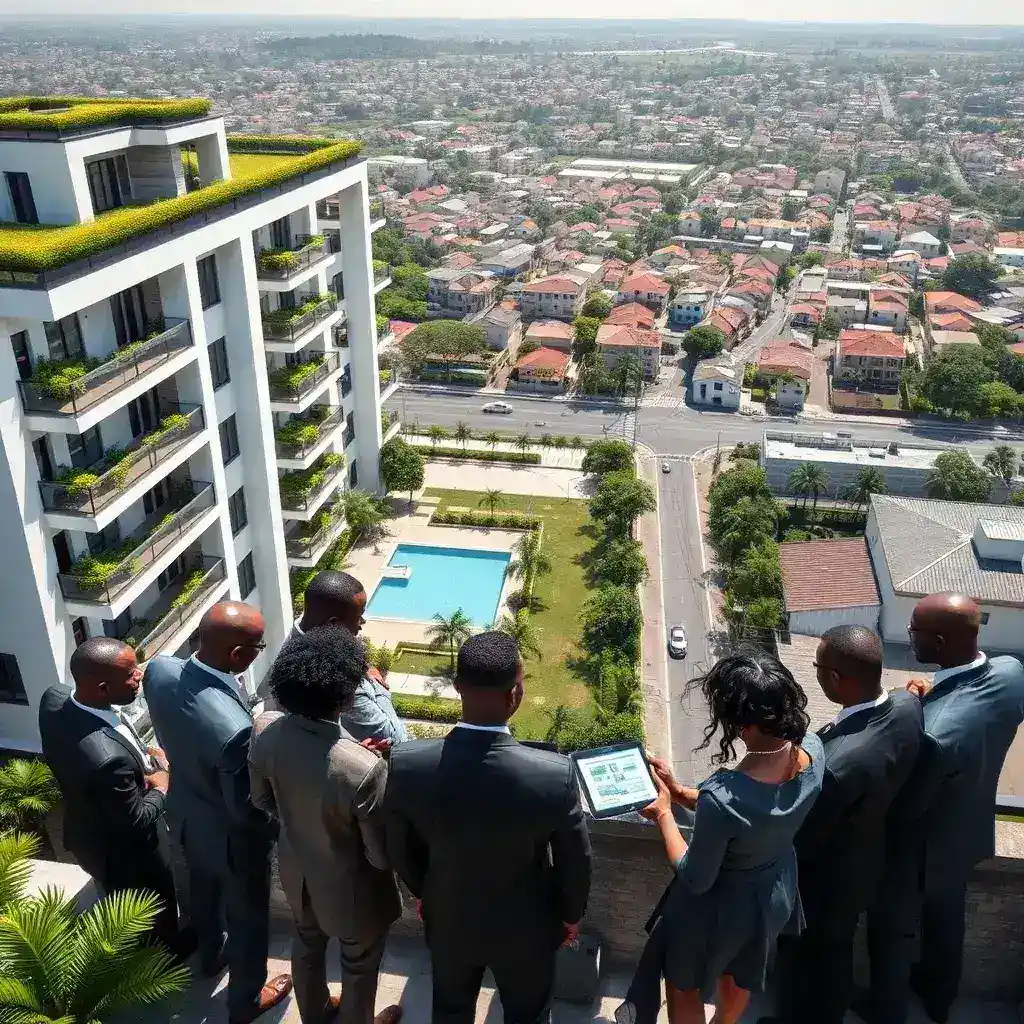
Accra, Ghana – May 2026 – Diaspora investors considering purchasing property in Accra face a persistent question: is it better to buy now or wait for more favorable conditions? Recent data from the first quarter of 2026 indicates that waiting may be a costly decision, as macroeconomic indicators and property market trends suggest a strengthening market. The Ghana Statistical Service reports inflation at a 25-year low of 3.2%, the Bank of Ghana has cut its policy rate to 14%, and gross international reserves have reached an all-time high of USD 14.5 billion. These factors collectively create a favorable environment for property investment, particularly for those transacting in US dollars.
Macroeconomic Stabilization Bolsters Investor Confidence
Ghana’s economic landscape has undergone a significant transformation over the past two years. Inflation, which peaked at 54.1% in December 2022, has seen a remarkable 50.9 percentage point decline in 39 months, reaching 3.2% by March 2026. This sustained disinflation, marking 15 consecutive months of decline, signals a period of structural economic stabilization.
Complementing this, the Bank of Ghana’s monetary policy has become more accommodative. Following a 250 basis point cut in January 2026, the policy rate reached 15.5%, its lowest since February 2022. Subsequent cuts have brought it down to 14% by March 2026. This reduction in borrowing costs has translated into lower average lending rates, falling from 30.2% at the end of 2024 to 17.7% by early 2026. These improved financing conditions make property more accessible for a broader range of buyers and reduce costs for developers.
Furthermore, Ghana’s foreign exchange reserves stand at a record high of USD 14.5 billion as of February 2026. This strong reserve position empowers the Bank of Ghana to defend the local currency, the cedi. For diaspora investors operating in US dollars, a stable cedi ensures that their hard-currency investments maintain their value.
Construction Costs Stabilize, Property Prices Rise
The cost of construction, a key component of property development, has also seen stabilization. After experiencing a year-on-year inflation rate of 23.7% in January 2025, construction price inflation fell into single digits by mid-2025, recorded at 9.7% by September 2025. This easing of construction costs allows developers to build more efficiently, potentially increasing supply, and stabilizes the replacement cost of existing properties, thereby limiting downside price pressure.
These favorable macroeconomic conditions are translating into tangible growth in the property market. Analysts project annual property price growth of 5% to 8% in Accra through 2026, with prime neighborhoods potentially experiencing double-digit increases. Over a five-year horizon, cumulative price growth in Greater Accra is forecast to be between 40% and 65%.
Transaction data from Q1 2026 confirms this trend, with mainstream property segments showing 5% to 8% annualized appreciation. Demand is particularly robust for two- to three-bedroom units and townhouses in sought-after areas like Airport Residential Area, Dzorwulu, East Legon, and Tse Addo. Properties in prime locations, such as Airport Residential Area and Cantonments, are selling within 75 to 110 days, while well-priced mid-market units in established suburbs rent out within two to six weeks.
Diaspora Capital Flows In, Driving Demand
Diaspora capital is actively seeking opportunities in Ghana, driven by a desire for calculated hedges against global economic uncertainty. High-net-worth Ghanaians abroad are comparing rental yields in Ghana, estimated at 8% to 12%, with lower yields of 3% to 5% in Western markets. This comparison often leads to straightforward, risk-adjusted investment decisions.
This influx of diaspora investment is not a future projection but a current reality. Early movers are already securing limited premium stock, creating competition for those still deliberating their purchase. The demand from diaspora investors, coupled with local demand, is creating a dynamic market.
The Cost of Delay: A Financial Calculation
To illustrate the financial implications of waiting, consider a two-bedroom apartment in Airport Residential Area priced at USD 220,000 off-plan. If an investor waits twelve months, assuming a 7% annual price appreciation, the same unit would cost USD 235,400, an increase of USD 15,400. At a 10% appreciation rate, the price would rise to USD 242,000, an increase of USD 22,000.
Beyond the price increase, missed rental income adds significantly to the cost of waiting. A professionally managed short-let unit in Airport Residential Area can generate approximately USD 2,000 to USD 2,300 net per month. Twelve months of missed net income could amount to an additional USD 24,000 to USD 27,600. In total, the cost of waiting for twelve months in this scenario could range from USD 39,400 to USD 49,600.
Acknowledging Reasons to Wait
Despite the compelling data for buying now, there are valid reasons some investors may choose to wait. The mortgage market, while improving, still presents challenges. Average commercial bank lending rates remain at 17.7%, with mortgage APRs often exceeding 25%. While further rate cuts are anticipated by Q3 2026, those reliant on local cedi mortgages might find current borrowing costs prohibitive.
Additionally, certain market segments face oversupply. Luxury apartments in prime Accra enclaves are experiencing softer demand and longer selling times. Some clusters in areas like Airport Residential Area have a high density of competing short-let listings, necessitating differentiation through amenities and management quality to maintain occupancy rates.
The conclusion of Ghana’s Extended Credit Facility with the IMF in May 2026 also presents a point of consideration. Some analysts express concern about potential fiscal discipline risks if successor arrangements are not established, which could impact macroeconomic credibility.
Data-Driven Conclusion: Buy Now for Strategic Investors
For diaspora investors transacting in US dollars with a five-plus-year investment horizon, the case for buying now is stronger than waiting, provided key conditions are met. The property must be in a location with genuine structural demand, supported by embassies, multinational corporations, diaspora returnees, and corporate tenants. Furthermore, the building must be well-specified with reliable backup power, desirable amenities, and quality management to maximize yield potential.
The market conditions observed in early 2026—sustained disinflation, low policy rates, record reserves, controlled construction costs, and steady property appreciation—have only strengthened. As interest rates bottom out and demand pressure mounts, particularly from returning diaspora capital, off-plan prices are expected to rise. The current window of opportunity rewards those who commit during this stabilization phase, before the broader market fully recognizes the potential.









Leave a Reply