
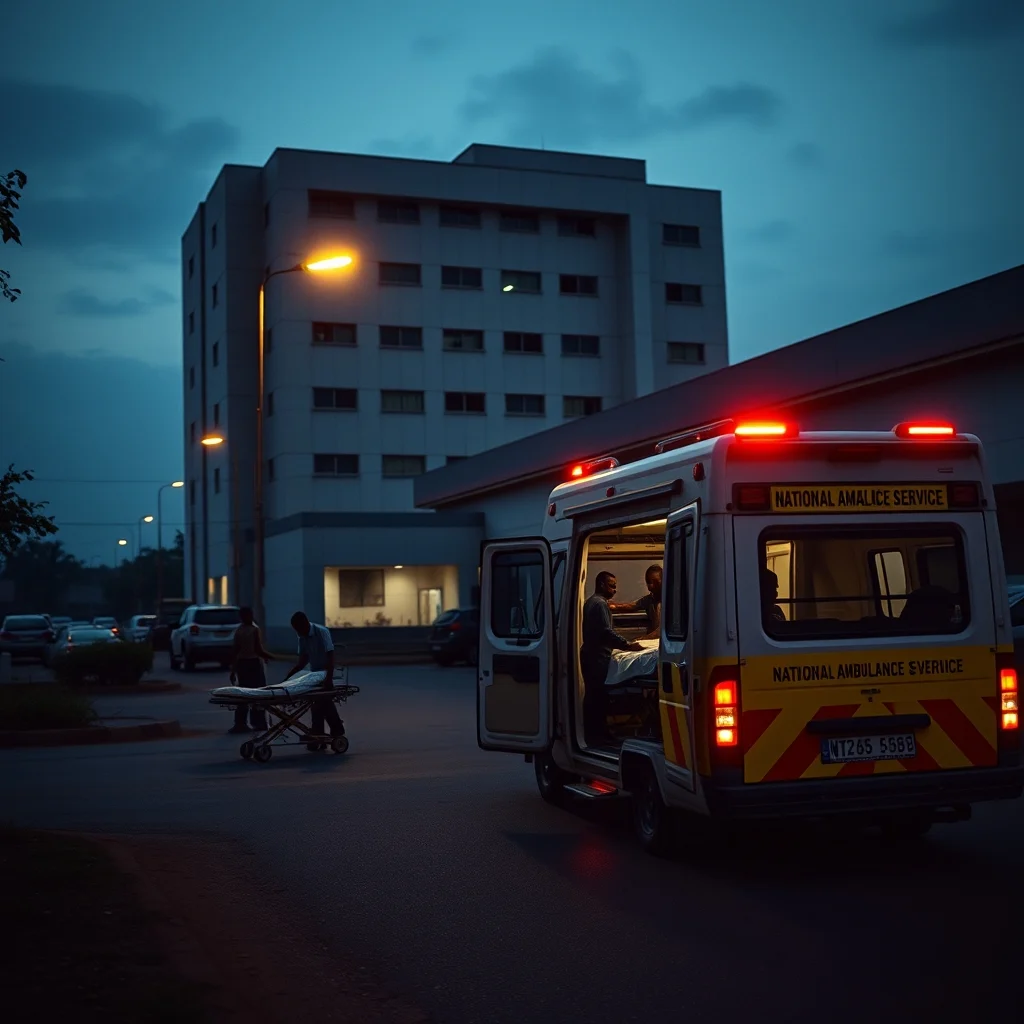
A committee investigating the death of Charles Amissah has determined that multiple hospitals failed to adequately triage and stabilize the 29-year-old engineer after he was brought in alive following a hit-and-run incident near Accra’s Kwame Nkrumah Circle Overpass on February 6, 2026. The findings highlight significant systemic issues within Ghana’s emergency healthcare services, leading to national outcry and calls for reform.
Systemic Lapses in Emergency Response
Charles Amissah, an engineer with Promasidor Ghana Limited, was involved in a severe hit-and-run accident. After initial attention from the National Ambulance Service, his journey to find critical medical care became fraught with obstacles.
Reports indicate that Amissah was denied access to emergency services at several prominent health facilities, including the Police Hospital, Ridge Hospital (Greater Accra Regional Hospital), and Korle Bu Teaching Hospital. The primary reason cited for these rejections was the alleged lack of available beds.
Tragically, Amissah died while still in transit between facilities, a outcome that has intensified scrutiny on the preparedness and responsiveness of Ghana’s emergency medical infrastructure.
Committee Findings Detail Hospital Failures
The investigative committee, chaired by Agyeman Badu Akosa, pinpointed specific instances of negligence at the hospitals Amissah’s ambulance visited. “At the Police Hospital, the ambulance arrived with the patient alive. The hospital failed to triage and initiate stabilising interventions,” Akosa stated, underscoring a critical breakdown in immediate patient assessment.
Further failures were identified at the Greater Accra Regional Hospital. The committee noted that the ambulance remained at this facility for 17 minutes, during which time the patient, Charles Amissah, was still alive but apparently not receiving the necessary stabilization procedures before being moved on.
These delays and the failure to provide timely medical intervention are considered significant contributing factors to the tragic loss of life.
Broader Implications for Ghana’s Healthcare System
The case of Charles Amissah has brought to the forefront long-standing concerns about the capacity and efficiency of Ghana’s emergency medical services. The alleged inability of major hospitals to admit and treat critically injured patients, even when they arrive alive, raises serious questions about resource allocation, bed management, and emergency protocols.
Experts in emergency medicine have frequently pointed out the importance of a robust triage system, which prioritizes patients based on the severity of their condition to ensure immediate care for those most in need. The committee’s findings suggest a breakdown in this fundamental aspect of emergency care.
The national outrage following Amissah’s death underscores a public expectation for a functioning emergency healthcare network that can respond effectively to life-threatening situations. The incident serves as a stark reminder of the potential consequences when such systems falter.
Path Forward: Reforms and Accountability
The committee’s findings are expected to serve as a critical basis for implementing much-needed reforms within Ghana’s hospital emergency care protocols. These reforms could include enhanced training for medical staff in triage procedures, improved bed management systems, and clearer guidelines for inter-hospital transfers during emergencies.
The incident also calls for a broader discussion on investment in healthcare infrastructure and personnel to meet the growing demands of the population. Addressing the root causes of these failures will be crucial to preventing similar tragedies in the future.
Moving forward, the public and healthcare stakeholders will be closely watching to see how these recommendations translate into tangible improvements in emergency medical services across the country. The implementation of stricter protocols and increased accountability will be key indicators of progress.










Leave a Reply