
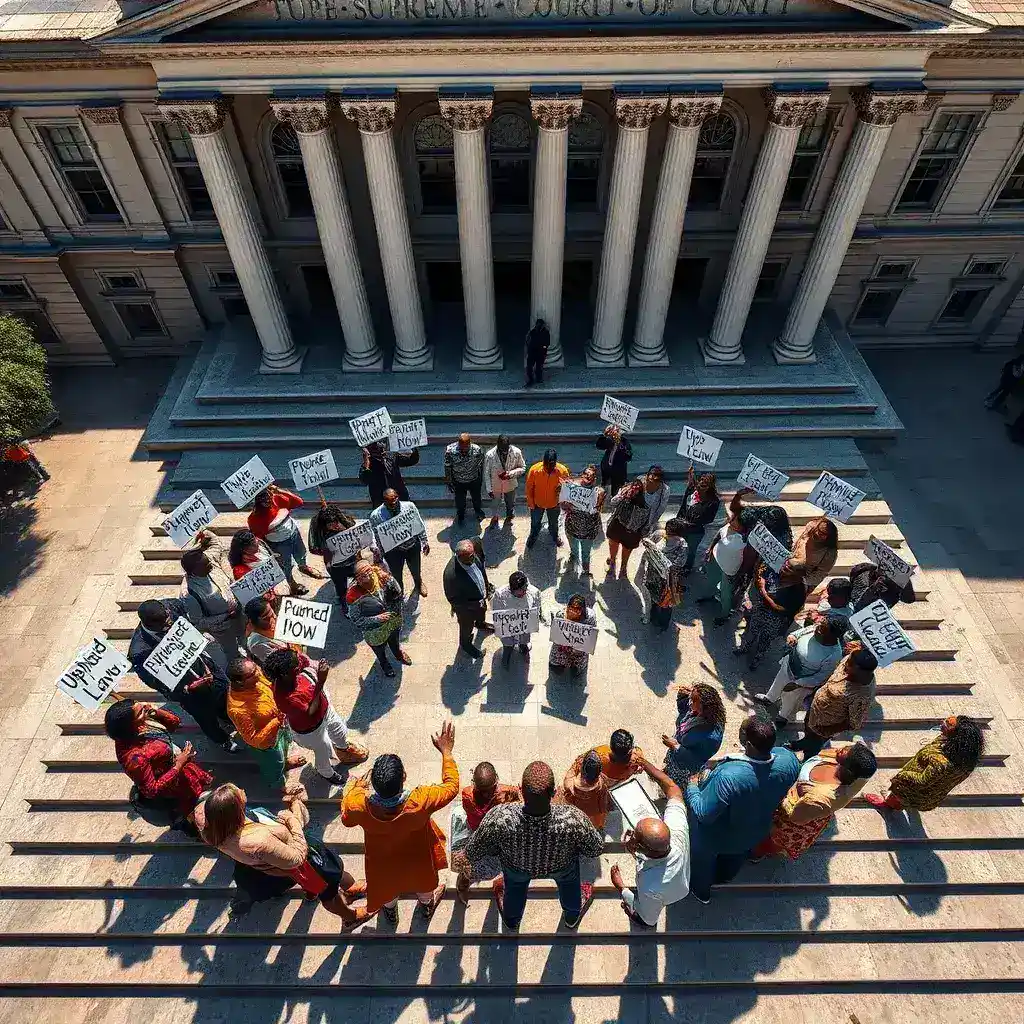
Accra, Ghana – On Wednesday, May 6, IMANI Africa, a prominent think tank, publicly defended the active participation of a coalition of civil society organizations (CSOs) in a critical Supreme Court case. The case challenges the constitutionality of Ghana’s Office of the Special Prosecutor Act, 2017 (Act 959), Ghana’s primary anti-corruption legal framework. This intervention by CSOs has drawn scrutiny, with some critics questioning whether their involvement constitutes advocacy rather than impartial legal assistance to the court.
Context of the Legal Challenge
The Supreme Court is currently hearing the case of Adamtey v Attorney-General (Suit No. J1/3/2026). This legal challenge targets several key provisions that established the Office of the Special Prosecutor (OSP), an independent body created to investigate and prosecute corruption. The OSP was established with the aim of enhancing accountability and tackling corruption more effectively in Ghana.
In response to this challenge, a significant bloc of 14 civil society organizations filed an application to join the proceedings. Their stated aim is to support the court in its constitutional interpretation and to bolster mechanisms for accountability within the country. They emphasize that their involvement is not driven by partisan interests or personal gain, but by a commitment to good governance.
CSO Justification for Intervention
Kay Cudjoe, an Associate at IMANI Africa, addressed the concerns about CSO neutrality during an interview on JoyNews’ The Pulse. He argued that the notion of neutrality in the fight against corruption is a false dichotomy.
“I think critics who say that would be unfair because there’s no neutrality when it comes to the fight against corruption,” Cudjoe stated. “It’s either you are for it or against it. It’s as simple as that.”
He further drew a parallel between organized criminal activity and the collective efforts of CSOs. Cudjoe posited that just as individuals collaborate to perpetrate corruption, civil society groups must also unite to combat it effectively.
“When bad people come together to do bad things in the context of corruption, people should also be able to come together to do good things in the context of fighting corruption,” he added, underscoring the proactive stance of the CSOs.
Prominent CSOs Involved
The coalition seeking to participate in the Supreme Court case represents a broad spectrum of Ghanaian civil society. The organizations involved include the Ghana Centre for Democratic Development, Transparency International Ghana, Ghana Anti-Corruption Coalition, IMANI Africa, Democracy Hub, STAR-Ghana Foundation, NORSAAC, Penplusbytes, Africa Centre for Energy Policy (ACEP), Odekro, A Rocha Ghana, Parliamentary Network Africa, One Ghana Movement, and Africa Education Watch.
This collective action highlights a unified front among various CSOs dedicated to upholding the integrity of anti-corruption institutions in Ghana. Their involvement signifies a strong belief in the importance of the OSP Act and the need to defend its legal foundation.
Implications for Ghana’s Anti-Corruption Framework
The Supreme Court’s decision on whether to allow the CSOs to join the case as interested parties, and its eventual ruling on the constitutionality of the OSP Act, will have significant implications. It could either strengthen or weaken Ghana’s institutional capacity to fight corruption.
For citizens and governance advocates, the active role of CSOs demonstrates a vibrant civil society sector willing to engage directly in legal and constitutional matters to safeguard public interest institutions. This case will likely set a precedent for future CSO involvement in similar legal challenges concerning governance and accountability frameworks.
The outcome will be closely watched as an indicator of the robustness of Ghana’s democratic institutions and its commitment to transparency and accountability in public life. The legal arguments presented and the court’s subsequent judgment will shape the future operational landscape for the Office of the Special Prosecutor and potentially influence other anti-corruption efforts across the continent.










Leave a Reply