
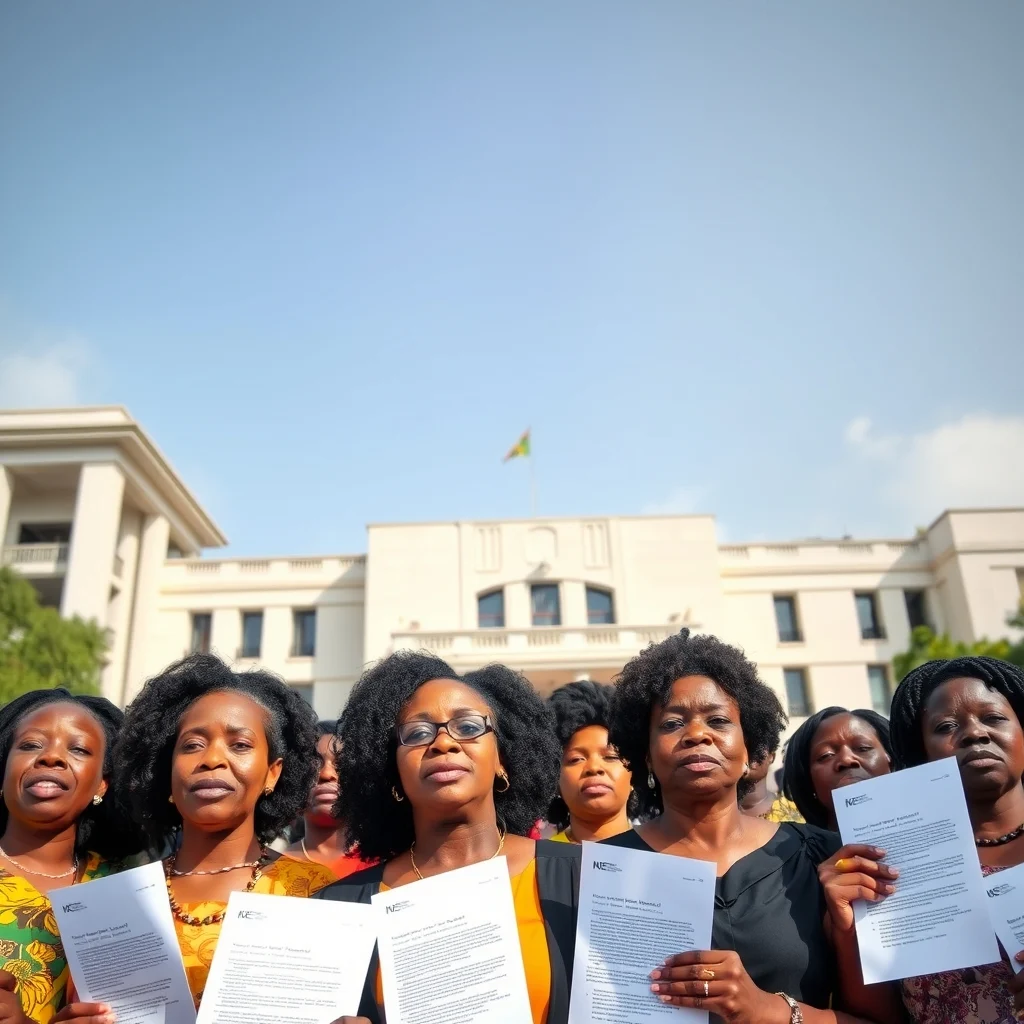
FIDA Ghana has formally petitioned Ghana’s Parliament to accelerate the passage of the Property Rights of Spouses Bill, highlighting that a prolonged absence of this legislation continues to leave numerous women and children exposed to vulnerability following marital dissolution. The petition, presented to the Chairperson of Parliament’s Women’s Caucus, addresses the critical need for a comprehensive law to regulate the distribution of jointly acquired property, which currently leads to uncertainty and hardship.
Constitutional Mandate and Legislative Void
The International Federation of Women Lawyers (FIDA) Ghana emphasizes that Article 22 of Ghana’s 1992 Constitution mandates Parliament to enact legislation governing the property rights of spouses. Specifically, Article 22, clause 2, requires such legislation, while Article 22(3) stipulates equal access to jointly acquired property and its equitable distribution upon marriage dissolution. Despite this clear constitutional directive, over three decades have passed without the enactment of the envisioned comprehensive law.
Gloria Ofori-Boadu, President of the Board of FIDA Ghana, stated that the current reliance on case law for property distribution during divorce proceedings results in inconsistent and unpredictable outcomes. While acknowledging the Supreme Court’s recognition of both direct and indirect contributions of spouses, she stressed that judicial decisions alone cannot provide the clarity and uniformity that only legislation can guarantee.
A History of Delays and Unfulfilled Promises
Drafts of the Property Rights of Spouses Bill have been in existence since 2009, undergoing various discussions and stakeholder engagements in 2013, 2014, 2021, and most recently in 2024. FIDA Ghana points to this long history as evidence of the recognized need for the law, stating that what remains is the necessary political and legislative will to finalize and pass it.
The organization highlighted the severe impact of marital dissolution on children, noting that many face displacement and deprivation due to inadequate legal protections. “No child should be homeless in this country. Every child should be supported to have a home, to be educated, and to have medical care, food, and all the rights irrespective of the marital status of their parents,” Ofori-Boadu urged.
Parliamentary Response and Implementation Concerns
In response to the petition, Speaker of Parliament, Alban Bagbin, assured FIDA Ghana of Parliament’s readiness to pass the bill, even under a certificate of urgency. He acknowledged the frequent encounters by Members of Parliament with constituents struggling with housing, survival, and child welfare issues post-marital breakdown, validating the concerns raised.
“The problem is not Parliament. Parliament is more than willing, ready today, even to pass this bill under a certificate of urgency,” Speaker Bagbin stated. However, he cautioned that the passage of the law alone is insufficient without effective implementation and enforcement mechanisms. “You can pass a bill, it becomes law, and if they’re not implementing it, we’re back to square one,” he added.
Broader Societal Implications
The Speaker underscored the issue as a national concern affecting both men and women, emphasizing that robust legal protections for spouses and families are crucial for the overall well-being of society. The delay in enacting this legislation perpetuates a system where equitable division of marital assets remains elusive, particularly for women and children who often bear the brunt of financial instability after divorce.
Looking Ahead
The focus now shifts to whether Parliament can overcome existing hurdles to pass the bill swiftly. Observers will be watching for the legislative process, potential amendments, and the government’s commitment to ensuring the law is not only passed but also effectively implemented. The successful enactment of the Property Rights of Spouses Bill is anticipated to bring much-needed clarity, consistency, and fairness to property distribution upon marital dissolution, thereby safeguarding the rights and welfare of spouses and their children in Ghana.










Leave a Reply