
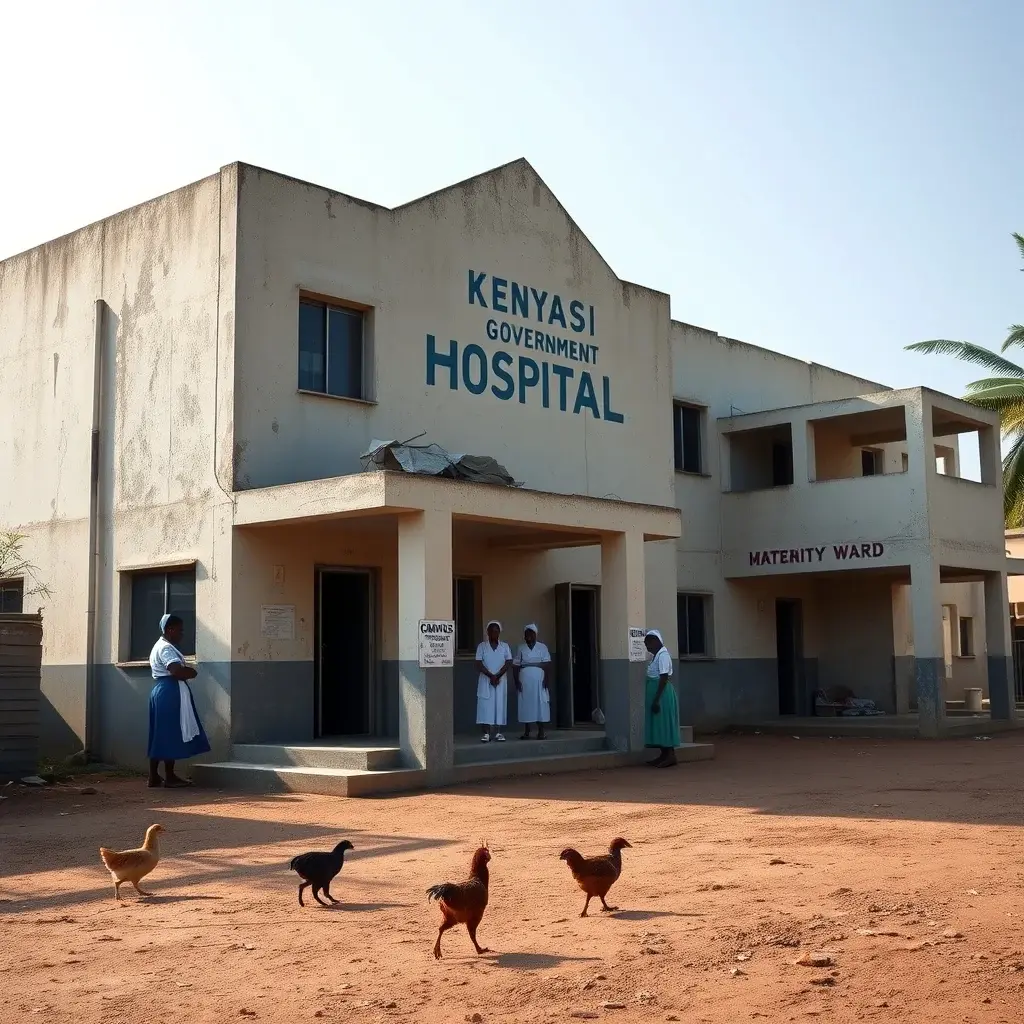
The Kenyasi Government Hospital, located in the Asutifi North District of Ghana’s Ahafo region, is urgently appealing for government intervention to address severe infrastructure deficits and equipment shortages, despite recently receiving accolades for its high performance. The facility, recognized as the Best Performing Hospital for 2025 at the Ahafo Regional Annual Health Performance Review, faces ongoing challenges with security and space that threaten its ability to maintain excellent healthcare delivery standards.
Context of Excellence Amidst Challenges
The Kenyasi Government Hospital has consistently demonstrated a commitment to high-quality healthcare, evidenced by its recent awards. It was named the third-best institution during the 2024 peer review and monitoring exercise, underscoring the dedication of its staff. However, these achievements stand in stark contrast to the deteriorating physical and resource conditions the hospital is battling.
Security Vulnerabilities and Infrastructure Gaps
A significant concern highlighted by Specialist Pharmacist Dr. Patrick Appiah Larbi is the absence of a perimeter wall around the hospital premises. This lack of security infrastructure leaves the facility vulnerable to intrusions by stray animals and unauthorized individuals.
These incursions disrupt essential medical services and pose a direct threat to the safety of patients and staff. Furthermore, valuable medical equipment is at risk of damage or theft due to inadequate security measures.
Beyond security, the hospital operates without a dedicated administration block. Dr. Appiah Larbi explained that this absence significantly impedes official duties and hinders overall operational efficiency. The lack of segregated administrative space creates logistical challenges for management and support staff.
Overwhelmed Maternity Ward and Growing Demand
The maternity ward at Kenyasi Government Hospital is experiencing a severe crisis due to overcrowding. Monthly deliveries have surged dramatically, increasing from approximately 18 to 60. The current six-bed capacity is now critically insufficient to meet this escalating demand.
Hospital management is urgently requesting an expansion of the maternity ward to a 40-bed capacity. This expansion is deemed essential to adequately serve the growing population of the Asutifi North District and surrounding areas.
Staffing Shortages and Equipment Needs
Staffing and equipment shortages continue to be major hurdles for the award-winning facility. The hospital is compelled to divert a substantial portion of its internally generated revenue towards hiring temporary staff.
This financial strain is a direct consequence of a shortage of permanent allied health professionals. Management is therefore urging the government to grant financial clearance for the recruitment of permanent personnel to ensure consistent staffing levels.
In addition to staffing, the hospital is actively soliciting support from individuals, community groups, and non-governmental organizations (NGOs) focused on health. The aim is to acquire modern medical equipment to help sustain and further improve the quality of care provided to the community.
Implications and Future Outlook
The situation at Kenyasi Government Hospital highlights a critical disconnect between performance recognition and the resources required to sustain it. The facility’s ability to maintain its top-tier performance is jeopardized by basic infrastructure and staffing issues.
For the residents of the Asutifi North District, the ongoing challenges mean potential disruptions to healthcare services and a risk to the quality of care they receive, despite the hospital’s recognized excellence. The diversion of funds to temporary staff also impacts the hospital’s ability to invest in other critical areas.
Moving forward, the focus will be on whether the government responds to the hospital’s plea for urgent intervention. The successful recruitment of permanent staff and the acquisition of essential equipment will be key indicators of the hospital’s ability to overcome these obstacles. Observers will also watch for potential partnerships with NGOs and private entities that could provide much-needed resources and infrastructure improvements to ensure the Kenyasi Government Hospital can continue its vital work without compromise.










Leave a Reply