
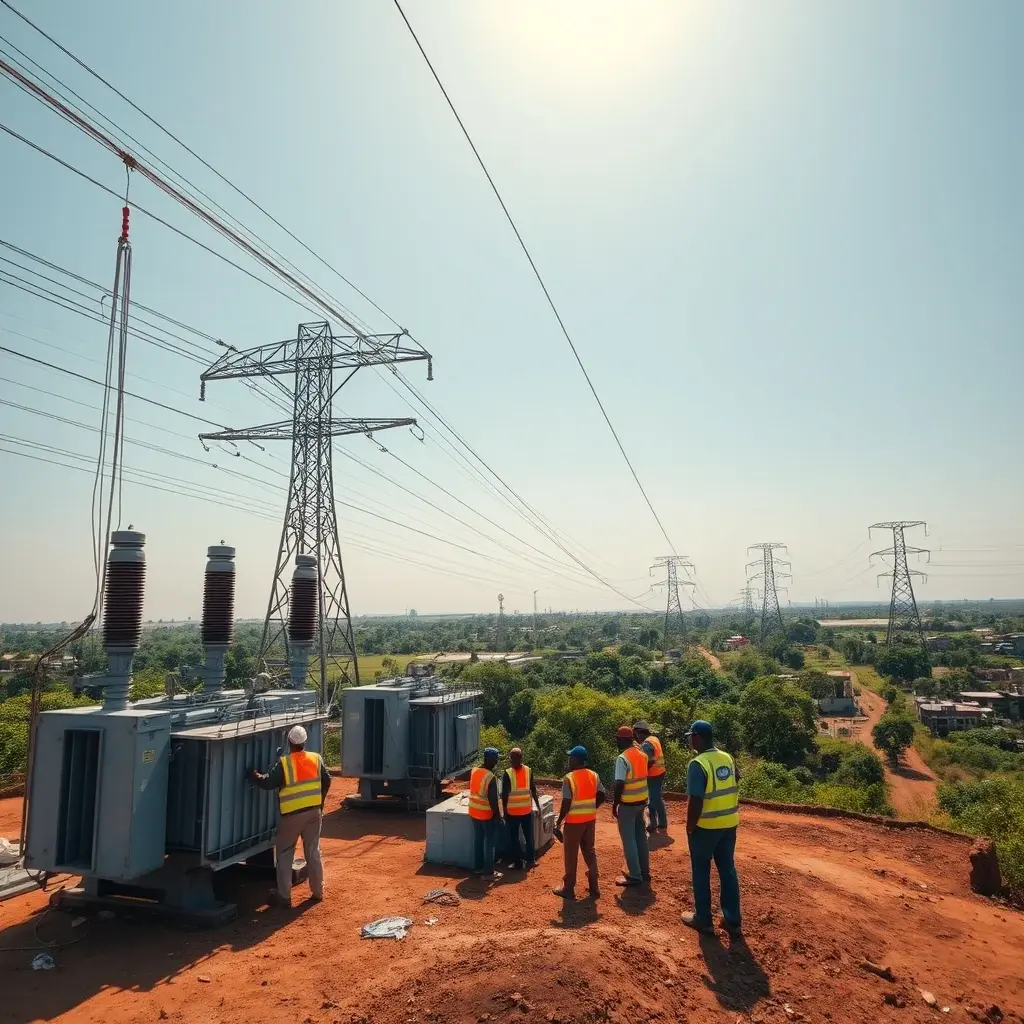
The Minister for Energy and Green Transition, Dr. John Abdulai Jinapor, announced on Saturday, May 9th, that the government is accelerating efforts to fortify Ghana’s electricity infrastructure, with a specific emphasis on enhancing reliability and expanding power supply throughout the Ashanti Region and the broader middle belt.
Focus on Infrastructure Modernization
This announcement followed a comprehensive tour of critical energy facilities in Kumasi. During his visit, Dr. Jinapor personally inspected ongoing transmission and distribution upgrade projects. These vital works are being carried out by the Ghana Grid Company (GRIDCo) and the Electricity Company of Ghana (ECG).
Key among the inspected sites were transformer replacement and upgrade operations at the Anwomaso and Kumasi substations. These upgrades are designed to significantly increase the capacity for bulk power delivery. Furthermore, they aim to improve the overall stability of electricity supply to numerous surrounding communities.
Broader Energy Modernization Agenda
Minister Jinapor articulated that these interventions are integral components of the government’s overarching energy modernization agenda. The primary goal is to construct a power system that is both more resilient and demonstrably more efficient.
He underscored the critical nature of these upgrades in addressing the escalating demand for electricity. Ensuring improved service delivery for both industrial and domestic consumers across the Ashanti Region is a key objective.
Boosting Generation Capacity in the Middle Belt
In addition to transmission and distribution improvements, the government is actively working to increase power generation capacity within the middle belt. Dr. Jinapor disclosed plans to add approximately 1,000 MW through a combination of existing and planned projects.
These generation projects include the AKSA Power Plant (350 MW), CENIT (110 MW), AMERI Power Plant (250 MW), and the ARVENSIS Energy Project (380 MW). The strategic placement and expansion of these facilities are crucial for meeting regional energy needs.
Economic Transformation and Future Readiness
These substantial investments are presented as pivotal to developing a future-ready electricity network. Such a network is deemed essential for supporting Ghana’s ongoing economic transformation and industrial development.
The upgrades signal a commitment to creating a more dependable power supply, which is a foundational requirement for attracting investment and fostering sustainable growth. Enhanced energy infrastructure can reduce operational costs for businesses and improve the quality of life for residents.
What to Watch Next
The successful completion and operationalization of these transmission, distribution, and generation projects will be crucial indicators of progress. Stakeholders will be closely monitoring the timelines for these upgrades and their tangible impact on power reliability and affordability in the Ashanti Region and beyond. Continued government investment in grid modernization and generation capacity expansion will be key to meeting Ghana’s growing energy demands and supporting its long-term economic aspirations.










Leave a Reply