
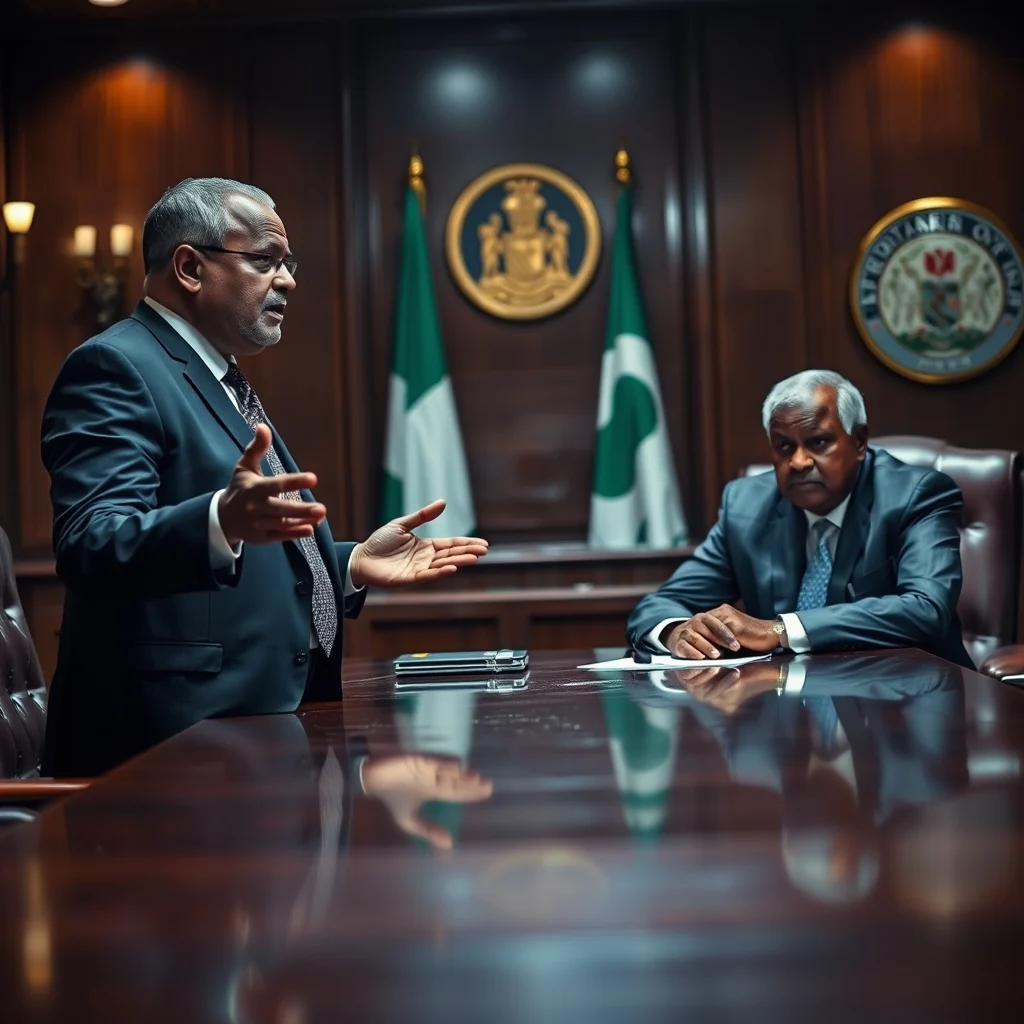
Minority Leader Alexander Afenyo-Markin has accused Raymond Archer, the Executive Secretary of the Economic and Organised Crime Office (EOCO), of transforming the agency into a “one-man institution.” Afenyo-Markin voiced these concerns on JoyNews’ *Newsfile* programme on Saturday, May 9, highlighting issues of governance, accountability, and institutional balance within EOCO.
Background to the Accusations
The accusations stem from the recent controversy surrounding the re-arrest of Abdul-Wahab Hanan, former CEO of the National Food Buffer Stock Company, and his wife, Faiza Sayyid Wuni. Charges against the couple were discontinued by the Office of the Attorney-General, only for them to be re-arrested shortly thereafter. This sequence of events has ignited a significant public and legal debate concerning prosecutorial discretion and adherence to due process.
Lawyers for Hanan and Wuni, led by former Attorney-General Godfred Yeboah Dame, have alleged that they were denied access to their clients for over 24 hours post-re-arrest. EOCO, however, maintains that all legal procedures were followed as investigations into the matter continue.
Concerns Over Centralized Authority
Mr. Afenyo-Markin specifically stated, “Raymond Archer has made EOCO a one-man institution.” He emphasized that robust institutions should not operate solely based on the directives of a single individual. The Minority Leader stressed the critical need for transparency, effective oversight mechanisms, and strict adherence to due process within anti-corruption bodies.
The principle of strong, independent institutions is fundamental to maintaining public trust and ensuring the rule of law. When authority becomes overly concentrated, it can lead to a perception, or reality, of undue influence and a lack of accountability. This can undermine the very mandate of agencies tasked with fighting economic and organised crime.
Broader Implications for Governance
The controversy surrounding EOCO’s operations and the specific accusations against its Executive Secretary raise broader questions about institutional integrity in Ghana. The effectiveness of anti-corruption efforts relies heavily on public confidence, which is built through transparent and accountable processes.
Allegations of concentrated power, if substantiated, could have significant implications for how EOCO conducts its investigations and prosecutions. It could also affect the public’s willingness to cooperate with the agency and trust its findings. Ensuring that such institutions operate within a clear framework of checks and balances is crucial for their legitimacy and effectiveness.
What to Watch Next
Moving forward, the public and stakeholders will be closely watching how EOCO addresses these governance concerns. The outcome of the ongoing investigation into Abdul-Wahab Hanan and Faiza Sayyid Wuni, and the legal challenges surrounding their re-arrest, will be critical. Furthermore, any official response or action taken by relevant oversight bodies regarding Mr. Afenyo-Markin’s accusations will be significant. The focus will remain on whether EOCO can demonstrate a commitment to transparent, accountable, and institutionally balanced operations moving forward.









Leave a Reply