
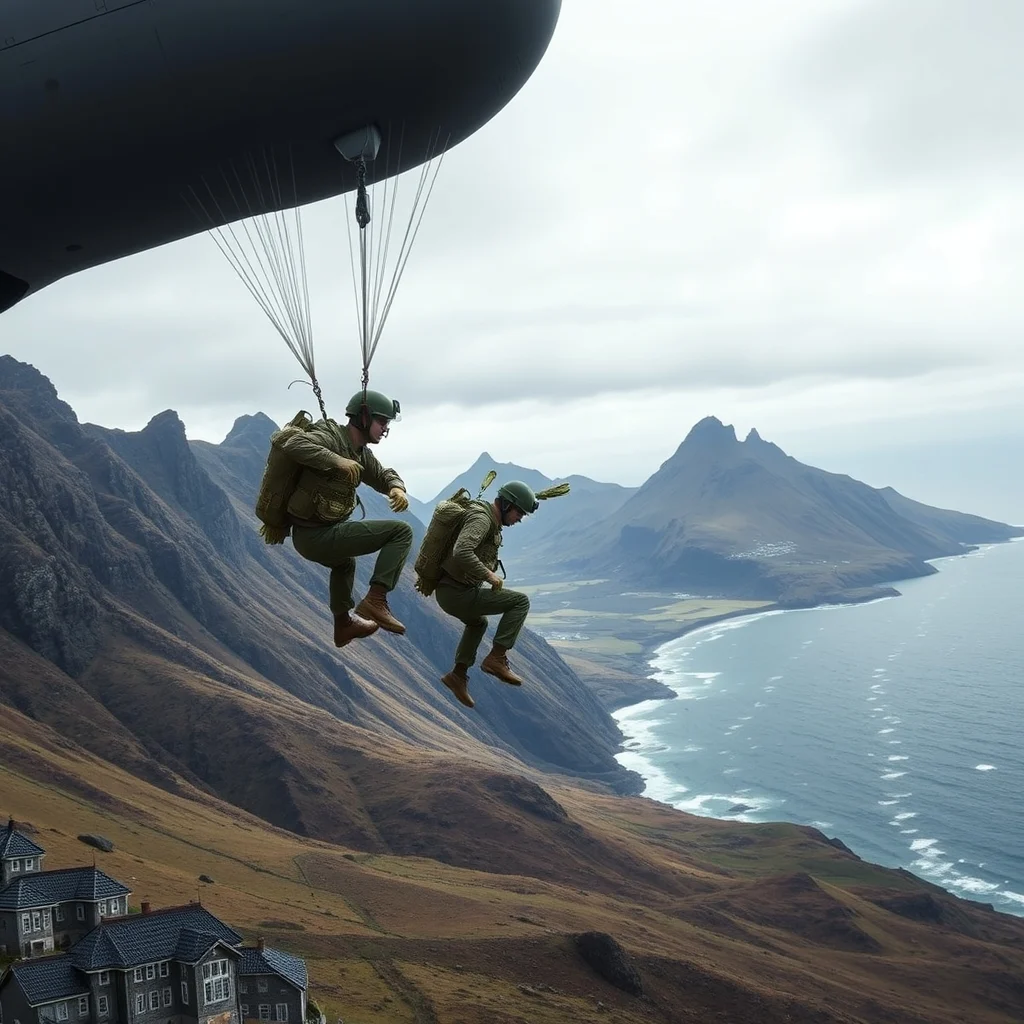
In an unprecedented humanitarian mission, British Army medics parachuted onto the remote South Atlantic island of Tristan da Cunha in mid-May to assist a British national exhibiting symptoms of a suspected hantavirus infection. The operation, launched by the Ministry of Defence, involved a team of six paratroopers and two intensive care clinicians from the 16 Air Assault Brigade, who were flown from RAF Brize Norton. This marks the first instance of the UK military deploying medical personnel via parachute for humanitarian aid, underscoring the extreme remoteness and unique challenges of providing support to Britain’s most isolated inhabited territory.
Context of the Outbreak
The need for this extraordinary intervention stems from a hantavirus outbreak that originated on the cruise ship MV Hondius. A British resident of Tristan da Cunha, who had disembarked the ship in mid-April, began showing symptoms approximately two weeks later. The individual reported diarrhoea on April 28 and a fever on April 30, and is currently in a stable condition while in isolation.
Hantaviruses are a group of viruses primarily carried by rodents. While most strains do not transmit between humans, the Andes strain, identified among passengers of the MV Hondius, is known to be capable of human-to-human transmission. This particular strain has led to a confirmed outbreak, with six cases identified so far. Three individuals have died as a result of the virus, including two confirmed cases linked to the ship.
The Remote Island Challenge
Tristan da Cunha, located approximately 1,500 miles off the coast of South Africa, is one of the world’s most remote inhabited islands. With a population of 221, it lacks an airstrip and is accessible only by sea. The island’s isolation, coupled with challenging weather conditions, including average winds exceeding 25 mph, made a conventional medical evacuation or supply delivery impossible.
The Ministry of Defence confirmed that oxygen supplies on the island were at a critical level, necessitating an aerial drop from an RAF A400M aircraft on Saturday prior to the medical team’s deployment. This highlights the logistical complexities faced by the island’s usual two-person medical team.
Military Response and Medical Expertise
The deployment saw two of the paratroopers jump in tandem with an intensive care nurse and an intensive care doctor. This infusion of advanced medical expertise aims to bolster the island’s healthcare capacity during this critical period. The operation was described by Minister for the Armed Forces Alastair Carns as taking place under “incredibly challenging circumstances,” praising the personnel for their professionalism.
Foreign Secretary Yvette Cooper stated that the operation reflects the UK’s “unwavering commitment” to its overseas territories and British nationals, emphasizing that their safety is a top priority.
Broader Implications of the Outbreak
The MV Hondius has since arrived in Tenerife, Spain, where authorities are facilitating the disembarkation and repatriation of over 100 individuals. Two British nationals with confirmed hantavirus cases are receiving treatment in the Netherlands and South Africa. The UK Health Security Agency (UKHSA) is monitoring other British nationals who remained on the vessel, though none have reported symptoms.
Two other Britons, who disembarked the ship at St Helena on April 24 before the outbreak was confirmed, are voluntarily self-isolating in the UK. The remaining 22 British passengers are scheduled to return home on a charter flight from Tenerife. They will undergo a 45-day isolation period at Arrowe Park Hospital in Wirral, Merseyside, under the supervision of the UKHSA.
Looking Ahead
The risk to the general public from this outbreak is considered very low. However, the incident highlights the vulnerabilities of extremely remote communities to infectious disease outbreaks and the critical importance of robust emergency response capabilities. Future preparedness strategies for such isolated locations may need to incorporate more advanced remote medical support systems and rapid deployment protocols, potentially involving military assets, to mitigate health crises effectively.










Leave a Reply