
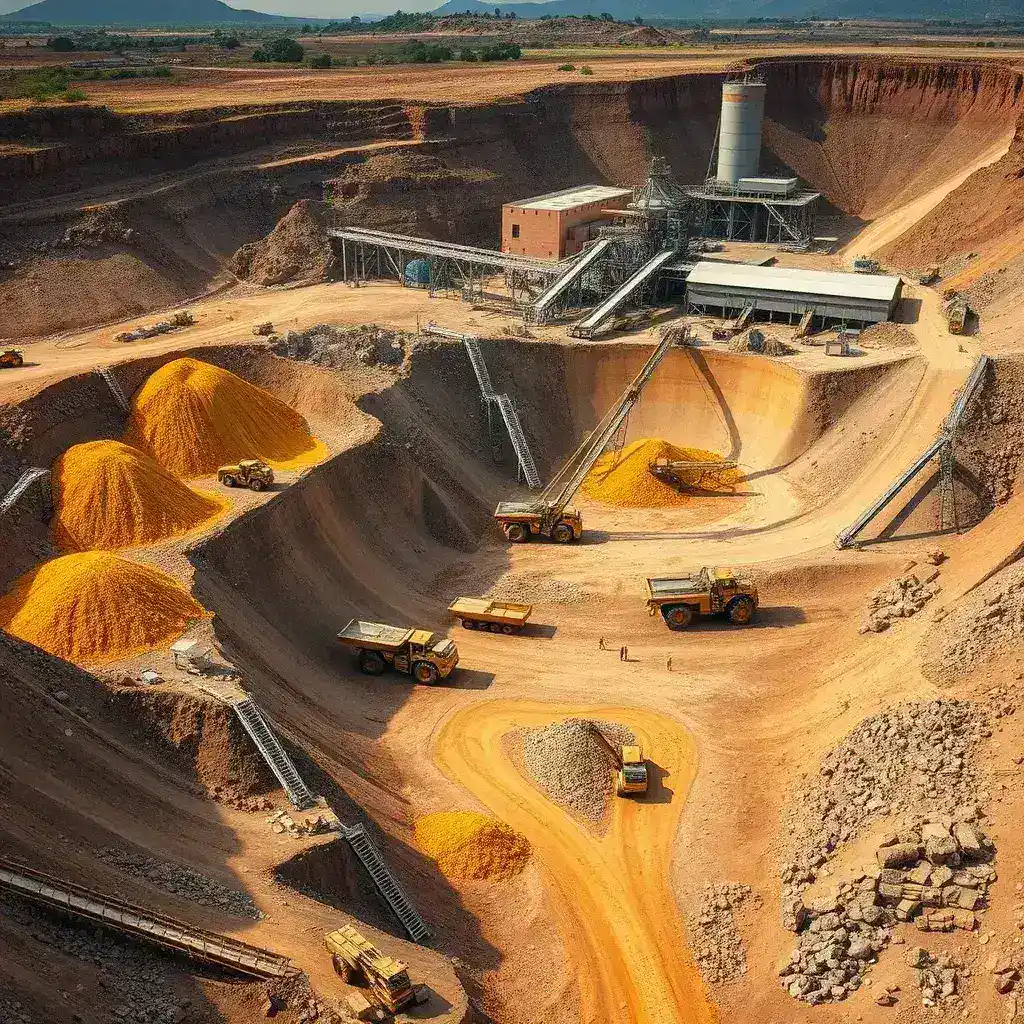
Ghana’s gold sector is significantly bolstering the nation’s economic growth and external stability, according to a recent assessment by Fitch Ratings. High global gold prices and increased mining output have substantially boosted the country’s export earnings, providing crucial support to its balance of payments.
Context: Ghana’s Economic Landscape
Ghana, a West African nation, has long relied on its rich mineral resources, particularly gold, as a cornerstone of its economy. Gold mining has traditionally been a major source of foreign exchange, government revenue, and employment. However, the sector has also faced challenges, including informal mining activities and price volatility on the global market.
In recent times, global economic conditions have seen a notable surge in gold prices. This trend, coupled with efforts to enhance mining output, has presented a significant opportunity for resource-dependent economies like Ghana. Fitch Ratings’ report provides an updated perspective on how these factors are impacting the country’s macroeconomic health.
Gold’s Impact on Exports and Reserves
Fitch Ratings highlighted that Ghana achieved a strong current account surplus, predominantly attributed to the robust performance of its gold sector. This favourable commodity price environment has directly translated into increased foreign exchange inflows.
These enhanced inflows have been instrumental in the accumulation of Ghana’s international reserves. The agency noted that the country’s external buffers have been strengthened through a combination of strong export performance, significant foreign direct investment, and financial support from development partners.
The build-up of these reserves is crucial as it reduces external liquidity risks. This improved financial position enhances Ghana’s capacity to meet its international debt obligations and withstand external economic shocks.
Sector Contributions and Future Outlook
The report also acknowledged the significant contribution of small-scale mining to Ghana’s overall gold production. Fitch suggested that further formalisation of this segment could lead to even greater output and revenue generation for the country.
Overall, the mining sector remains a vital pillar for Ghana, serving as a key source of foreign exchange and government revenue. Its continued strength underpins macroeconomic stability and positively influences the country’s credit profile, according to Fitch.
Looking ahead, Fitch projects that Ghana’s current account will likely remain in surplus in the near term. However, the agency anticipates a potential slight narrowing of this surplus. This is due to expected increases in import demand as the economy recovers and a possible moderation in commodity prices from their current high levels.
Vulnerabilities and Policy Imperatives
Despite the positive outlook, Fitch Ratings cautioned that Ghana’s external position remains susceptible to fluctuations in global commodity prices, with the gold market being a primary concern. The inherent volatility of these prices poses a persistent risk to export earnings and foreign exchange stability.
To navigate these risks effectively, the agency stressed the importance of maintaining sound economic policies. Prudent fiscal management and strategic monetary policies are essential to absorb potential shocks and ensure sustained economic resilience.
Continued improvements in the external sector are anticipated to bolster investor confidence. This, in turn, is expected to contribute to Ghana’s long-term economic resilience and its attractiveness for further investment. The report concludes that Ghana’s strong current account position and growing reserves are critical strengths shaping its economic outlook.
What to Watch Next
Investors and policymakers will be closely monitoring global gold price trends and their impact on Ghana’s export revenues. The success of initiatives aimed at formalising the small-scale mining sector and diversifying export commodities will also be key indicators of the nation’s sustained economic health and external stability. Furthermore, the government’s adherence to sound fiscal and monetary policies will be crucial in managing potential commodity price downturns and ensuring long-term economic resilience.









Leave a Reply