
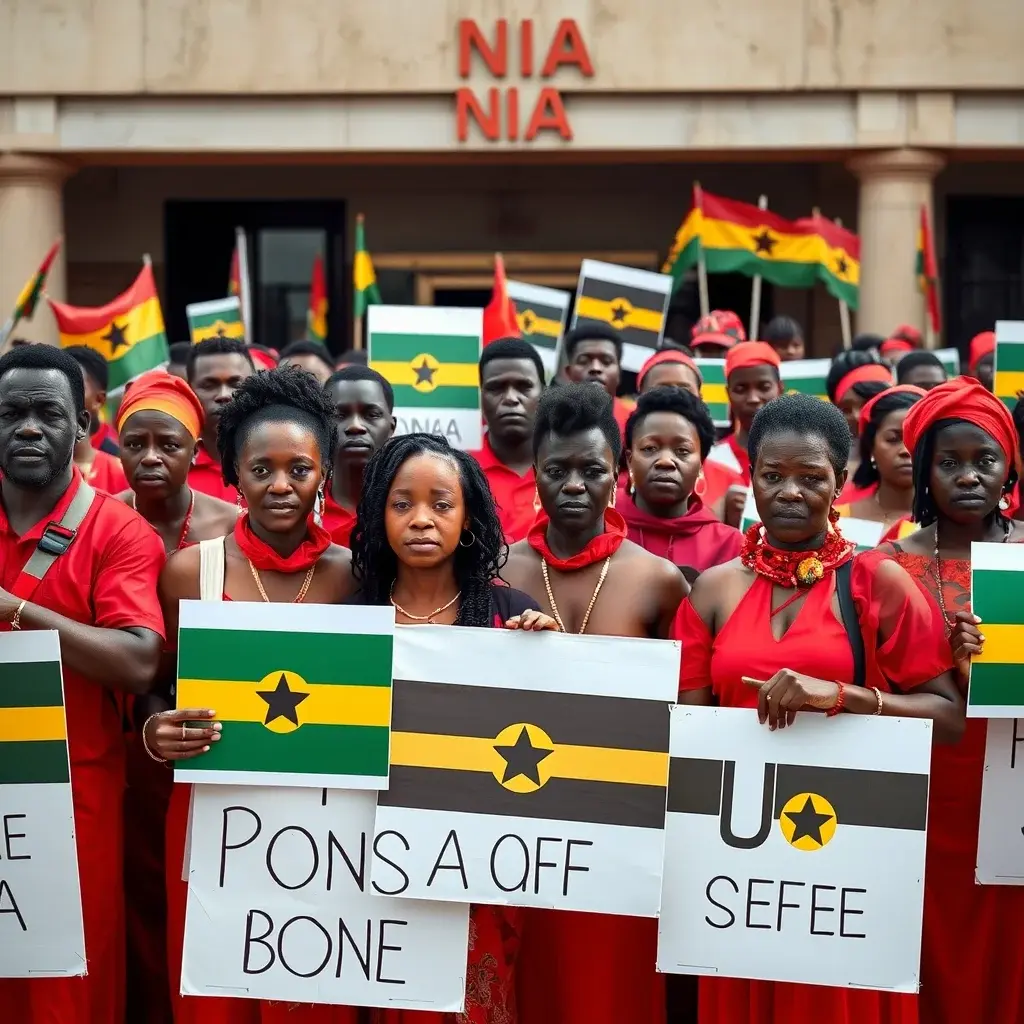
Workers of the National Identification Authority (NIA) under the Public Services Workers’ Union (PSWU) commenced an indefinite nationwide strike on Wednesday, May 13, 2026, halting services due to unresolved concerns regarding their working conditions. The industrial action follows a unanimous decision by the NIA Division of the union after their seven-day notice period expired without a satisfactory response from authorities.
Background to the Industrial Action
The decision to strike was formalized in a directive issued by the NIA Division of the PSWU. This directive followed a period of unmet demands and what the union terms as a lack of meaningful engagement from the NIA administration and relevant government bodies. Workers had previously been instructed to wear red attire or armbands on May 11 and 12 as a visible demonstration of their solidarity and protest.
Union’s Demands and Enforcement
The union’s statement clearly outlined the expectation for all members nationwide to cease work immediately. “On Wednesday, May 13, 2026, no member shall report to work. You will rise from your beds and return to them, until further notice, and until our just demands are met,” the directive stated. This action is intended to remain in effect until the collective concerns of the workers are addressed. Regional officers have been tasked with ensuring strict compliance across all NIA offices.
Francis Bangfudem Nyuzaghl, Divisional Chairman, and Godsway Ayivor Bismark, Assistant Divisional Secretary, jointly signed the statement, emphasizing unity as a crucial element for the strike’s success. “Our resolve is our weapon; our solidarity is our shield. Only through unwavering unity will we make this struggle a success,” the union urged its members.
Impact on Public Services
The strike is poised to significantly disrupt essential services provided by the NIA. These include the registration of new Ghana Cards, as well as services for card replacement and updates. The continuity of these services is now contingent on a swift resolution between the government and the union leadership.
Broader Context of Public Sector Labor Disputes
This industrial action by NIA workers highlights ongoing tensions within the public sector regarding service conditions and worker welfare. Similar disputes often arise when negotiations over salaries, benefits, or working environments fail to yield agreements that satisfy employee representatives. The PSWU, as a significant labor union, plays a crucial role in advocating for its members across various public institutions.
Looking Ahead: Potential Resolutions and Future Implications
The immediate focus will be on whether government officials will engage in further dialogue with the PSWU to find a mutually acceptable solution. The duration of the strike will largely depend on the responsiveness of the authorities to the workers’ demands. Failure to reach an agreement could lead to prolonged disruption of critical national identification services, impacting citizens who rely on them. The outcome of this strike could also set a precedent for future labor negotiations within the Ghanaian public service, emphasizing the importance of addressing worker grievances proactively.










Leave a Reply