
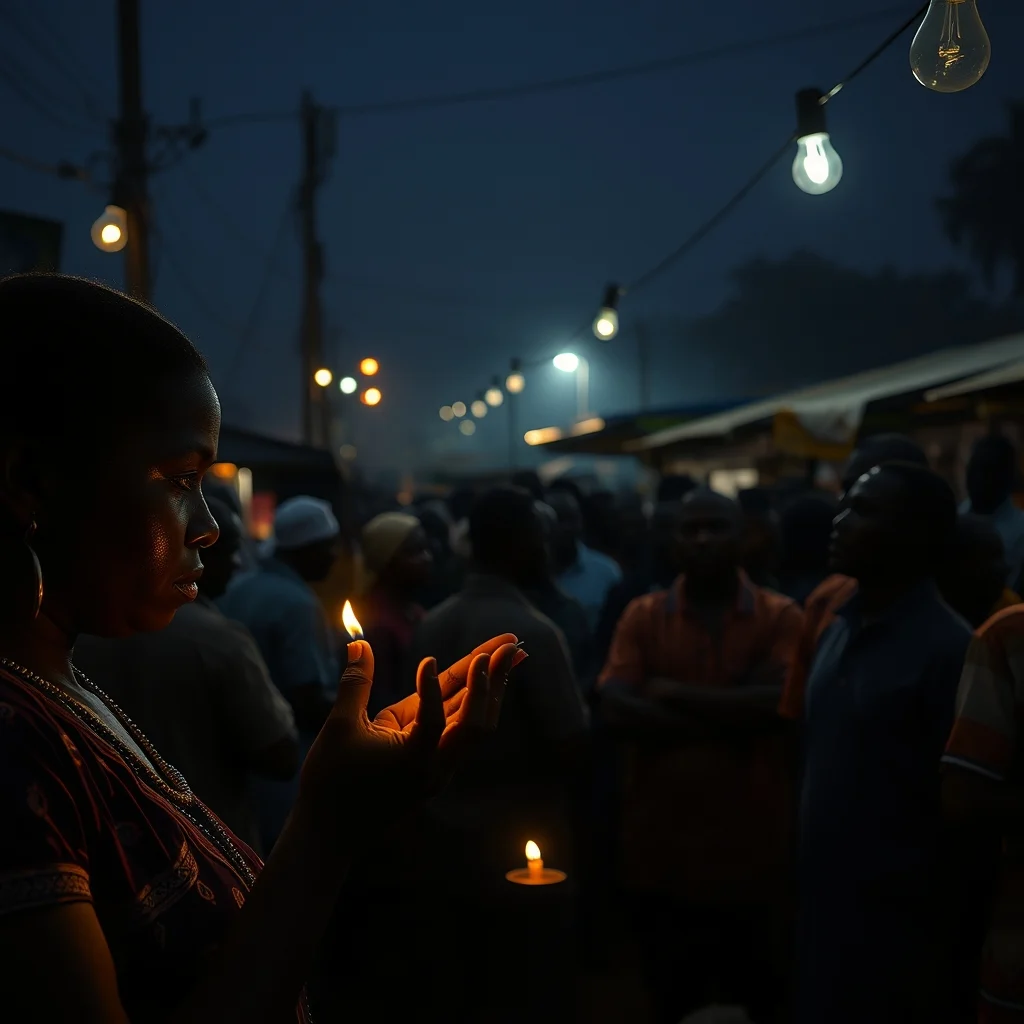
Accra, Ghana – A recent incident involving the alleged arrest of a social media user in Agona West for posting about potential electricity outages has ignited national debate and resurfaced deep-seated fears of ‘dumsor,’ the Ghanaian term for erratic power supply. The event, which occurred recently and gained traction online, has polarized the nation, pitting concerns for freedom of speech against the government’s alleged desire to prevent panic and misinformation regarding the power situation.
A Nation Haunted by ‘Dumsor’
The word ‘dumsor’ evokes significant historical trauma in Ghana, recalling periods of widespread and prolonged power cuts that crippled businesses, disrupted daily life, and caused immense frustration. For many Ghanaians, the mere mention of flickering lights triggers memories of economic hardship, spoiled goods, and disrupted education.
Traders recall the devastating loss of perishable goods. Students recount studying late into the night under unreliable rechargeable lamps. Tailors and artisans faced immense pressure to meet deadlines amidst generator failures. Even personal relationships were strained by the discomfort of non-functioning fans on hot nights.
This collective memory makes any suggestion of ‘dumsor’s’ return a sensitive political issue, often met with heightened anxiety and suspicion from the public.
The Spark: A Facebook Post and an Arrest
The current controversy reportedly began when a gentleman in Agona West posted on Facebook suggesting that the ‘spirit of dumsor’ might be returning under the current administration. The post quickly gained traction, leading to an alleged response from state authorities.
According to reports, armed officers apprehended the individual following his post. This action has been widely criticized, with many questioning the state’s response to what they perceive as a legitimate citizen’s concern or observation.
The incident has led to fears that expressing concerns about basic utilities, or even economic matters, could be construed as politically motivated panic or misinformation, potentially leading to further intimidation.
Freedom of Speech vs. National Security
The situation has divided Ghanaians into two prominent camps. One side argues that freedom of speech should not be exploited to spread fear or politically motivated panic, emphasizing the need for responsible discourse regarding sensitive national issues like power supply.
Conversely, a significant portion of the population believes that citizens must have the unhindered right to voice concerns about recurring issues like power outages. They argue that suppressing such complaints undermines democratic principles and creates an environment of distrust.
Social media platforms and traditional media outlets have become arenas for intense debate, with citizens and commentators dissecting the implications for civil liberties and the government’s handling of public sentiment.
Underlying Anxiety: More Than Just Power
Experts suggest that the strong public reaction stems not just from the alleged arrest but from a deeper national anxiety rooted in past experiences with ‘dumsor.’ The unpredictability, economic damage, and sheer inconvenience associated with those periods have left lasting scars.
“The memory of ‘dumsor’ is so potent because it touched every aspect of life in Ghana,” commented Dr. Ama Serwaa, a sociologist specializing in Ghanaian social dynamics. “It represented a failure of basic infrastructure and governance that had tangible, daily consequences for millions. Therefore, any perceived return triggers a deeply ingrained fear of that past suffering.”




Leave a Reply