
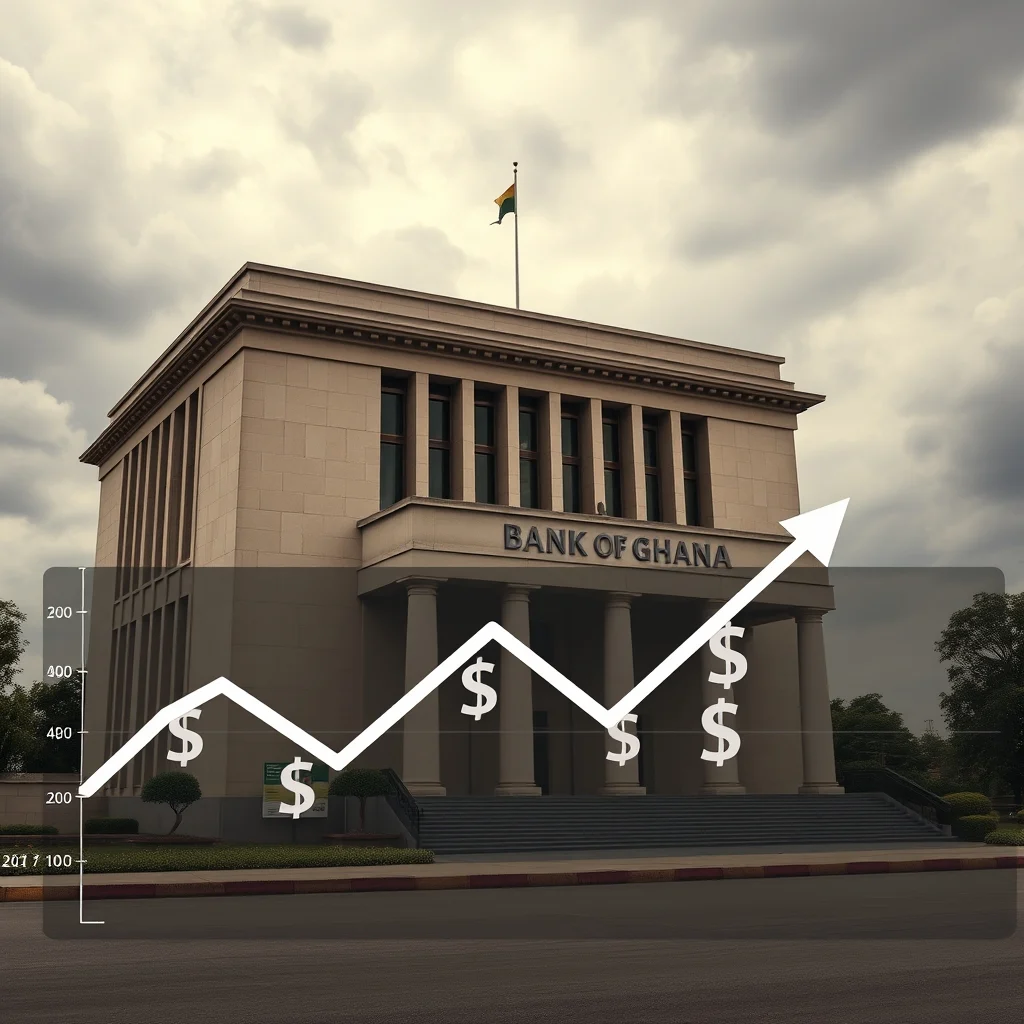
The Bank of Ghana is projected to report a substantial net loss of GH¢15.6 billion for the 2025 financial year, a significant escalation from the GH¢9.6 billion loss recorded in 2024. This projected figure, if realized, would represent the second-largest loss for the central bank since 2008 and a 68% increase year-on-year.
Context of Central Bank Operations
Speaking in Parliament on Thursday, Atta Issah, a member of the Finance Committee, emphasized that the Bank of Ghana’s mandate is not profit-driven. Central banks often undertake interventions aimed at broader economic stabilization, which may not yield immediate financial returns.
The projected losses are intrinsically linked to the bank’s efforts to manage the Ghanaian economy during a challenging period. These interventions, while crucial for macroeconomic stability, can incur significant financial costs.
Factors Contributing to the Projected Loss
A key factor contributing to the projected financial performance is the ‘other comprehensive income’ account, which recorded a charge of GH¢19.32 billion. This charge is largely attributed to the impact of a stronger cedi on the valuation of the bank’s foreign currency reserves.
When the value of the local currency strengthens against foreign currencies, the local currency equivalent of foreign assets held by the central bank decreases, leading to a notional loss in its balance sheet.
Central Bank’s Equity Position
Regarding the bank’s equity, Mr. Issah detailed a projected improvement. While the net equity stood at a negative GH¢31.3 billion at the end of 2024, it is expected to rebound to a positive GH¢1.2 billion by the end of 2025. This contrasts with a deeper negative position of approximately GH¢35 billion anticipated at the close of 2025 before accounting for these specific interventions.
Cumulatively, the figures indicate a net equity position of roughly negative GH¢96.3 billion over the period. This reflects the financial cost incurred by the Bank of Ghana through its stabilization measures.
Historical Perspective on Bank’s Financial Health
To provide context, Mr. Issah noted that when President John Dramani Mahama took office, the Bank of Ghana’s total negative equity stood at approximately GH¢61.3 billion. This highlights a significant increase in the cumulative financial impact of the central bank’s operations over time.
He further elaborated that as of 2021, the Bank of Ghana maintained a positive net equity of about GH¢1.2 billion. The subsequent decline into negative equity and the projected losses are presented as the direct financial consequence of undertaken measures to stabilize the economy.
Majority’s Stance and Rationale
The Majority in Parliament maintains that the substantial losses, though concerning on the surface, are the unavoidable outcome of necessary actions taken by the central bank. These actions were deemed critical for supporting macroeconomic stability during a period of significant economic challenges.
The argument is that the central bank’s role transcends simple financial management; it involves active intervention to safeguard the economy’s overall health, even if this incurs short-term financial costs.
Implications and Future Outlook
The projected losses raise questions about the long-term financial sustainability of the Bank of Ghana and its capacity to absorb future economic shocks. Stakeholders will be closely watching how these financial trends impact the bank’s operational independence and its ability to implement monetary policy effectively.
The focus will likely shift to the Bank of Ghana’s strategies for rebuilding its equity and ensuring its financial resilience in the coming years. The effectiveness of ongoing economic stabilization efforts and their associated financial implications will be a key area of observation for investors, policymakers, and the general public.









Leave a Reply