
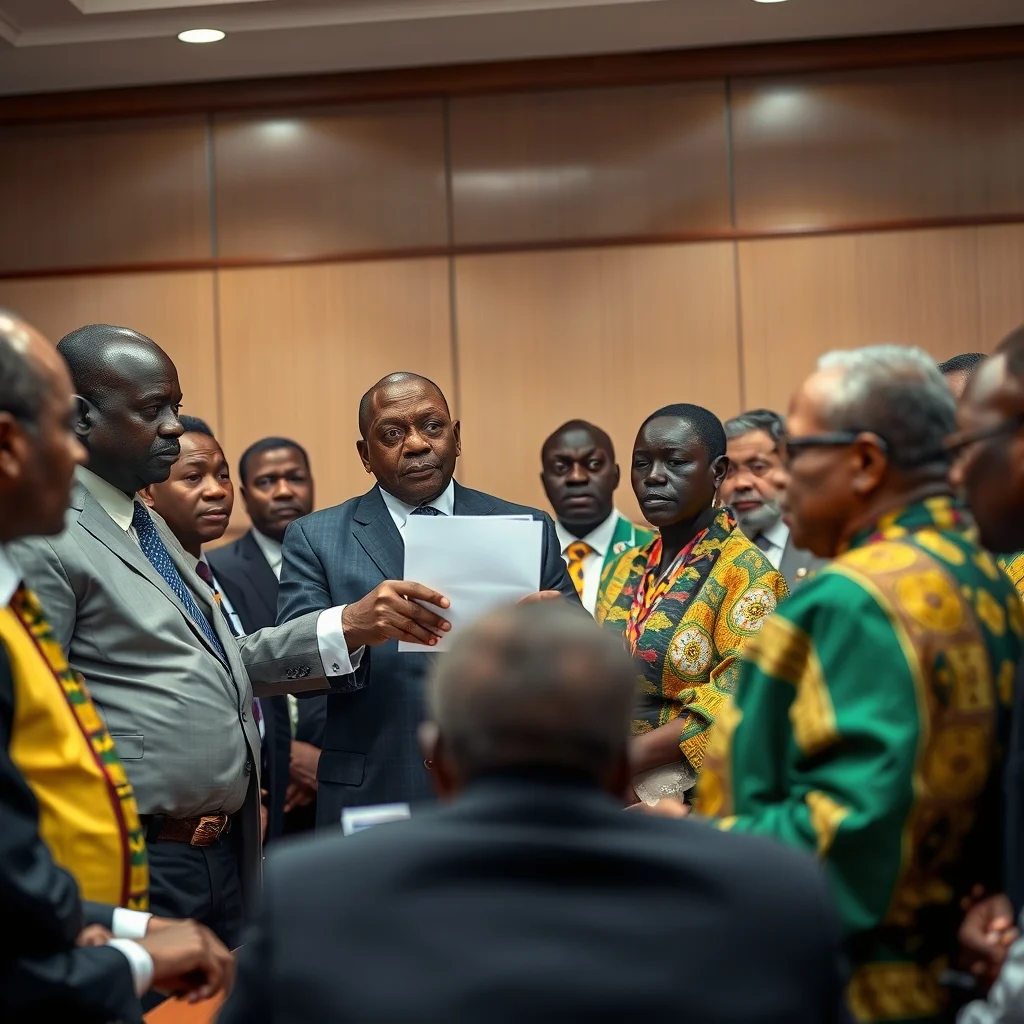
A faction within Ghana’s National Democratic Congress (NDC) has formally petitioned the party’s leadership, challenging the newly released guidelines for the 2026 internal elections. The petition, lodged by members Sinare Toufique Sinare, Ibrahim Tuzee Abdul-Raheem, and Aminu Suleiman, argues that specific provisions within the guidelines are unconstitutional and infringe upon fundamental rights, particularly those barring certain public officeholders from contesting internal party positions.
Constitutional and Internal Party Law Concerns
The core of the petition rests on the alleged conflict between the election guidelines and Ghana’s 1992 Constitution. The petitioners contend that prohibiting individuals holding public office, such as ministers, chief executive officers, and Metropolitan, Municipal and District Chief Executives (MMDCEs), from seeking party positions amounts to an unlawful suppression of political participation.
They reference Article 12(1) of the Constitution, which mandates that all institutions, including political parties, must uphold fundamental human rights. Furthermore, the group points to recommendations from the Committee of Experts involved in drafting the constitution, emphasizing the right of citizens to engage freely in political activities without undue restriction.
Beyond constitutional arguments, the petitioners also question the consistency of the new directive with the NDC’s own internal constitution. Specifically, they cite Article 40(2), which reportedly requires candidates for national executive positions to have prior experience in party or government roles. The new guidelines, they argue, create a contradiction by simultaneously acknowledging and restricting the value of experience gained through government service.
Broader Eligibility and Discrimination Issues
The petition extends beyond the eligibility of public officials to address other potentially contentious aspects of the election guidelines. Concerns have been raised regarding the educational requirements stipulated for members of the research committee. The petitioners suggest that these conditions could disproportionately disadvantage party branches located in rural areas, potentially limiting their capacity to contribute effectively.
Another significant point of contention is the imposition of age limits on certain youth organiser positions. The petitioners specifically highlight a rule capping eligibility at 40 years for particular regional youth roles. They argue that such age restrictions may contravene Article 17 of the Constitution, which prohibits discriminatory treatment based on arbitrary classifications.
Demands and Next Steps
The group is formally demanding a thorough review of all the contested provisions within the election guidelines. Their objective is to ensure that the guidelines are brought into alignment with both the overarching constitutional principles of Ghana and the foundational ideals of the NDC.
The petitioners have urged the party’s Functional Executive Committee (FEC) to initiate an investigation into these matters. They also seek for the National Executive Committee (NEC) to deliberate on the issues, employing the party’s established internal dispute resolution mechanisms. The outcome of this petition could set a precedent for how the NDC structures its internal democratic processes and eligibility criteria for future elections.
Implications for Party Democracy
The challenge highlights a recurring tension within political parties regarding the balance between maintaining party discipline and ensuring broad-based participation. If the petitioners’ concerns are not adequately addressed, it could lead to internal dissent and potentially affect the party’s ability to mobilize its base effectively. The party leadership’s response will be closely watched by members and observers alike, as it signals the administration’s commitment to internal democracy and constitutional adherence.










Leave a Reply