
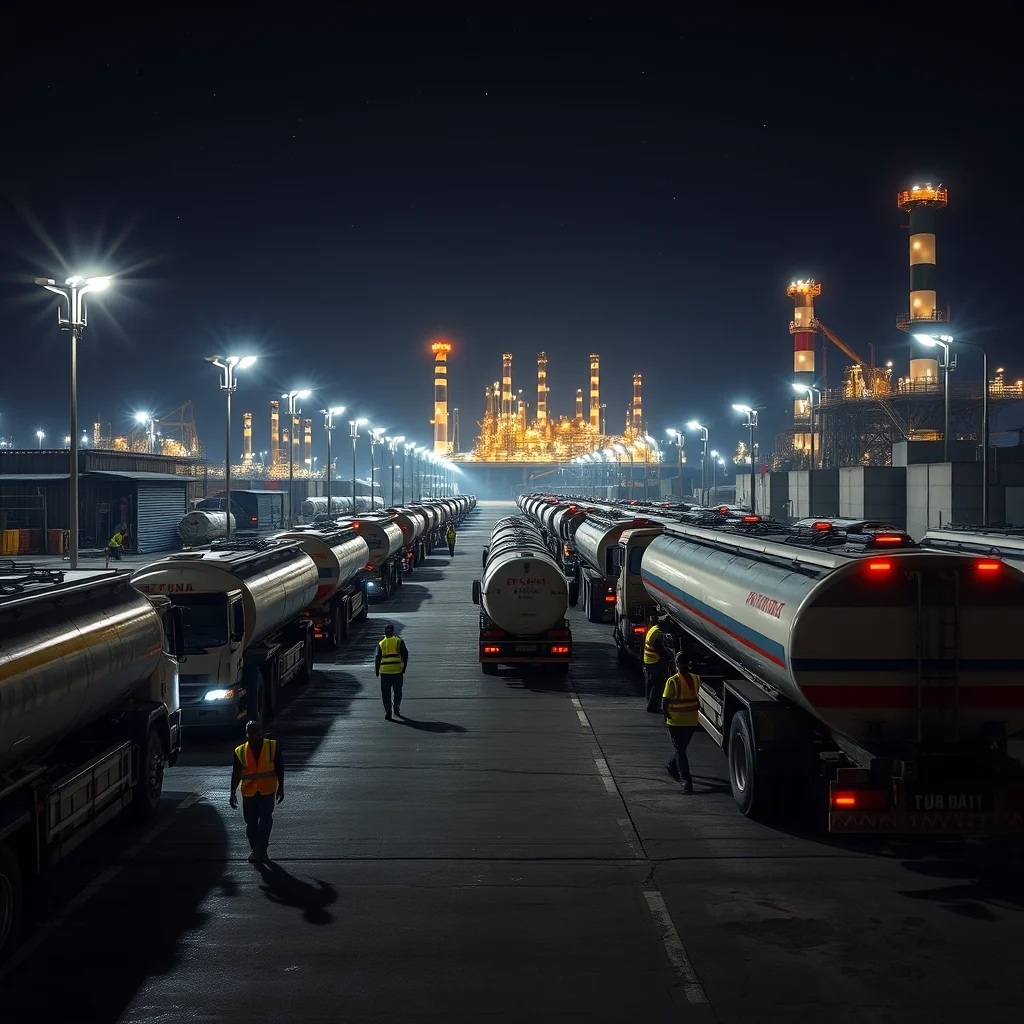
The National Petroleum Authority (NPA) has launched a six-month pilot program for a 24-hour economy in Ghana’s petroleum downstream sector. This initiative, which began in Accra on Tuesday, aims to alleviate fuel supply bottlenecks and stimulate job creation by extending operational hours across key industry facilities. The pilot will involve 268 fuel retail outlets, eight fuel depots, and two refineries, primarily in the Greater Accra, Ashanti, Western, and Northern Regions, and is scheduled to run until November 2026.
Addressing Productive Bottlenecks
Presidential Adviser on the 24-Hour Economy, Augustus Goosie Tanoh, highlighted that the petroleum sector was chosen for an early pilot due to its foundational role in Ghana’s economy. Fuel supply is critical for numerous productive activities, including agriculture, manufacturing, logistics, transportation, and export trade.
Tanoh explained a core inefficiency: “When a depot closes at six in the evening and the next loading slot is at eight in the morning, that is fourteen hours in which the productive economy above it cannot expand.” This initiative seeks to eliminate such downtime.
Pilot Program Scope and Objectives
The pilot program will assess the impact of extended operational hours on reducing fuel shortages and transit times from depots to retail stations. A key focus is to improve fuel availability during night-time hours along major economic routes, such as the Accra-Kumasi and Accra-Tamale corridors.
A joint steering committee, comprising officials from the NPA and the 24-Hour Economy Secretariat, will oversee the pilot. Their mandate includes monitoring economic performance, operational efficiency, labor outcomes, and safety compliance throughout the six-month duration.
Government Commitment and Stakeholder Support
Richard Gyan-Mensah, Deputy Minister for Energy and Green Transition, acknowledged potential challenges but assured that the government is prepared to address obstacles. He commended the NPA, Tema Oil Refinery, transporters, and marketers for their cooperation and support for the program.
Godwin Kudzo Tameklo, CEO of the NPA, described the initiative as a significant shift in Ghana’s approach to productivity and economic potential. He cited global examples where round-the-clock economies have led to improved logistics, reduced congestion, increased revenues, and higher employment.
Participating Facilities and Safety Assurance
The pilot encompasses a wide range of facilities, including bulk storage depots, refinery gantries, LPG stations, and retail fuel outlets. Notable participants include the Tema Oil Refinery and Sentuo Oil Refinery, alongside depots operated by BOST, APD, TTF, TFC, Vana Energy, Quantum Terminals, Ghanstock, and Zen Terminals.
Safety and security are paramount concerns. Tameklo emphasized close collaboration with agencies like the National Security, Ghana Police Service, and Ghana National Fire Service to ensure all participating facilities adhere to the highest safety standards during extended operations.
Future Implications and Watch Points
The success of this petroleum downstream pilot could set a precedent for implementing similar 24-hour operational models in other vital sectors. Industries such as manufacturing, logistics, agriculture, and port operations may also transition to round-the-clock systems, unlocking further economic potential and creating new employment opportunities.
Key areas to watch will be the quantifiable impact on fuel availability, the reduction in supply chain delays, the creation of new jobs, and the effectiveness of safety protocols under extended operational hours. The program’s outcomes will determine the feasibility and roadmap for scaling the 24-hour economy concept across Ghana’s broader economic landscape.










Leave a Reply